See Disclaimer Below.

Archive for the ‘Novels’ Category

Joyce Corrington Publishes You Trust Your Mother

In Arts & Letters, Creative Writing, Fiction, Humanities, News and Current Events, News Release, Novels, Writing on July 23, 2012 at 8:45 am

Allen Mendenhall

Joyce Corrington, a friend and supporter of this site (see here, here, and here), has just released the final installment of the New Orleans mystery series begun by her and her late husband John William Corrington.  Learn more about this book, You Trust Your Mother, at Joyce’s website.

Law in Melville and Hawthorne

In America, American History, Arts & Letters, Historicism, History, Humanities, Law, Law-and-Literature, Literary Theory & Criticism, Literature, Nineteenth-Century America, Novels, Writing on July 11, 2012 at 8:45 am

Allen Mendenhall

Law was a common trope in the writing of nineteenth century American authors.  The jurist Roscoe Pound referred to nineteenth century America as a “frontier society” that was struggling to define what law was.  Justice John Marshall was carving out the jurisdiction of the nation’s high court, even as Andrew Jackson challenged Marshall’s authority to do so.  (Jackson supposedly said, in regard to Worcester v. Georgia, that Marshall had made his decision, “now let him enforce it.”)  American jurisprudents were seeking to reconcile the contradictions between liberty and equality on the one hand—the ideals of the revolutionary generation—with the peculiar institution of slavery on the other.  The ethos of republicanism and the ideal of open discourse clashed with the legislative attempts among the Southern states to resurrect Roman code to validate slave laws, even as the judiciary, on all levels and in all states, attempted to incorporate British common law into a new setting with unique problems.  In short, law was in flux during the nineteenth century in America, and writers like Melville and Hawthorne picked up on this problem and gave it unique and sometimes troubling articulation in their literature.

The “facts” in Benito Cereno are strikingly similar to the facts in one of America’s most memorable cases: U.S. v. The Amistad, in which John Quincy Adams, among others, served as an attorney.  In both “cases,” slaves took over a slave ship, killed some of their white captives, and demanded that the remaining white shipmen return the boat to Africa.  Rather than doing that, however, the white shipmen steered a path toward America, where the unsuspecting crew of another ship, sensing something wrong, came to assist.  These fact patterns raise sensitive and disturbing questions about the law.  What is justice?  How should it be determined?  Which party is right, and what does it mean to be right or to have rights?  For that matter, what is the law to begin with?

In Benito Cereno, Cereno is the captain of the ship bearing slaves, and it is from Delano’s perspective that we learn, gradually, that a slave revolt has occurred and that Cereno is being held captive by Africans.  Delano is the captain of a different ship who has come aboard Cereno’s ship to assist Cereno’s apparently distressed crew.  The leader of the slave revolt, Babo, himself a slave, is always by Cereno’s side, thereby giving Delano the impression that Cereno has a loyal servant.  What Delano eventually discovers is that the slaves have spared the lives of only Cereno and a few other whites in order that these whites return the ship to Africa.

In Amistad as in Benito Cereno, the African slaves had been removed from their homeland, without their consent, and taken to a foreign land among alien peoples for the sole purpose of perpetual enslavement.  On the other hand, the white shipmen had, it could be argued, complied with the law of the sea in conducting these actions, and they were murdered by mutinying slaves.  The problem here is that neither side seems to represent an unquestionably moral or obviously right position.  Slavery is evil, but so is murder.  Melville, perhaps realizing the literary possibilities created by this tension, subjects this challenging set of circumstances to rigorous interrogation by way of a captivating narrative. Read the rest of this entry »

Matthew Simmons Reviews J. Mark Hart’s “Fielder’s Choice”

In Arts & Letters, Creative Writing, Fiction, Humanities, Literary Theory & Criticism, Literature, Novels, Southern Literary Review, Writing on June 26, 2012 at 8:00 am

Matthew Simmons was born and raised in Whiteville, North Carolina.  He lived in Raleigh for eight years, where he went to college at North Carolina State University, roasted coffee for a living, and developed a taste for single-malt Scotch.  Currently a Ph.D. student in English at the University of South Carolina, Matt lives in Columbia, South Carolina, where he tries to garden and regularly rides his bicycle in coat and tie.

The following review appeared here at the Southern Literary Review.

Years ago, after reading Richard Russo’s Mohawk, I decided I needed more flexibility in labeling fiction.  Obviously, there was pulp, there was genre fiction, and there was the rarified air of “lit-tra-ture.”  But what I’d found in Mohawk seemed to somehow occupy parts of all of those labels simultaneously and effortlessly.  I needed a name for this effortless occupation of different registers, and it came to me halfway through another, similar book.  What I was reading was, in fact, the Great American Middlebrow Novel.  Such is a book that tries to be more than an afternoon or a weekend’s entertainment; nevertheless, its writing is highly readable.  It does not set out to explore the eternal complexities of the human experience, but rather tries to show the suppleness and myriad realities that make up an individual or a group’s experience of a specific place, at a particular time.  That last bit is incredibly important.  The GAMN is a book of specificities, of particularities, and it plumbs these specificities and particularities to give us some access to the localized truths of a moment.  J. Mark Hart’s forthcoming debut novel, Fielder’s Choice, tries its damnedest to show itself as worthy of the title, and succeeds, with varying degrees of success, at achieving this goal.

Hart’s locale and moment are Birmingham, 1969.  Brad Williams, our narrator, wants to avoid the hellish fires of the steel mills.  But there is a fate worse than the mills also possibly awaiting him:  the jungles of Vietnam.  Working class, his only hopes at escape are for his athletic prowess on the baseball diamond to win him a college scholarship, as well as drawing a high draft number.  The first of these hopes is immediately compromised—a lifetime shortstop, senior year finds Brad moved over to second to accommodate Robbie, a black student transferred to West Lake High via integration, who is a superior shortstop to Brad in every way.

And thus are the specifics of Hart’s novel—a Birmingham trying to live down the specter of Bull Connor’s hoses and dogs, and a young man trying to find his place in this uncertain newness.  At its best, Fielder’s Choice does a truly wonderful job of presenting a city struggling to understand itself and an 18-year-old boy trying both to fit into this city and get out of it.  Hart’s presentation of Brad is, in many ways, wonderfully well-done.  Similarly, the city’s tensions are admirably sketched, and Birmingham, as a character itself, feels incredibly alive and compelling.  Hart’s debut novel thus promises to join the august company of the Great American Middlebrow novel, an achievement to be lauded—especially when the author, an attorney by day, is only moonlighting as a novelist.

Promising though it may be, Fielder’s Choice is also, at times, deeply problematic.  The prose can be clunky and wooden:  explaining his friend’s father’s drinking habits, Brad speaks of “[the father’s] customary can of Pabst Blue Ribbon beer, or, in his vernacular, a ‘PBR.’”  Contrast that passage with any number of gorgeous moments from Brad’s courtship of Susie and you’ll find yourself frustrated—Hart can, at times, be an immensely lyrical and even beautiful writer, and you’ll wish he always was.  But significantly more troubling than some hiccups with the prose is the novel’s reliance on flat, stereotypical characters.  Of course the hippie would be a Yankee, and of course he would drive a VW with a day-glo peace sign on the back window.  Of course the main antagonist would be named Bubba, and would be a violent, reactionary, bigoted redneck.  Robbie, the African-American shortstop who forces Brad to move positions, often seems like little more than a plot device and a means for developing Brad’s character—a shame and even an error, as Robbie begins as one of the most promising characters in the novel.

And while Paxton, the Yankee hippie, becomes more sympathetic as the novel progresses, it is not because his character deepens, but because Brad becomes more involved in the anti-war movement.  Meanwhile, the Bubbas of the novel are never any more than boogeymen, “hicks,” to use Brad’s distressingly frequent verbiage, who wave the Confederate flag and stand in the way of progress.  Near the novel’s end, Brad glowing speaks of Birmingham moving into the “New South,” and we understand that Brad understands Bubba and his ilk not so much as people as impediments to the birth of this “New South.”  Brad’s voice thus carries a nascent sense of cosmopolitan elitism.  And while I see this as a legitimate and even necessary act of characterization, I’m nevertheless troubled that Brad gets off scot-free in this regard.  The Bubbas of the novel, and of Southern history, are of course inexcusably wrong in their racial attitudes and certainly on the wrong side of history.  But this does not make them any less complexly human, something that Brad never recognizes, and something Hart never calls him to task for.  We cannot present a fully nuanced picture of the South at this time—which is, again, what I think Hart wants to do—if we merely write off the Bubbas of the world, wrong-headed and misguided as they may be, as merely villainous “hicks” resembling Snively Whiplash more than flawed human beings.

This not to denigrate how fine the novel is on the whole.  Brad himself is a deeply compelling and well-realized hero.  Susie, Brad’s love interest and female counterpart, helps to Hart’s exploration of 1969 Birmingham in sophisticated ways, and Susie and Brad’s relationship is at turns soaring, titillating, crushingly painful, and immensely familiar to us all.  Hart presents the changing relationships between Brad and his childhood best friend BJ, as well as between Brad and his father, powerfully and complexly.  Brad, and those characters closest to him, are wonderfully rendered, strongly presented, and, at times, heart-wrenchingly achieved.

This is all to say that Fielder’s Choice is a novel of real promise, despite some significant problems.  Mr. Hart has given us a very fine representation of a boy becoming a man in a place and time that are immensely complicated, and we are moved to joy and frustration alongside Brad.  It is a deeply enjoyable novel, one I found myself tearing through in three days—no short task for a nearly 500-page book.  And while it has its problems—the writing is sometimes too flat, the characters often too stock, the ending perhaps too neat—I am amazed, again, that this is a first novel by a man whose vocation is not fiction.  And while the problems may keep Mr. Hart’s first novel from being a Great American Middlebrow Novel, it comes mighty close.  Ultimately, Fielder’s Choice is a very good book about a very complex time.  I’m a fan.

Review of Coleman Hutchinson’s Apples and Ashes

In America, American History, Arts & Letters, Book Reviews, Fiction, Historicism, History, Humanities, Literary Theory & Criticism, Literature, Nineteenth-Century America, Novels, Southern History, Southern Literary Review on June 20, 2012 at 8:00 am

Allen Mendenhall

The following review first appeared here at the Southern Literary Review.

Confederate literature and literary culture have not received the critical consideration that they warrant.  Not only that, but they have been dismissed as scant and mediocre.  Scholars of the South and of the Civil War—even those whose work has reached wide audiences—have paid more attention to other humanistic fields than to literature, particularly to Confederate literature and particularly during the so-called “fighting” years of 1861-1865.  This neglect, argues Coleman Hutchison in Apples and Ashes, is regrettable because “the Confederacy gave rise to a robust literary culture.”

Several factors account for the dearth of scholarship on Confederate literature, not least of which is the fact that the Confederacy existed for only a short time, during which Confederate writers had to overcome, among other things, ink and paper shortages; many of these men and women struggled to see their work reach print in cities occupied by Union troops.  Accordingly, much of what might have become Confederate literature was lost or unpublished, yet the relative shortage of Confederate literature was not due to lack of talent, but to printing paralysis.

Another reason Confederate literature has failed to become a common subject of study is the presumption that this topic is not worthwhile, largely because Confederate cultural values have been discredited.  There is, today, the tendency to demonize or denounce any person who would take seriously the claims and writings of Confederate partisans, politicians, and highbrows.  Yet to take something seriously is not to endorse it, and to proclaim certain intellectual matters off-limits—even if those matters are highly complex and, when studied carefully, telling about contingencies and urgencies of our own day—is dangerous and foolish indeed.  Hutchison is just as aware of the importance of Confederate literature as he is of the importance of disclaiming it.  “To write about the Confederate nation,” he says, “is to risk being seen as endorsing its right to exist.”  He adds, emphatically, that his book “is by no means an apology for the Confederacy or Confederate nationalism,” and that he “finds almost nothing that is admirable in the politics and culture of the Civil War South.”  That Hutchison feels compelled to disassociate himself from Confederate ideology at all suggests how strangely anxious the impulsive, opportunistic, or lazy readers will be to either condemn or celebrate (depending on their perspective) this book as pro-Confederate.

Mostly uninterested in matters of taste and judgment regarding the literary quality of his subjects, Hutchison submits that Confederate literature teaches literary scholars not only about the nuances and cultures of nationalism, but also about nineteenth century American (read: non-Confederate) letters generally, since Confederate literature was in conversation with—and in contradistinction to—American literary nationalism.  Among the distinguishing features of Confederate literature were its aspirational impulses and its focus upon an imagined and impossible future.  In some respects, the South’s belles lettres recognized the poignancy of a lost cause narrative before the cause was actually lost. Read the rest of this entry »

Review of “Teaching Law and Literature”

In Arts & Letters, Book Reviews, Fiction, Humanities, Jurisprudence, Law, Law-and-Literature, Literary Theory & Criticism, Literature, News and Current Events, Novels, Pedagogy, Teaching, Writing on April 24, 2012 at 8:33 am

Allen Mendenhall

Teaching Law and Literature.  Austin Sarat, Cathrine O. Frank, and Matthew Anderson, eds.  New York: Modern Language Association, 2011.  vii + 507 pp.  $25, paper.

What began as a coordinated, idiosyncratic project in American and British law schools has become a common component of curricula in English departments across the globe.  Law and literature as a subject and as a movement has gained purchase over the last three decades.  Inaugurated in 1973 with the publication of James Boyd White’s The Legal Imagination, which highlighted, among other things, the affinities between legal and literary rhetoric, law and literature has splintered into so many narrowed foci that today it is just as common to see courses like “Law in Late 19th Century American Literature” as it once was to see courses called, quite simply and broadly, “Law and Literature.”

To celebrate and explain this movement, The Modern Language Association (MLA) has released Teaching Law and Literature, an edition with forty-one essays by some of the most prominent scholars in the field, including none other than White himself.  Although law and literature has enjoyed ample funding and has become the subject of an increasing number of journals and conferences, not enough work has been done on the pedagogical aspects of the discipline.  Put another way, the discipline has yet adequately to address the question of how professors ought to teach the interplay of law and literature to students.

That is a gap that this book seeks to fill.  According to editors Austin Sarat, Cathrine O. Frank, and Matthew Anderson, Teaching Law and Literature  “provides a resource for teachers interested in learning about the field of law and literature and how to bring its insights to bear in their classrooms, both in the liberal arts and in law schools.”  Despite that stated goal, the book is weighted toward undergraduate education, and the editors admit as much in their introduction.

At a time when American law schools are under fire for admissions scandals and fabricated data, professors of law and literature—and law professors interested in humanistic and jurisprudential approaches to law teaching—would do well to turn their attention to undergraduates.  When budget cuts and faculty purging befall the legal academy, as they likely will, law and literature (and its various offshoots) will be the first curricular elective to suffer.  A discipline whose proponents struggle to articulate its purpose—will a course in law and literature help law students to pass a bar exam or to become better lawyers?—may not survive the institutional scrutiny of deans, administrators, and alumni associations.

Yet it is the urgent quest for validation that makes law and literature such an important subject.  At its core, law and literature is about grand questions: Why study literature at all?  What use do novels, plays, poems, and the like have for the general public and for the practical, workaday world in which lawyers serve a necessary function?  Might the recurring themes of justice, fairness, and equality expressed in canonized texts from disparate cultures and communities point to something recognizable and distinctive in the human condition?  And are there paralyzing limits to specialized knowledge of periods and genres when so many law and literature scholars, working out of different traditions and trained in supposedly autonomous disciplines, arrive at the same or similar generalizations regarding human experience?

One such generalization, interestingly enough, is that complicated relationships between people—whether based in race, gender, class, or whatever—ought to be understood in terms of ambiguity and contingency rather than certainty and absolutes, and that simple answers will hardly ever suffice to illuminate the nuances and contradictions of any given phenomenon, especially law.  That law is too often reduced to blackletter, blanket rules is not lost to writers of imaginative literature, who, many of them, have used law and legal institutions to enable critiques and explorations of complex social and philosophical problems.

It is little wonder, in light of the compatibility between literary and legal rhetoric or hermeneutics, that a Maryland appellate judge recently wrote in his concurrence that “[t]his case is E.M. Forster’s A Passage to India all over again.  Something happened up there at the Marabar Caves.  Was it an attempted rape?  Was it some form of hysteria triggered by strongly ambivalent emotions imploding violently in a dark and isolated catacomb?  Or was it some unmappable combination of the two as moods and signals shifted diametrically in mid-passage?  The outside world will never know.”  Here is a judge employing a work of literature to demonstrate a point about the limitations of human knowledge.  Law provides topoi in countless works of literature, and works of literature, as this judge apparently recognizes, can supply context and profundity to the deforming routines and desensitizing rituals of everyday law practice.  Without following the judge through to the end of his reasoning, one can sense in his lines a stark awareness of the incapacity of human faculties and hence the perspectival nature of what the philosophers call “justice.” Read the rest of this entry »

Allen Mendenhall Interviews Julie Cantrell

In Arts & Letters, Book Reviews, Creative Writing, Fiction, Humanities, Literature, News and Current Events, Novels, Southern Literary Review, The South, Writing on February 29, 2012 at 6:10 am

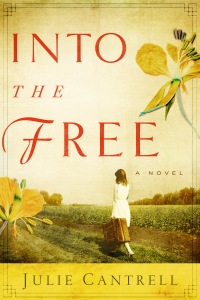
Julie Cantrell was editor-in-chief of the Southern Literary Review.  She teaches English as a second language to elementary school students and is a freelance writer who has published two children’s books. Julie and her family run Valley House Farm in Mississippi.  Her first novel, Into the Free, was released by David C. Cook in 2012.


Julie, so glad to be doing this interview.  First of all, congratulations on the publication of Into the Free, which, at the moment, is number 23 on the Amazon Kindle bestseller list.  What does it feel like to have completed your first novel?

It’s amazing! The entire journey has been joyful for me, but to see it reach readers across the world is incredible. Having it become a bestseller is simply surreal. I admit I’m a bit numb watching it climb the charts, and I keep thinking it will end in a few minutes – a strange little bubble of joy that is about to pop. For that reason, I’ve been doing the happy dance nonstop and am just going to enjoy the fun while it lasts.

The main character of the book is Millie Reynolds.  How did you come up with Millie?  Did you know what she would be like—her personality, her attitudes, her struggles—before you started writing, or did she sort of come to you as you worked?

Well, to be honest, I never intended to write from a child’s point of view. I originally set out to write about the “Gypsy Queen,” but it just wasn’t the voice I heard. Then I saw a scene of a poor, depressed woman standing on a porch watching the Travelers leave town. She wanted to leave with them, but she was too afraid to take the first step. So I sat down to write her story, but it wasn’t her voice I heard either. Instead, Millie sat in her tree and told me her story. I know it sounds kooky, but I guess I just have a very vivid imagination. I’m happy to introduce Millie to readers, and I hope they love her as much as I do.

You once told me that you had two kids, four cows, three goats (two of which were then due with babies that you’d have to bottle feed), two dogs, two cats (one stray that arrived pregnant), a horse that likes a lot of attention, a flock of hens, a newly arrived carton of chicks, a husband, and a full-time job as a speech therapist.  How did you ever manage to finish writing Into the Free

It sounds crazy, doesn’t it? In fact, we’ve grown bigger since then! I still work in an elementary school, but now I teach English as a Second Language, so I was able to reduce my hours to part-time this year. With a full-time farm, a teaching job (which is never really part-time, as any teacher will tell you), two kids, a wonderful hubby, freelance gigs, and an active community life, we stay very busy. I usually write between the hours of 3 am and 5 am, when the rest of the world is sleeping. I just love it more than sleep.

Tell us a little about your choice of setting for the novel?

I am a southern girl, through and through. I spent my childhood in Louisiana before leaving the south after graduate school. I loved living in various states across the country, but our family relocated to Mississippi seven years ago, returning to our southern roots. I find this state incredibly rich with everything needed to whip up a story. I never considered setting it anywhere other than Mississippi. However, I like to mix things up a bit, so let’s see where the sequel takes us.

Any advice for aspiring novelists who might come across this interview?

Yes. I say, Go for it! If writing is what you love, be willing to make sacrifices to keep that in your life. Only you know what you were born to do, and only you know how to live the life that makes you happy. Life is short. Choose wisely.

Thank you, Julie.  This has been a great interview.  I’m thrilled to see the success of Into the Free, and I would encourage readers of this site to purchase a copy right away. 

Thank you, Allen. I am honored to be interviewed here on a site I have always loved. You’ve done a fabulous job with Southern Literary Review, and I know your readers all agree. Kudos!

Book Review: Paul Cantor and Stephen Cox’s Literature and the Economics of Liberty

In Arts & Letters, Austrian Economics, Book Reviews, Communism, Conservatism, Economics, Essays, Fiction, History, Humane Economy, Humanities, Law-and-Literature, Liberalism, Libertarianism, Literary Theory & Criticism, Literature, Novels, Philosophy, Politics, Western Civilization, Western Philosophy on January 23, 2012 at 4:53 am

Allen Mendenhall

The following book review originally appeared here in the Fall 2010 issue of The Independent Review.

Humans are not automated and predictable, but beautifully complex and spontaneous. History is not linear. Progress is not inevitable. Our world is strangely intertextual and multivocal. It is irreducible to trite summaries and easy answers, despite what our semiliterate politicians would have us believe. Thinking in terms of free-market economics allows us to appreciate the complicated dynamics of human behavior while making sense of the ambiguities leading to and following from that behavior. With these realities in mind, I applaud Paul Cantor and Stephen Cox for compiling the timely collection Literature and the Economics of Liberty, which places imaginative literature in conversation with Austrian economic theory.

Cantor and Cox celebrate the manifold intricacies of the market, which, contrary to popular opinion, is neither perfect nor evil, but a proven catalyst for social happiness and well-being. They do not recycle tired attacks on Marxist approaches to literature: they reject the “return to aesthetics” slogans of critics such as Allan Bloom, Harold Bloom, and John M. Ellis, and they adopt the principles, insights, and paradigms of the Austrian school of economics. Nor do Cantor and Cox merely invert the privilege of the terms Marxist and capitalist (please excuse my resort to Derridean vocabulary), although they do suggest that one might easily turn “the tables on Marxism” by applying “its technique of ideology critique to socialist authors, questioning whether they have dubious motives for attacking capitalism.” Cantor and Cox are surprisingly the first critics to look to Austrian economics for literary purposes, and their groundbreaking efforts are sure to ruffle a few feathers—but also to reach audiences who otherwise might not have heard of Austrian economics.

Cantor and Cox submit that the Austrian school offers “the most humane form of economics we know, and the most philosophically informed.” They acknowledge that this school is heterodox and wide ranging, which, they say, are good things. By turning to economics in general, the various contributors to this book—five in all—suggest that literature is not created in a vacuum but rather informs and is informed by the so-called real world. By turning to Austrian economics in particular, the contributors seek to secure a place for freedom and liberty in the understanding of culture. The trouble with contemporary literary theory, for them, lies not with economic approaches, but with bad economic approaches. An economic methodology of literary theory is useful and incisive so long as it pivots on sound philosophies and not on obsolete or destructive ideologies. Austrian economics appreciates the complexity and nuance of human behavior. It avoids classifying individuals as cookiecutter caricatures. It champions a humane-economy counter to mechanistic massproduction, central planning, and collectivism. Marxism, in contrast, is collectivist, predictable, monolithic, impersonal, linear, reductive–in short, wholly inadequate as an instrument for good in an age in which, quite frankly, we know better than to reduce the variety of human experience to simplistic formulae. A person’s creative and intellectual energies are never completely products of culture or otherwise culturally underwritten. People are rational agents who choose between different courses of action based on their reason, knowledge, and experience. A person’s choices, for better or worse, affect lives, circumstances, and communities. (“Ideas have consequences,” as Richard Weaver famously remarked.) And communities themselves consist of multiplicities that defy simple labels. It is not insignificant, in light of these principles, that Michel Foucault late in his career instructed his students to read the collected works of Ludwig von Mises and F. A. Hayek. Read the rest of this entry »

Allen Mendenhall Interviews J. Neil Schulman, Prometheus Award–Winning Author of Alongside Night

In Artist, Arts & Letters, Austrian Economics, Creative Writing, Creativity, Economics, Fiction, Film, Humanities, Imagination, Libertarianism, Literary Theory & Criticism, Literature, News and Current Events, Novels, Philosophy, Screenwriting, Television, Television Writing, Writing on January 17, 2012 at 9:00 am

J. Neil Schulman

J. Neil Schulman is a novelist, actor, filmmaker, journalist, composer, and publisher.  Among his many books are Alongside Night and The Rainbow Cadenza, both of which won the Prometheus Award.  Visit his website at http://jneilschulman.rationalreview.com/.


The following interview originally appeared here at Prometheus Unbound: A Libertarian Review of Fiction and Literature.

AM:  Right off the bat, it strikes me that I don’t know what to call you.  Will Neil work?

JNS:  Sure. It’s J. Neil Schulman in credits, and Neil in person.

AM:  Anyway, thank you for doing this interview, Neil.  You’ve had a fascinating and unique career.  You’ve written novels, short fiction, nonfiction, screenplays, and other works.  Which of your works is your favorite and why?

JNS:  Every artist gets asked this question sooner or later. I asked it of Robert A. Heinlein when I interviewed him in 1973, and his answer was, “The latest one I’ve been working on.”

I’ve only completed one movie so far — Lady Magdalene’s — so it’s a Hobson’s Choice on that one. Ask me again when I’ve made two! But a lot of people also seem to like the script I wrote for The Twilight Zone, “Profile in Silver.”

I’ve written three novels. My first, Alongside Night [editor’s note: free in pdf], seems to be my most accessible and popular. I consider my second novel, The Rainbow Cadenza, to be my most layered, literary, and richest in explicit philosophy. My third novel, Escape from Heaven, is my favorite. It may not be as timely as my first novel or literary as my second novel, but it’s the one that’s closest to my heart…both the funniest thing I’ve ever written, and the one which is most deceptively simple. It appears to be a lightweight piece of comic fantasy, but it’s full of ideas that if examined more closely turn both traditional theology and rationalist philosophy on their heads.

Short stories? I’ll pick a few: “The Musician,” “Day of Atonement,” and “When Freemen Shall Stand” — all in my collection Nasty. Brutish, and Short Stories — and my latest short story, “The Laughskeller,” published on my blog, J. Neil Schulman @ Rational Review.

AM:  Your worldview is, in a word, libertarian.  Why is that?  How does libertarianism come across in your writing?

JNS:  In my nonfiction essays it comes across explicitly. In fiction, drama, and comedy, I try to examine libertarian themes without preaching. I was probably most subtle doing this in The Rainbow Cadenza. The utilitarian politics advocated by the chief villain, Burke Filcher, is so self-consistent that a lot of readers have thought this character speaks for the author. In fact, I wrote the novel to attack utilitarianism as a nullification of the natural individual rights I believe in. The novel reduces utilitarianism to absurdity — it’s a formal satire of it.

Alongside Night is less subtle, though I’m probably more successful in the new movie script than the 1970s novel when it comes to letting the audience make up its own mind. I have learned some refinements of my craft in the last three decades.

Alongside Night by J. Neil SchulmanAM:  I recently noticed that you commented on a post at the Austrian Economics and Literature blog edited by my good friend Troy Camplin.  Tell me about the influence that Austrian economics has had on you.

JNS:  I would say that Austrian economics — and more fundamentally, the analytical tools of praxeology and games theory — have been fundamental to my work for my entire professional career. They’re not the only tools in my kit, but they get shopworn as much as any of them. Austrian economics is most explicit in Alongside Night, projecting the social and political consequences of fiat money hyperinflation — but I used games theory in plotting “Profile in Silver” and applied praxeology to the afterlife in Escape from Heaven. Read the rest of this entry »

Joyce Corrington Publishes New E-Books

In Arts & Letters, Creative Writing, Fiction, Humanities, John William Corrington, Law, Literature, News and Current Events, News Release, Novels, Writing on January 4, 2012 at 9:00 pm

Allen Mendenhall

Joyce Corrington, a long-term friend and supporter of this site whose interview with me appeared back in September, recently republished, in e-book format, the four New Orleans mysteries she wrote in a series with her late husband John William Corrington.  The books are available at the following links:

So Small a Carnival

A Project Named Desire

A Civil Death

The White Zone

Joyce’s latest novel, Fear of Dying, the fifth in the series, came out in 2011.

Allen Mendenhall Interviews Ace Atkins

In Artist, Arts & Letters, Book Reviews, Creative Writing, Fiction, Humanities, News and Current Events, Novels, Southern Literary Review, Writing on December 12, 2011 at 8:46 am

Ace Atkins is the author of nine novels, most recently The Ranger and Infamous.  A former journalist at The Tampa Tribune, Atkins has been nominated for a Pulitzer Prize for his investigation into a 1950s murder.  He lives on a farm outside Oxford, Mississippi.

The following interview first appeared here at Southern Literary Review.

AM: What I suspect everyone wants to know is, how do you stay so prolific?  How do you write so much, so quickly?

AA: I’m very fortunate to be a full-time novelist. I’ve been writing full time since 2001 and that gives me the freedom to concentrate completely on my stories. Many terrific writers I know have to carve out time from from their jobs to work on a book. I am able to go to my office every day and work on that new novel. I feel pretty damn lucky and that in turn means I get to work on more projects.

AM: You seem to have located The Ranger in regions of the South that you know well.  Would you call this book “Southern literature”? 

AA: Absolutely. I don’t get into working in a certain genre—that’s up to readers and critics—and can hurt the writer and reader. My new series of novels could not be set anywhere else but the South and certainly centers on many Southern themes. I gain a lot of inspiration from the gritty world of Faulkner’s crime stories and turn my attention to the descendants of those people. 

AM:    I noticed that country music and country musicians appear throughout The Ranger.  Can you tell us about the significance of this to the novel?

AA: My first four novels were stylistically and thematically about blues. I always wanted to work on a novel that felt like an old Johnny Cash ballad—a solider returning home to town, unrequited love, guns and violence. I listened to a lot of Johnny Cash and also tons of Outlaw Country—Waylon, Merle, etc.—when coming up with the background of Quinn Colson.

AM: Who is Colonel George Reynolds?  I noticed his name in the Acknowledgments. 

George is the guy who saved my ass. I had contracted to write a novel about a U.S. Army soldier without knowing enough about the modern war in Afghanistan. Colonel Reynolds contacted me from Camp Phoenix in Afghanistan about signing a copy of my novel, Devil’s Garden. He offered help if I ever needed. It turned out, I needed help immediately. He offered terrific insight direct from the battle front and introduced me to the real Ranger who provided the background for Quinn Colson. 

I could not have written the book without him and he still provides me with a ton of answers to picky questions. Read the rest of this entry »