See Disclaimer Below.

Archive for the ‘Novels’ Category

Part One: Allen Mendenhall Interviews Mark Zunac about his new edition, “Literature and the Conservative Ideal”

In Academia, American History, American Literature, Arts & Letters, Books, British Literature, Conservatism, Creativity, Fiction, History, Humanities, liberal arts, Liberalism, Literary Theory & Criticism, Literature, Novels, Philosophy, Poetry, Politics, Postmodernism, Scholarship, Western Civilization, Western Philosophy on November 9, 2016 at 6:45 am
Mark Zunac

Mark Zunac

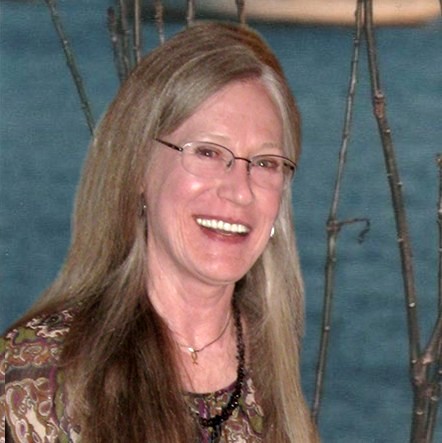
Mark Zunac is associate professor in the Department of Languages and Literatures at the University of Wisconsin-Whitewater.  Editor of Literature and the Conservative Ideal, he researches revolution, writing, and the rise of intellectual conservatism in Britain following the French Revolution. He received his Ph.D. from Marquette University in 2008.


AM:  Thank you for this interview, Mark.  Your recent edition is titled Literature and the Conservative Ideal.  What, in your view, is the conservative ideal?

MZ:  In my mind the conservative ideal reflects what Michael Oakeshott calls a “disposition” rather than something that can be expressed by a singular identifiable creed. Nevertheless, I would say that it is in many ways an intuitive and practical view of the world, one that privileges human freedom, acknowledges a common humanity, and maintains a healthy regard for the accumulated wisdom of ages.

In today’s context, it is also uniquely defined by what it is not, since the very idea of an intellectual conservatism is often met with condescension or, perhaps in some cases, preemptive disdain. This invariably reflects a reductive and fundamental – and often deliberate – misunderstanding. Contra its critics, the conservative ideal does not demand a blind allegiance to the status quo, nor does it entail uncritical nostalgia for some heroic past. Such willful obtuseness I think would have its present-day parallel in the relentless deconstruction of nearly everything that we as citizens in a liberal democracy have taken for granted.

It is too easy to characterize the conservative disposition as a product of an unenlightened past or, more nefariously, deep-rooted prejudices. The destruction of a civil order grown out of its past has become reflexive and impulsive, and there is seldom any careful reflection as to what, practically speaking, a society unmoored from its historical roots will look like. Thus, the conservative ideal is grounded in the enduring presence of civilizational standards that, while not immune to scrutiny or change, are nevertheless prerequisites for a stable and ordered society.

Of course, as an intellectual exercise, it is more difficult, or at least less exciting, to make a case against earthly utopias, particularly when they have been peddled as some moral zenith. In a word, the conservative ideal encompasses a respect for the past and a deep skepticism for any social innovations that might jeopardize its influence on what may rightly be called culture.

AM:  After the turf wars over canon and curriculum in the 1980s and 1990s, did any expositors of the conservative ideal come out alive? 

MZ:  There have indeed been some survivors, but the side was badly damaged. As English departments became wholly owned subsidiaries of the multicultural program, literature became simply one more vehicle through which victimization and oppression became the sole standard for assigning value.

The study of literature as an artistic endeavor, one subject to critical judgment and the recognition of a work’s place within literary history, was supplanted by the idea that value is situational and that any search for truth or beauty must necessarily be futile. The most significant casualties of the English turf wars have been works of the West, useful now only for their iteration of or complicity in historical cruelties.

Unfortunately, approaches to literature that privilege the text over the identity of its author or characters have become associated with political conservatism, itself a byproduct of the contemporary university’s tendency to hold politics as an individual’s highest calling. Thus, when it comes to literary criticism, a conservative ideal has less to do with promoting certain ideologies than with a dispassionate return to literature as a form of high art. Doubly unfortunate, and perhaps a bit ironic, is that as students of English literature continue to flock to other areas of study, we in the field have doubled-down on curricular approaches that are now not only stale but increasingly obsolete.

AM:  Can anything be done to save the field at this point, or is it doomed for failure? I realize these are strong words, and perhaps premature, but there do seem to be trends and data that suggest that at least English departments will face serious budgetary and enrollment problems in the years to come.

MZ:  Yes, I suppose we shouldn’t be too fatalistic at this point, even though in many cases the situation is nearing critical. I don’t much doubt that English departments will continue to exist, and perhaps even thrive, in the future. They just might have to take on a new identity, as it were. It might ultimately be fortuitous that as fewer people read, the less aptitude there seems to be for writing well. Thus, the rise of professional writing programs and the continuance of rudimentary instruction in composition may throw us a lifeline.

Departments have not, for the most part, adapted to the current climate. In some regard, there will always be a case for literature’s place within the educational landscape, and we should not stop making it. I completely sympathize with certain laments over the decline of literature and the humanities more broadly, indicated, as you suggest, by certain unpropitious trends. Many of them I will grant fall outside of our purview.

I think the liberal arts, even in their purest form, are threatened by the credentialist attitude currently infusing higher education. In addition, the heavy emphasis on STEM fields in primary and secondary education, combined with the turn toward “fact-based” texts, is both a capitulation to market demands and a nod to the reality that slow reading as an intrinsically rewarding enterprise can’t compete in the digital world.

So, despite our own malfeasance, there are certainly many other cultural trends causing our decline. Though I cannot help thinking how the complete dominance of Theory within literary criticism over the last number of decades has left would-be readers wondering how a text can possibly be relevant to their personal lives or how it might provide insights into the human condition. This is to say nothing of how that text might not be so predictably subservient to the social and cultural forces that informed it.

AM:  You mention this in your introduction, but for the sake of readers of the blog, I’ll ask how you chose the contributors to this edition.  

It wasn’t until well after graduate school that I encountered intellectual viewpoints from within my discipline that were congenial to both my own political predilections and my preferred approach to literature. The idea that these could coexist, or even work in concert, hadn’t really occurred to me. I remember feeling somewhat liberated by the presence of literary scholars in opinion and public affairs journals that I avidly read. I realized that while scholarship had its place, questions surrounding the study of literature and its implications for our culture deserved a place in a much wider realm of ideas. In a way, I found an intellectual home outside of the university, which, in my case, proved salutary.

The roster for Literature and the Conservative Ideal was assembled by individual cold calling. I had compiled a fairly short list of scholars whose work I had come across in these popular venues and who I thought might at least be able to consider conservatism’s role in literary study as well as its various formulations in selective literary works. The response to my initial proposal was very positive, and I remain infinitely grateful to the contributors for their generosity.

What I have come to understand over the years is that genuine concern over the state of literature today is not bounded by party affiliations or directed by a singular ideological framework. As I mention in the book, personal politics did not figure in discussions with contributors, nor did I harbor any assumptions about them. I think it is a testament to dispassionate scholarship and the contributors’ dedication to their craft that the volume came together the way that it did.

AM:  What critics do you consider representative of the conservative tradition?

MZ:  I think in this case it is once again useful to detach what might be considered a conservative approach to literature from the more freighted use of the term in a distinctly political context. In so doing, a critic such as Lionel Trilling, known for his oft-repeated equation of conservatism with “irritable mental gestures,” might be classified as an exemplar of a conservative literary tradition. His emphasis on literature as an embodiment of culture cut against the grain of scholarship that valued texts primarily for their reflection of bourgeois society. Close reading and moral judgment are at the center of Trilling’s critiques, and his skepticism of a literature that “pets and dandles its underprivileged characters” might be sustained as a rebuke to today’s critical environment.

Writing also in what might be called the conservative tradition is of course F.R. Leavis, whose concern for literature’s essential role within civilized life is discussed by Thomas Jeffers in the book. I would also include T.S. Eliot and other contributors to Scrutiny, a publication whose critical acumen and attention to literature’s artistic expression is in many ways lacking today. It is, however, still found in the pages of such eminent publications as Commentary, the Claremont Review of Books, The New Criterion, and others. So, as readers of The Literary Lawyer are keenly aware, the humanistic tradition, which stands athwart today’s prevailing postmodernist ethos, is very much alive. It just isn’t generally in vogue in those places where literature is taught.


Part Two coming soon….
Claire Hamner Matturro Reviews Robert Bailey’s “Between Black and White”

In Arts & Letters, Book Reviews, Books, Creative Writing, Fiction, Humanities, Justice, Law, Law-and-Literature, Literature, Novels, Southern Literary Review, Southern Literature, The Novel, The South, Writing on June 15, 2016 at 6:45 am

ClaireHamnerMatturroforSoLitRev

Claire Hamner Matturro, a former lawyer and college teacher, is the author of four legal mysteries with a sense of humor. Her books are Skinny-Dipping (2004) (a BookSense pick, Romantic Times’ Best First Mystery, and nominated for a Barry Award); Wildcat Wine (2005) (nominated for a Georgia Writer of the Year Award); Bone Valley (2006) and Sweetheart Deal (2007) (winner of Romantic Times’ Toby Bromberg Award for Most Humorous Mystery), all published by William Morrow. She remains active in writers’ groups, teaches creative writing in adult education, and does some freelance editing. Visit her at www.clairematturro.com.

The review originally appeared here in Southern Literary Review.

Following the success of his powerful debut legal thriller, The Professor (Thomas & Mercer 2015), Bailey offers a second, stunning story in the series. In his novel Between Black and White (Thomas & Mercer March 2016), Bailey establishes beyond doubt that he is an author to be read and reckoned with.

Between Black and White is closely tied to Bailey’s first book and involves several of the same characters. In The Professor, readers were introduced to aging former law professor Tom McMurtrie, who returns to the courtroom after being forced out of his teaching position at The University of Alabama School of Law. Tom teams up with Rick Drake, an impetuous young attorney and his one-time student. Together, in The Professor, Tom and Rick pursue a tense and dangerous wrongful death lawsuit.

While Tom and Rick dominate The Professor, another lawyer—Bocephus Haynes, or Bo—steps into that story at critical times to boost and support Tom. Bo is a bigger than life black University of Alabama football star who blew out his knee and, instead of retreating into depression over the loss of a pro football career, goes to law school. Tom is one of his professors, and the two develop a close friendship.

As much as The Professor was Tom and Rick’s story, Between Black and White is Bo’s story. In the prologue, we meet Bo as a five-year-old who watches members of the Ku Klux Klan lynch his beloved father. From the opening pages of Chapter One—which finds a disheartened, angry Bo getting drunk on the anniversary of his father’s brutal lynching—to the shocking, violent conclusion, Bo leaps off the pages with boldness and spirit. But like all well-crafted fictional heroes, he is flawed, and his failings land him in a courtroom as the sole defendant in a capital murder case.

His near fatal flaw: hunger for revenge. Obsessed with punishing the man who lynched his father, Bo shapes his professional life around that goal. After graduating with honors from The University of Alabama School of Law, Bo turns down offers at prestigious law firms. He returns to his home town, Pulaski, Tennessee, to a solo law practice as the city’s only black attorney—and to pursue the man he holds responsible for his father’s death. Too many people in the city of Pulaski know Bo is driven by his fixation to punish the man he blames for his father’s lynching. His wife has even left him because his drive to avenge his father’s murder has endangered their two children.

Since Bo was five years-old, he has blamed Andrew Davis Walton, a powerful businessman in Pulaski, for his father’s death. Once the Imperial Wizard of the Tennessee Knights of the KKK, Walton shook off the robes of the Klan and made millions in the stock market. Known as the “the Warren Buffett of the South,” he tried to make amends for his Klan actions.

Yet people have a long memory when it comes to the Klan—and no one more than Bo. Though Walton was hooded the night five-year-old Bo witnessed the lynching, Bo recognized Walton’s voice. But no one in law enforcement was ever willing—then or later—to prosecute Walton on the testimony of a child claiming to identify a voice.

On the 45th anniversary of his father’s lynching, Bo gets drunks in a local bar. Walton and Maggie, Walton’s aging, beautiful wife and one of the local landed aristocracy, seemingly accidentally run into Bo in the bar. Face to face with Walton, Bo threatens him in front of witnesses by quoting the Old Testament’s “eye for an eye.”

After the bartender breaks up the confrontation, Walton steps outside. But before Bo leaves the bar, Maggie returns to tell him that Walton is dying. She asks that Bo leave her terminally ill husband alone. Bo staggers out, lamenting to himself that Andy Walton was going to die before he could bring him to justice.

That night, someone shoots Walton and stages a mock lynching at the site where Bo’s father was lynched four and a half decades before.

Physical evidence points directly at Bo. Everyone in the legal community knows he had the motive and opportunity. Even before Bo recovers from his hangover, he is in jail. The prosecutor, a fierce woman attorney who has butted heads with Bo in court before, decides to seek the death penalty.

Pulaski was the birthplace of the Ku Klux Klan, and many residents and officials in the city strive to live that down. So when the murder, with its roots in the old KKK lynching, puts Pulaski and its Klan heritage back in the spotlight of national media, city officials attempt to pressure Bo to plead guilty and avoid the further media circus of a trial.

Bo refuses. He is innocent of murdering Walton—or so he claims, though no one in law enforcement believes him. He calls on his former law professor and close friend, Tom, to defend him. Reluctantly, Tom agrees and retains local attorney Raymond “Ray Ray” Pickalew, another former U of A football player. Rick, who is now Tom’s law partner, is dragged into the case as well.

Though Tom and Rick sense a setup, they struggle against multiple roadblocks—and the overwhelming physical evidence of Bo’s guilt—to determine who had a motive to kill Andy Walton and frame Bo. During their quest, Tom is assaulted and sidelined by his injuries; Ray Ray is a drunk with an attitude, and young. Overwhelmed Rick is left to unravel the seemingly unrelated pieces of a complex, emotional puzzle. Villains from The Professor return to taunt and threaten Tom and Rick, adding further intricacy to the plot.

Thus, Bailey sets up the classic formula of a legal thriller. Mind you, formula is not used as a derogatory term here. Shakespeare’s sonnets were formula and critics do not dismiss them in disparaging terms. As used here, formula simply refers to the structure and elements that define a genre or a literary style. In a legal thriller where the focus is on a criminal defendant on trial for his or her life, readers expect the odds to be stacked against the defendant. They expect the defense attorneys to be complicated, troubled, overwhelmed and conflicted. And, owing perhaps to the Perry Mason standard, readers expect a surprise witness and revelation near the close of the trial which allows the defense attorneys to prevail and the defendant to be found not guilty.

There are, of course, notable exceptions to this basic formula. Lincoln Lawyer and A Time to Kill come to mind. Both of those legal thrillers had guilty defendants, yet with vastly differing twists at the end.

Given the formulaic elements at play in the genre, a successful legal thriller author has to avoid creating a stale, mechanical plot that reads like a written version of a paint-by-number canvas. Yet the author has to keep the plot within the confines of the genre or publishers will scratch their heads and throw the manuscript on the reject pile.

In other words, authors working within a prescribed genre face a kind of delicate yet vicious circle. On the one hand, they must write within the parameters of their chosen genre. But, on the other hand, they have to do something new, exciting and fresh. It’s kind of like saying: Color within the lines. But don’t color within the lines.

Within this catch-22, the author has to give the reader something more—and something different. This Bailey does, and does with a bang.

Yet, having said that much, to say much more about the surprising, original twists of Between Black and White risks spoiling the plot. Thus, this reviewer will only observe that per the Perry Mason/John Grisham model, an unexpected witness with a startling revelation does pop up at the end of the trial. But just when the reader settles back to relax and believe that justice has been achieved, something complicated, violent and utterly surprising happens.

It isn’t just that Bailey knows how to surprise us, but he also writes well. Very well. Make no mistake on that point. His sentences are clear, clean, distinctive, and when they need to hit with a punch, they do. His pacing is excellent—an edge-of-the-seat, can’t-put-it-down momentum fuels the storyline from the prologue to the climatic ending. His characters are well-drawn, his sense of place and world-building excellent. The plot is intricate, but believable. There is redemption for some characters, resolution for others—and those that deserve neither are left to flounder in their own hell. Justice is achieved, albeit in a confused, violent way.

In short, Bailey wrestles what in less talented hands could have been a formulaic story into something wholly fresh, engaging, and ultimately rich and satisfying. This is a book you want to own and read.

Paul H. Fry on “Who Doesn’t Hate Theory Now?”

In Academia, American Literature, Arts & Letters, Books, British Literature, Essays, Fiction, Historicism, History, Humanities, Literary Theory & Criticism, Literature, Novels, Pedagogy, Philosophy, Scholarship, Teaching, The Academy, Western Civilization, Western Philosophy on April 13, 2016 at 6:45 am

Below is the next installment in the lecture series on literary theory and criticism by Paul H. Fry. The previous lectures are here, here, here, here, here, here, here, here, here, here,here, here, here, here, here, here, here, here, here, here, here, here, and here.


Paul H. Fry on “Post-Colonial Criticism”

In Arts & Letters, Books, Britain, British Literature, Eastern Civilizaton, Fiction, Historicism, History, Humanities, Law, Literary Theory & Criticism, Literature, Novels, Pedagogy, Philosophy, Politics, Rhetoric, Scholarship, Semiotics, Teaching, The Novel, Western Civilization, Western Philosophy on February 24, 2016 at 8:45 am

Below is the next installment in the lecture series on literary theory and criticism by Paul H. Fry. The previous lectures are here, here, here, here, here, here, here, here, here, here, here, here, here, here, here, here, here, here, here, and here.


Allen Mendenhall Interviews Joyce Corrington

In American History, American Literature, Arts & Letters, Books, Creative Writing, Fiction, Film, History, Humanities, John William Corrington, Joyce Corrington, Literature, Novels, Screenwriting, Southern History, Southern Literature, Television, Television Writing, Writing on October 28, 2015 at 8:45 am
Photo by Robert Corrington

Photo by Robert Corrington

APM: Joyce, thanks for doing this interview. The last time we did one of these, I suggested that we might do another one day. I’m glad that day is here. I guess if there’s a particular occasion for the interview, it’s that you and your son Robert have recently finished your project of making the literary works of your late husband, John William “Bill” Corrington, available to the public. How did you do that?

JC: Bill began his literary career as a poet in the 1960s, publishing in the “little magazines” that were prevalent at that time and also publishing five collections of his poems. Then he largely switched to fiction and published pieces of short fiction in literary magazines and in three collections, which were themselves collected into a publication by the University of Missouri Press after Bill’s untimely death.  Finally he published four novels, the last of which, Shad Sentell, was published in 1984.  Since almost thirty years have passed since then, all of Bill’s works were out of print and available to the public only as rather expensive used books.  Our son Robert, who works for Microsoft and is very informed about IT matters, told me that Amazon and its subsidiary Create Space would accept digital manuscripts and publish them at no charge as eBooks or print on demand books that would be offered to the public on the Amazon.com/books website.  So we began a many years long project to make all of Bill’s literary work again available to the public in inexpensive editions.  The “many years” was due to the fact that we had no digital manuscripts.  I had to retype the poems, short stories and novels on my computer and then Robert edited the digital files and created original covers for the books in Photoshop.  Finally, with the recent publication of Shad Sentell, we are done!

APM: Having recently reread the entirety of Bill’s published works, what is your overall impression?

JC: It was interesting to read a lifetime of work in a relatively short period of time. I found that a sense of history permeates Bill’s work. Even many of his poems have historical themes and his first novel, And Wait for the Night, was concerned with the consequences of the Civil War, as were many of his short stories.  Also infusing the work is a strong sense of morality and religion.  This might surprise someone who casually reads The Upper Hand, which is about a priest who loses his faith and descends into the “hell” of the French Quarter.  Much of it seems sacrilegious and offensive to a person of religious sensibilities, but the first words of the novel are “God Almighty…” and the last are “the living the dead,” both phrases which appear in the Apostle’s Creed.  Bill’s novella The Rise’s Wife resulted from a deep study of Hinduism.  Of course, as many have noted, Bill’s taking a J.D. midway in his life resulted in many lawyers and judges becoming characters in his fiction.  This allowed Bill to explore the logos of a moral life.  Finally, and almost in contrast to all these other serious themes, Bill displayed an ironic and even black sense of humor in many of his poems, such as “Prayers for a Mass in the Vernacular,” in his short story “The Great Pumpkin,” and especially in his novel The Upper Hand.

APM: You’ve said that Shad Sentell is your favorite of Bill’s books. Why is that? 

JC: Mostly because the humor in Shad Sentell is farcical and not black.  It is a really fun read, if you are not prudish.  Shad, who is a “redneck” Don Giovanni, is likely one of the most carnal characters in literature and this, thirty years ago, was perhaps shocking to many readers.  I hope that today readers can see that this novel is (excuse my partiality) a work of genius that records for all time the character and language of the Southern redneck.  Bill shows he has a surprising depth of intelligence and sensibility that one would not suspect from his bluff and crass surface.

APM: Do you remember the circumstances under which Bill authored the book? In other words, do you have any memories of him writing it?

JC: Bill had been disappointed that his first three “serious” novels had received little critical acclaim.  He decided to write one aimed at what he thought was more to the taste of the general public.  In this I think he was far ahead of his time, but I hope Shad Sentell will eventually find its audience.

APM: I once read something that Lloyd Halliburton wrote about how you critiqued parts of Shad Sentell and caused Bill to rethink some passages. I can’t recall the details. Do you know what I’m referring to?

JC: I always acted as Bill’s sounding board and editor as he was writing a novel. We would sit over coffee in the morning or maybe a gin a tonic in the afternoon and discuss his ideas on what was to come next.  I thought he got carried away with the farcical fun of the Mardi Gras scenes and, when his agent agreed with me, he let me cut much of that material from the manuscript.  But likely the biggest change I suggested was the ending.  Bill’s first idea was to have Shad die in the climactic oil well explosion, but I told him I thought that was a wrong decision.  Despite his seeing Shad as a modern day Don Giovanni, Shad Sentell was a comedy, not a tragedy, and the hero survives in a comedy.  Bill went along with my suggestion.

APM: Where did the character Shad Sentell come from? Was he based on any one person?

JC: Bill had a very good friend, Sam Lachle, who shared many of Shad’s characteristics. During high school and college Bill played trumpet with local bands in the bars of Bossier City.  He had a very smart mouth and it would likely have gotten him into more trouble than it did if he had not hung out with two very large friends, Sam and Don Radcliff, who protected him.  Sam died of a stroke at an early age and Shad Sentell, which is dedicated to him, is to some degree a loving memorial.

APM: I assume the newly released version of the book that you and Robert have put together will be available on Amazon, right? What about your website?  Can readers find and purchase it there?

JC: My son Robert not only formatted the books but created a website, www.jcorrington.com, which lists all the books that are available on Amazon. There are also biographies and a menu of critical works.

APM: This changes the subject a bit, but you once mentioned, I think when I was visiting you in New Orleans a few years ago, that there was a graduate student writing a dissertation on Battle for the Planet of the Apes and that he was trying to read into the screenplay something that wasn’t there. Does this ring a bell? Am I remembering this correctly?

JC: Bill and I wrote six films, one of which was the last in the original Planet of the Apes series. Bill never took film writing seriously, which was probably for the best since as writers we never had any control over what was done with our scripts after turning them over to the producer who hired us to write them.  We were actually quite dismayed when the film Battle for the Planet of the Apes was released to find some elements had been dropped and others added (a crying statue, for heaven’s sake), but we wrote it off as “just an entertainment.”  Imagine my surprise when years later I received a phone call from a young man who was doing his Ph.D. dissertation on the Planet of the Apes series!  He asked for an interview which I was happy to grant.  I soon discovered that his thesis was that the films were really about racism in America in the 1960s.  I told him that I would not try to speak for the other films, but ours was actually a Cain and Abel story (the apes had previously been presented as innocent pacifists compared to warmongering humans and our story was of the first ape killing another ape).  The graduate student chose to ignore this and stick to his thesis.  He won his Ph.D. and even later published his dissertation work.

APM: I ask in part because the latest installment of the Battle for the Planet of the Apes series came out last year. That was Dawn of the Planet of the Apes, which followed the 2011 Rise of the Planet of the Apes. What do you think about these latest films?

JC: I am afraid I did not bother to see it.

APM: Giuliana and I saw Rise of the Planet of the Apes in the theater, and we waited around after the film to see if you or Bill received any mention in the credits. I can’t remember if you did, but I’m inclined to say that you did not. Do you have any comment about that?

JC: I don’t think we did receive any credit because the Writer Guild of America would have sent me a notice to see if I wanted to dispute the credit.  They did this with the remake of our film Omega Man, which was titled I Am Legend.  I asked if there was any money involved and when the Guild said no, I replied that I did not really care what credit we received.  Subsequently a lot of friends were surprised to see a credit for us at the end of the new film and sent me emails about it.

APM: I’m now thinking these interviews should be an ongoing thing. I’d like to continue the conversation. What do you think? We could do one every now and then for the historical record.

JC: I would like that very much. I especially would like to have an opportunity to talk to you about the Collected Poems of John William Corrington and the Collected Short Fiction of John William Corrington.  These are also recently published and available on Amazon.com or through my website www.jcorrington.com.

APM: Thanks, Joyce, let’s do it again soon.

Learning What We Don’t Know

In American Literature, Arts & Letters, Book Reviews, Books, British Literature, Humanities, Literary Theory & Criticism, Literature, Novels on September 9, 2015 at 8:45 am

Allen 2

This review originally appeared here in The University Bookman.

I begin with a trigger warning. The following review contains references that could evoke strong feelings about the nature and purpose of literature, a manifestly dangerous field of human creativity consisting of stories about, and representations of, highly sensitive and potentially upsetting subjects, including but not limited to racism, rape, classism, war, sex, violence, imperialism, colonialism, religious persecution, suicide, and death. Those who find discussions or descriptions of such demonstrably timeless elements of human experience unpalatable or offensive should consult medical professionals before reading this review or the book it promotes. Readers are encouraged not to engage any aspect of this review, or the book under review, that might provoke hurtful memories, grave discomfort, or existential angst.

Reading is precarious enough as it is, without having to introduce concepts or narratives about complex perennial themes, fictional renderings of plausible and fantastic events, or the contingencies of everyday life. Therefore, if you feel you must avoid material that elicits a passionate or emotional response derived from the inevitably discomforting features of both lived and imagined experience, then you must not only bypass Robert P. Waxler’s The Risk of Reading but also lock yourself in a closet, plug your ears with your fingers, and shout la la la la la until you’re no longer aware of your subjective self and the sometimes painful, sometimes joyous ubiquity of reality.

Enough of that. If you’re still reading, you agree to hold harmless this reviewer, Robert Waxler, and the editors and publishers of this journal for any claims or damages resulting from serious discussions of literature. You’re hereby warned: reading is risky—hence the title of Waxler’s book.

Not just reading, but deep reading, is risky, according to Waxler, because it teaches us “about who we are and where we are located in the midst of complexities in the world.” Deep reading disturbs the satisfying complacency of both ignorance and certitude. It can make you unhappy, challenge your most cherished presuppositions, and force you to think rigorously and laboriously about the nature of human relations and our place in the world. A life without reading isn’t so risky, at least for those who prefer not to be bothered with inconvenient narrative or exposed to different points of view. Knowing you’re right without working for understanding is easy. Why get distraught? Why not simply “know” without having to exert yourself in contemplation, without exercising your imaginative powers?

My generation, the millennials, will take shameless offense at Waxler’s notion that we are situated, temporal beings with definite bounds and limitations, little insignificant persons in a vast web of human history, near-nothings within a cosmic totality who are destined to suffer the fate of every living thing. This may be overstating, if not misrepresenting, Waxler’s presiding themes, but the anti-egoist premise is implicit in his chapters. It is an irrefutable premise at odds with my generation’s prized assumption that the knowing self is fluid and permeable, subject to the malleable constructions of choice and chance, always appropriable and appropriated—never fixed, never closed, never immutable, never assigned.

For my generation, the anything-goes-except-standards generation, slow reading—deep reading—is anathema, the kind of tedious exercise rendered unnecessary by hypertext and the rhyzomatic Internet. A studied appreciation for nuanced story and linguistic narrative has been replaced by an insatiable craving for instant gratification, by trite sound bites and fragmented data, by graspable bullet points and ready access to reduced testimony. We’ve got information at our hands, this generation of mine, but no wisdom or knowledge in our heads.

Although he does not come right out and say so explicitly, Waxler seems to have my generation in mind. He portrays himself as “someone who grew up with books but now finds himself surrounded by screens, consumer sensation, data streams, [and] the spectacle of electronic circuitry masquerading as public transparency.” A child today cannot avoid these technological distractions. Waxler’s not an old fogey intent on bemoaning new media for the sake of the cozy familiar or Luddite quixotism; rather, he’s worried about what is happening to reading as much as to readers when the rhetorical medium incentivizes rank inattentiveness and scattered interest.

Reading properly, in Waxler’s view, teaches us how much we do not know, not how much we know, about our mysterious universe and human interaction. Consequently and paradoxically, he maintains, reading improves and expands our tacit knowledge about the quotidian things that shape our lives and inform our decisions, the subtle things we might overlook or misapprehend if we aren’t attentive. And we’re not attentive, most of the time—at least that’s what Waxler appears to mean by his emphasis on “the distraction of each flickering instant” in which “information and data pull us away from ourselves, set themselves up as sovereign, as if they are all-knowing gods.”

Having paid homage to deep reading in his introductory chapter, Waxler puts his deep reading, or the fruits of his deep reading, on display. He examines nine texts in as many chapters: Genesis (the creation account), Frankenstein, Alice in Wonderland, Heart of Darkness, The Old Man and the Sea, Catcher in the Rye, One Flew over the Cuckoo’s Nest, Fight Club, and The Sense of an Ending. Then there’s a brief concluding chapter on the future of linguistic narrative—not a prediction or prophecy but a call to pensive action. These books have it all—sex, violence, death, sin, rebellion. They are risky.

Waxler encourages us to face our vulnerabilities and insecurities by reading deeply and widely, ever mindful of the nuances and possibilities of language and story. His subjects proceed chronologically, Genesis being the oldest text and The Sense of Ending, which was published just four years ago, the most recent. These subjects have little in common save for the high regard in which they’re held by a critical mass of readers. It’s premature to say whether some of these books are canonical—as in classics—but all of them are difficult and stirring: candidates for canonicity if they can prove their fitness over time.

All you need to know about Waxler’s thesis resides in his title—and subtitle. He submits that his subjects are “risky” or “dangerous”—terms laced with sarcasm and irony—because they help us to make sense of other people and our surroundings, which together amount to culture and experience. Understanding our concrete phenomenal surroundings, via literature, enables us to make sense of what Whitman called the “Me Myself,” or the “I” that was, for Descartes, the starting-point of metaphysics and epistemology—or so Waxler would have us believe.

Waxler’s thesis may be right—who can deny such broad claims?—but it doesn’t always play out as agreeably as it might in his analyses. Too much summary and synopsis presupposes a reader who hasn’t undertaken the primary text. Waxler’s local points are more interesting than his general conclusions about the worth of reading well and wisely—conclusions that, it must be said, are sufficiently apparent to go without saying, although they form the only discernable through-line in this exposition of disparate authors, texts, and time periods, and thus serve a vital function.

Waxler is not attempting to imbue his readers with cultural literacy; rather, he’s trying to teach them how to read deliberately. He echoes Kenneth Burke by suggesting that literature is equipment for living. We shouldn’t fail to recognize the skill with which Waxler dissects texts. The problem is that such dissection removes the strangeness of the reading experience, deprives the unseasoned reader of his chance to luxuriate in the sublime power of language and story. Waxler’s critical commentary simply cannot do what the literary works themselves do: provoke, inspire, move, awe, stimulate, anger, shock, and hurt. Therefore, a sense of repetition and banality settles over Waxler’s arguments: the biblical account of creation teaches truths regardless of whether it “happened”; Mary Shelley raises unanswerable questions about restraints on human ambition; Lewis Carroll’s Alice finds meaning in a meaningless world; Joseph Conrad’s Marlow and Kurtz help us “locate our own ongoing journey that defines us, each in our own way”; Hemingway’s portrayal of Santiago at sea instills understanding about “the truth of the achievement, the accomplishment, and the loss”; and so on. You get the gist: readers are vicarious participants in the stories they read; thus, the stories are instructive about the self. Again, unoriginal—but also undeniable.

Conservatives will be surprised at the manner in which Waxler enlists men of the left to make some traditionalist-seeming points. He mentions Lacan and Foucault—known in conservative circles for French Theory, poststructuralism, jargon, pseudoscience, and psychobabble, among other things—for the proposition that literature transmits virtues and values that constructively guide human activity and orient moral learning. Such references implicitly warn about the risk and short-sightedness of closing individuals within ideological boxes that can be stored away without consequence—or perhaps they demonstrate how creative thinkers can use just about anyone to make the points they want to make.

By all means read Waxler’s book. But, sooth to sayne, if you really want a risk, if you really want to live dangerously, which is to say, as a self-aware, contemplative being, then you should—trigger warning, trigger warning!—read the books Waxler discusses rather than Waxler himself. I’m confident the risky Waxler would urge the same course. He’s just that dangerous.

Harold Bloom’s American Sublime

In Academia, America, American Literature, Art, Artist, Arts & Letters, Book Reviews, Books, Creativity, Emerson, Fiction, History, Humanities, Literary Theory & Criticism, Literature, Nineteenth-Century America, Novels, Philosophy, Poetry, Rhetoric, Scholarship, The Novel, Western Civilization, Western Philosophy, Writing on August 12, 2015 at 8:45 am

Allen 2

This review originally appeared here in the American Conservative.

What can be said about Harold Bloom that hasn’t been said already? The Yale professor is a controversial visionary, a polarizing seer who has been recycling and reformulating parallel theories of creativity and influence, with slightly different foci and inflections, for his entire career, never seeming tiresome or repetitive. He demonstrates what is manifestly true about the best literary critics: they are as much artists as the subjects they undertake.

Bloom’s criticism is characterized by sonorous, cadenced, almost haunting prose, by an exacting judgment and expansive imagination, and by a painful, sagacious sensitivity to the complexities of human behavior and psychology. He is a discerning Romantic in an age of banality and distraction, in a culture of proud illiteracy and historical unawareness. Bloom reminds us that to be faithful to tradition is to rework it, to keep it alive, and that tradition and innovation are yoked pairs, necessarily dependent on one another.

Bloom has been cultivating the image and reputation of a prophet or mystic for decades. His stalwart defense of the Western canon is well known but widely misunderstood. His descriptive account is that the canon is fluid, not fixed—open, not closed. It might be stable, but it’s not unchangeable. The literary canon is the product of evolution, a collection of the fittest works that have been selectively retained, surviving the onslaught of relentless competition.

Bloom’s prescriptive position is that, because human agency is a controllable factor in this agnostic filtering process, serious readers can and should ensure that masterpieces, those stirring products of original, even genius minds, are retained, and that the latest works are held to the highest aesthetic standards, which are themselves established and proven by revisionary struggle. The merit of a work is not found in the identity of its author—his or her race, gender, or sexuality—but in the text proper, in the forms and qualities of the work itself.

Bloom’s latest book, The Daemon Knows: Literary Greatness and the American Sublime, examines ambitious and representative American authors, its chapters organized by curious pairings: Whitman with Melville (the “Giant Forms” of American literature), Emerson with Dickinson (the Sage of Concord is Dickinson’s “closest imaginative father”), Hawthorne with Henry James (a relation “of direct influence”), Twain with Frost (“our only great masters with popular audiences”), Stevens with Eliot (“an intricate interlocking” developed through antithetical competition), and Faulkner with Crane (“each forces the American language to its limits”). This mostly male cast, a dozen progenitors of the American sublime, is not meant to constitute a national canon. For that, Bloom avers in his introduction, he envisions alternative selections, including more women: Edith Wharton, Willa Cather, Marianne Moore, and Flannery O’Connor. Bloom’s chosen 12 represent, instead, “our incessant effort to transcend the human without forsaking humanism.” These writers have in common a “receptivity to daemonic influx.” “What lies beyond the human for nearly all of these writers,” Bloom explains, “is the daemon.”

What is this daemon, you ask. As always, Bloom is short on definition, embracing the constructive obscurity—the aesthetic vagueness—that Richard Poirier celebrated in Emerson and William James and Robert Frost, Bloom’s predecessors. Bloom implies that calling the “daemon” an idea is too limiting; the word defies ready explanation or summation.

The daemon, as I read it, is an amorphous and spiritual source of quasi-divine inspiration and influence, the spark of transitional creative powers; it’s akin to shamanism, and endeavors to transcend, move beyond, and surpass. Its opposite is stasis, repose. “Daemons divide up divine power and are in perpetual movement from their supernal heights to us,” Bloom remarks in one of his more superlative moments. “They bring down messages,” he intones, “each day’s news of the metamorphic meanings of the division between our mundane shell and the upper world.”

What, you might ask in follow up, is the American sublime that it should stand in marked contrast to the European tradition, rupturing the great chain of influence, revealing troublesome textual discontinuities and making gaps of influence that even two poets can pass abreast? “Simplistically,” Bloom submits, “the sublime in literature has been associated with peak experiences that render a secular version of a theophany: a sense of something interfused that transforms a natural moment, landscape, action, or countenance.” This isn’t quite Edmund Burke’s definition, but it does evoke the numinous, what Bloom calls, following Burke, “an excursion into the psychological origins of aesthetic magnificence.”

The Daemon Knows is part memoir, a recounting of a lifetime spent with books. There are accounts of Robert Penn Warren, Leslie Fiedler, and Cleanth Brooks. Bloom’s former students and mentors also make brief appearances: Kenneth Burke, for instance, and Camille Paglia. And Bloom doesn’t just analyze, say, Moby Dick—he narrates about his first encounter with that book back in the summer of 1940. He later asserts, “I began reading Hart Crane in the library on my tenth birthday.” That he remembers these experiences at all speaks volumes to Melville’s and Crane’s bewitching facility and to Bloom’s remarkable receptivity.

Bloom has not shied away from his signature and grandiose ahistorical pronouncements, perhaps because they’re right. Melville, for instance, is “the most Shakespearean of our authors,” an “American High Romantic, a Shelleyan divided between head and heart, who held against Emerson the sage’s supposed deficiency in the region of the heart.” Or, “Emersonian idealism was rejected by Whitman in favor of Lucretian materialism, itself not compatible with Indian speculations.” Or, “Stevens received from Whitman the Emersonian conviction that poetry imparts wisdom as well as pleasure.” These generalizations would seem to service hagiography, but even if they’re overstatement, are they wrong?

My professors in graduate school, many of them anyway, chastised Bloom and dubbed him variously a reactionary, a racist, a misogynist, a bigot, or a simpleton; they discouraged his presence in my essays and papers, laughing him out of classroom conversation and dismissing his theories out-of-hand. Or else, stubbornly refusing to assess his theories on their own terms, they judged the theories in the light of their results: the theories were bad because certain authors, the allegedly privileged ones, came out on top, as they always have. This left little room for newcomers, for egalitarian fads and fashions, and discredited (or at least undermined) the supposedly noble project of literary affirmative action.

They will be forgotten, these dismissive pedants of the academy, having contributed nothing of lasting value to the economy of letters, while Bloom will live on, continuing to shock and upset his readers, forcing them to second-guess their judgments and tastes, their criteria for aesthetic value, challenging their received assumptions and thumping them over the head with inconvenient facts and radical common sense. The school of resentment and amateurish cultural studies, appropriate targets of Bloom’s learned animus, will die an inglorious death, as dogmatic political hermeneutics cannot withstand the test of time.

Bloom, on the other hand, like his subjects, taps his inner daemon, invokes it and rides it where it travels, struggles against the anxiety of influence and displays all of the rhetorical power and play of the strong poets he worships. Dr. Samuel Johnson and Northrop Frye reverberate throughout his capacious tome, and for that matter his entire oeuvre. Bloom’s psychic brooding becomes our own, if we read him pensively, and we are better off for it.

Those who view literary study as a profession requiring specialized and technical training, who chase tenure and peer approval, publishing in academic journals and gaining no wider audience than groveling colleagues, do not possess the originality, the foresight, or the brute imagination necessary to achieve enduring appeal. Reading, done right, is a profoundly personal activity, an exercise in solitary contemplation and possible revelation; writing, done right, is transference: the redirection of complex states of consciousness and knowing from one person to another. A few sentences of Bloom’s contemplative questioning, such as the following, are worth the weight of whole academic articles: “At eighty-four I wonder why poems in particular obsessed me from childhood onward. Because I had an overemotional sensibility, I tended to need more affection from my parents and sisters than even they could sustain. From the age of ten on, I sought from Moyshe-Leyb Halpern and Hart Crane, from Shakespeare and Shelley, the strong affect I seemed to need from answering voices.” Here Bloom invites Freudian investigation of himself, summoning the psychoanalytic models he uses on others.

Bloom is now 85. He claims to have another book left in him, making this one his penultimate. His awesome and dedicated engagement with the best that has been thought and known in the world appears to have left him unafraid of the finish, of what comes next, as though literary intimacy and understanding have prepared him, equipped him, for the ultimate. It seems fitting, then, to quote him on this score and to end with a musing on the end: “We are at least bequeathed to an earthly shore and seek memorial inscriptions, fragments heaped against our ruins: an interval and then we are gone. High literature endeavors to augment that span: My twelve authors center, for me, that proliferation of consciousness by which we go on living and finding our own sense of being.”

Interview with Hubert Crouch

In Arts & Letters, Books, Creative Writing, Fiction, Humanities, Justice, Law, Literature, News and Current Events, Novels, Southern Literary Review, Southern Literature, The South on July 29, 2015 at 8:45 am

This interview originally appeared in Southern Literary Review.

Hubert Crouch

Hubert Crouch

AM: Thanks for taking the time to talk to Southern Literary Review about The Word, your second novel. Jace Forman, the protagonist of your first novel, Cried For No One, is back in this novel. How has your experience as a trial lawyer shaped Jace’s character, if at all? Is it even possible to identify where your legal background has shaped your character development?

HC: I leaned heavily on my experiences as a trial lawyer while creating Jace Forman. I actually know how it feels to try “high-stakes” lawsuits – the intense pressure, the sleepless nights, the perpetual gnawing in your stomach – because I have lived through them. What a trial lawyer goes through in his professional life has a profound impact on his personal life – again, I felt I was able to portray that realistically with Jace because personal experience was a good teacher. I am not saying Jace is autobiographical – he’s not. That being said, my ability to create his character was, in large part, the result of having been a trial lawyer myself.

AM: I’m not out­-of­-bounds in supposing that readers of Cried For No One will, like me, associate Ezekiel Shaw and the Brimstone Bible Church with Fred Phelps and the Westboro Baptist Church, which is featured in the book. Is there a deliberate connection?

HC: I taught Free Speech and the First Amendment to SMU undergraduates. One of the cases we discussed in class was Snyder v. Phelps. There were some lively exchanges between students over whether the Supreme Court got it right when they threw out the multi-million dollar judgment awarded to the Snyders. Had the Court gone too far in protecting free speech? Had the Court allowed a zealous sect to trample upon the rights of a family to bury their loved one in peace? Our classroom debate inspired me to change the factual scenario, inject a different religious issue and pit the conflicting positions against one another in a fictitious lawsuit.

AM: What made you decide to incorporate Leah Rosen and Cal Connors into the plot? Did you envision them at the outset, or did they come later, after you had already begun writing?

HC: Cal and Leah were characters from my first novel, Cried for No One. Leah continues her investigation into Cal’s legal misdeeds in the stand-alone sequel.

AM: As someone who has never attempted to write a thriller, I’m curious about how the intricate thriller plot falls into place. How much mapping or outlining do you do before beginning the writing process, and how often is the writing process interrupted by the need to adjust or revise?

HC: Before I wrote a word of the manuscript, I drafted a detailed, chapter-by-chapter outline, which went through a number of revisions. Once the outline was finished, I began writing the novel. Some might argue that having an outline is too confining. I get that. But for me, it is important to know where I’m ultimately going to end up before I start the journey. I find there is plenty of opportunity for creativity along the way.

AM: Texas. It’s big on the map and big in your book. You’ve been practicing law there for some time. How far back does your connection go?

HC: A long way. I graduated from Vanderbilt in 1973 and then attended SMU Law School. After receiving my law degree from SMU, I began practicing trial law in Dallas and that’s what I’ve been doing ever since. Although I grew up in Tennessee, I felt right at home in Texas. As the old adage goes, when you prick a Texan, he bleeds Tennessee blood.

AM: Why did you dedicate this book to your female law school classmates?

HC: One of my close friends and study partners in law school was female. She was brilliant, graduating number one in our class. And yet she received few offers from the top law firms in Dallas. There could be only one explanation – she was a woman. She, along with several other of my female classmates who had encountered a similar fate, took bold action and sued some of the major firms in Dallas. A settlement was reached which opened the door to countless female law school graduates afterwards.

AM: When did you start writing fiction?

HC: Over twenty-five years ago. I wrote a manuscript that has still not been published, although I consider pulling it out of the banker’s box it’s been in for years and giving it a read to see if it’s salvageable. After I shelved it, I was inspired to write my first novel, Cried for No One, by an actual lawsuit I handled involving a macabre grave robbery. I got up early each morning and wrote before going to work. The process took me years before I had a finished manuscript.

AM: Do you know what the future holds for Jace Forman? Can readers expect to see him again?

HC: I have enjoyed creating and getting to know Jace. Based upon the reviews, readers seem to like him and, if that sentiment continues, I will likely keep him around for a while.

AM: Last question, but two parts. How much research into the First Amendment went into this book? And how interested were you in First Amendment issues before you started into this book?

HC: I have studied the First Amendment, and the cases interpreting it, extensively. As mentioned above, I actually taught a course about it to SMU undergraduates. The drafters were so brilliant and far-sighted to come up with such an important enactment. We will forever be in their debt.

AM: Thank you again.

A Few of My Favorite Things, 2014

In Arts & Letters, Book Reviews, Books, Fiction, Film, Humanities, Literature, Novels, Poetry, Politics, Writing on December 12, 2014 at 7:45 am

Allen 2

I sat down this week to consider my reading habits over the last year and to make reading goals for next year.  As I did so, I started making lists, and I thought I’d share three of them.  Here, in these lists, are fourteen of my favorite writers, magazines or journals, and books that I read in 2014.  I thought about adding a film category, but I grew disenchanted with films this year.

My favorite writers for popular magazines and journals:

I place these names in no particular order; this is not a ranking.

Gracy Olmstead

Brad Birzer

George Scialabba (not as prolific this year)

Gerald Russello

Mark Bauerlein

Stephen Cox (UC San Diego)

Justin Raimondo

Joseph Epstein

Micah Mattix

Julie Baldwin

Bruce Frohnen

Jeffrey Tucker

Paul Gottfried

William Deresiewicz

My favorite books:

This is an eclectic mix. Genre has not factored into my decision. I enjoyed these very different books for very different reasons. Some are new; some aren’t. They’ve made the list because I liked them more than the other books I read this year.

Washington Square by Henry James

Great Expectations by Charles Dickens

A Literary Education and Other Essays by Joseph Epstein

The Sun Also Rises by Ernest Hemingway

Inventing the Individual: The Origins of Western Liberalism by Larry Siedentop

Collected Poems: 1952-1993 by W.S. Merwin

Common-Law Liberty by James R. Stoner, Jr.

The Novel: A Biography by Michael Schmidt

The Morality of Pluralism by John Kekes

The Institutes of Biblical Law by R.S. Rushdoony

Thomas Jefferson: The Art of Power by Jon Meacham

Literary Criticism: From Plato to Postmodernism by James Seaton

Smiling Through the Cultural Catastrophe by Jeffrey Hart

The Meaning of Human Existence by Edward O. Wilson

My favorite popular magazines and journals:

This list was easy; I read every piece these publications run. I do not miss a single essay, article, or review in these outlets.

The American Conservative

The New York Times Book Review

Chronicles

The Freeman

Mises Daily

Pacific Standard

LewRockwell.com

The Imaginative Conservative

The University Bookman

Reason

The American Spectator

The New Criterion

First Things

The Front Porch Republic

Interview with Robert J. Ernst, author of “The Inside War”

In America, American History, American Literature, Arts & Letters, Books, Creative Writing, Fiction, History, Humanities, Nineteenth-Century America, Novels, Southern History, Southern Literary Review, Southern Literature, The Novel, The South, Writing on December 4, 2014 at 8:45 am

This interview originally appeared here in Southern Literary Review.

Robert Ernst

Robert Ernst

APM: Thanks for taking the time to sit down for this interview, Bob. Your novel The Inside War is about an Appalachian mountain family during the Civil War. How long have you been interested in the Civil War?

RJE: I have had an interest in the Civil War for many years. Specifically, the effect of the war on Appalachia became an interest as I researched family history, now more than a decade ago. I realized that not much had been written, outside of academic treatises, on this aspect of the war. Bushwhacking ambushes, bands of roving deserters, intensely opposed partisan factions, and a breakdown in civil society befell western North Carolina. Of course, much study had been given to the poverty of the area during the twentieth century, but not much, save bluegrass music, about its culture. What I discovered was a vibrant pre-war society thoroughly rent by the war. And, the area did not recover.

APM: The story of Will Roberts, your novel’s protagonist, is similar to that of many actual soldiers who fought for the Confederacy. How much historical research went into this book? It seems as if there are a number of events in your story—Sammy Palmer’s shooting of the sheriff, for instance—that track historical occurrences.

RJE: Much of the story is based on historical events. In fact, Will Roberts was a real person, as was his brother, Edwin. I traced their wartime adventures, researched the battles and conditions of their captivity and wove a fictional story around them. Likewise their wives, as portrayed in the story, were based on real people, although their story is more fictionalized. The novel does incorporate many historical characters and events that occurred in the vicinity of Marshall, North Carolina, by which I attempt to portray a picture of the character of the area and the severe impact of the war on it.

APM: There are some themes in the book that cover an aspect of the Civil War that is not often covered. Tell us about those.

RJE: The tactic of bushwhacking, or ambushing mountain patrols, is one. Guerrilla warfare as a matter of accepted tactics was new and was a terrifying degradation of the morality of warfare. There was a real cultural divide among the citizens of western North Carolina between those who supported the North, the “tories,” and those who supported the Confederacy. These divisions played out in many ways, most notably in atrocities like the Shelton Laurel massacre, but more subtly in familial and neighbor relationships. I doubt many women suffered as did those in Appalachia, from the depredations, theft and physical threat of the men who populated the mountains during the war. I was surprised to learn of the inhumane prison conditions at Ft. Delaware. Everyone knows of Andersonville, but not many are aware of Ft. Delaware. We know of the great Civil War battles, but there were scores of skirmishes every week that terrified the contestants and shaped their perceptions. Certainly, Roberts’s family suffered greatly, even though their war happened in the background to better known events.

APM: You seem careful not to glorify war but to present it as the complex tragedy that it is. The book’s epigraph states, “For those who have suffered war.” I wonder if the process of writing this book taught you anything about war itself. What do you think?

Allen Mendenhall

Allen Mendenhall

RJE: The grand histories of the conflicts, eulogizing the fallen and celebrating the victorious are all necessary parts of our remembrance of a terrible, national conflict. What I found in researching this story was intense personal suffering, unnoted except at the basic unit of society, the family, and rippling out to the church, neighborhood and town. Why would a woman abandon her children? What would drive a member of the home guard to massacre captives – mere boys? How could people, so crushed, hope? And, of course, the main theme of The Inside War is hope; hope after, and despite the loss and suffering. As we deal with the veterans of the conflict with radical Islamists we need to surround them with a culture of hope.

APM: From one attorney to another, do you think being a lawyer affects your writing in any way—from the preparation to the organization to the style?

RJE: That’s interesting. Certainly the actual practice of law involves clear writing. I have a hard time reading novels written in stream of consciousness or in rambling, shuffling styles. So, hopefully this book will be understandable and clear to the reader. I like the process of legal research and enjoyed the process of researching this book. However, the characters, though based on historical figures, came about from my imagination, which is why the book is a novel and not a history.

APM: It’s been said that the Revolutionary War produced political philosophy in America whereas the Civil War produced literature. Do you agree with this, and if so, why?

RJE: Perhaps the truth in that statement devolves from the Revolutionary War defining the creation of a nation, the Civil War defining its character. The revolution tested the theories of individual liberty and melded them, free of sovereign control, imperfectly into a new nation. The Civil War represents a gigantic challenge to the notion that a nation of citizens can be free. Millions were intimately involved in the latter conflict and the upheaval and changes were intensely felt and recorded in innumerable books. But the fundamental story of both wars is ongoing, in my view, and that is America must re-experience, “a new birth of freedom,” with regularity if America is to retain her vibrancy and hope.

APM: Thanks, Bob, for taking the time. I appreciate it, and I know our readers do, too.