See Disclaimer Below.

Archive for the ‘Humanities’ Category

“Sojourn,” Part Seven, A Serialized Story by Yasser El-Sayed

In Arts & Letters, Creative Writing, Fiction, Humanities, Literature, Writing on July 6, 2016 at 6:45 am

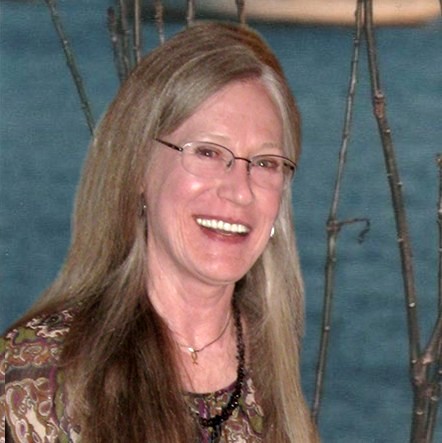
Yasser El-Sayed

Yasser El-Sayed has recently published fiction in Natural Bridge, The New Orphic Review, The Marlboro Review, Red Truck Review, and elsewhere. His short stories have been nominated for the Pushcart Prize in 2014 and in 2008. Yasser’s prose focuses upon the intersections of Arab and American experience both in the Middle East and the United States, including the contemporary American South. He is at work on a short story collection, Casket and Other Stories. Yasser is a physician and professor at Stanford University where he specializes in high-risk obstetrics. He lives and writes in Northern California.


The Australian took his chances at the airport. The German couple decided at the last moment to go with him. The Chinese tour group was gone, too, piling into a minivan which appeared one morning outside the hotel lobby, the driver cross-checking the names with a printed list on his clipboard.  Even most of the vacationing locals packed up and headed home, although a few families remained in the beach houses on the hotel grounds. Nabil would pass them as he walked along the stretch of beach leading up to the hotel proper, hearing fragments of Arabic. There remained a scattering of families from around Egypt, the parents drinking coffee quietly on the small patios overlooking the beach, watching their children play by the shore.

Every afternoon Nabil  saw more army convoys rumbling west down the highway; at night he and Joanne heard the percussive whomp whomp of military helicopters overhead, and the shriek of fighter aircraft flying low. In their isolation, these random bursts of mechanized rage were Nabil and Joanne’s connection to the unrest in the cities. The country was in turmoil; the police had disappeared from the streets; in every major city the violence was escalating. Cell phone coverage was intermittent at best, the Internet cut off entirely. Joanne got through to the American embassy in Cairo and requested advice. She was informed that if she could get to the consulate in Alexandria, perhaps something could be done to get her out of the country. But there were no guarantees beyond that. The prospect of making their way into Alexandria seemed terrifying especially to Nabil. He imagined them caught up in the tempest, their American passports a liability, his place of birth an added vulnerability. The thought that he could somehow be separated from Joanne only heightened the anxiety. They agreed to wait things out. Another week of vacation ahead of them, after which they could reconsider. An eerie quiet had settled over the resort premises. A skeleton crew of staff remained, and the service dwindled to non-existent. In the hotel proper the halls were deserted. When Nabil and Joanne wandered through one morning, the marble foyer echoed with their footsteps.

They availed themselves of long walks on the beach. In the distance the white sand dunes merged into the expanse of desert. The sky was a diaphanous blue and unyielding. By midday the glare of the sun was blinding. As they ambled west across a stretch of dunes, away from the shoreline and further into the desert, a lone hawk circled overhead, hunting, unnerving Nabil, escalating the feeling of emptiness around them.

Joanne laughed at his trepidation and said, “I’m entirely at peace with this isolation.”

“It’s the plains in you,” Nabil said defensively. “Space for the sake of space. But even you left.”

“I loved the space,” she said pensively. “I hated the emptiness. I’m not empty here. I imagine you as a little boy. It’s incredible to me that you were once here.”

“I don’t remember much.”

“You choose not to remember much.”

“I told you what I remember. One day she was here, the next she was dead. I was a kid. I remember a funeral and sometime later, weeks, months, I’m not sure, leaving. Flying across the world to a new country. All this put to rest. No pictures saved. Nothing.  A clean break. What would you remember of your childhood without stories and pictures?”

He pulled up suddenly.  His eyes scoured the empty skies as the screeching of a fighter jet somewhere in the distance shattered the still air.

To be continued….

“Sojourn,” Part Six, A Serialized Story by Yasser El-Sayed

In Arts & Letters, Creative Writing, Fiction, Humanities, Literature, Short Story, Writing on June 29, 2016 at 6:45 am

Yasser El-Sayed

Yasser El-Sayed has recently published fiction in Natural Bridge, The New Orphic Review, The Marlboro Review, Red Truck Review, and elsewhere. His short stories have been nominated for the Pushcart Prize in 2014 and in 2008. Yasser’s prose focuses upon the intersections of Arab and American experience both in the Middle East and the United States, including the contemporary American South. He is at work on a short story collection, Casket and Other Stories. Yasser is a physician and professor at Stanford University where he specializes in high-risk obstetrics. He lives and writes in Northern California.


At the end of another of these evenings—there were no other evenings to be had—Neena invited them to linger. “A nightcap. Just the three of us,” she said.

Abu-Bakr had left earlier than usual that night, exclaiming loudly that there were signs the unrest was spreading and he had to attend to business, and then he strode military style out of the bar. To which Joanne had quipped within ear-shot, “Working. Imagine that.”  But with him gone, both Joanne and Nabil could relax and enjoy their moment with Neena.

Behind the bar, Neena poured Nabil a scotch, a cognac for herself.

“Just mineral water for me,” said Joanne.

Neena tilted her head, eyed Joanne for a moment. “I have noticed this before, but now I am sure. My dear, you are pregnant.”

Nabil smiled, nodded.

“Mon Dieu! Félicitations! Mabrouk!””

“Thank you,” replied Joanne stiffly.

“Not exactly planned,” added Nabil.

“A little complicated,” Joanne said.

Neena made a face and shook her head. “How complicated is it? The process well understood, no?” She laughed, said, “Ah oui. Je comprends. You are not together, really together in that way. Not married.”

She poured Joanne’s mineral water. “No alcohol. The hardest part about being pregnant,” she said. “But I still adored it. How far? Can’t be too far?”

“Just barely,” said Joanne. “A few weeks only.”

“My daughter. She is in Canada now. She came back many years ago after her father died, for his funeral. Agreed to see me. Briefly.”

Suddenly the glass panes in the doors to the terrace rattled as if they might shatter in their frames and there was the roar of fighter jets overhead, low and deafening.

Joanne cried out and Nabil gathered her in. For a moment they both looked to the ceiling.

Neena slumped in her seat; her face sank in her hands. “Who knows what will happen,” she said, when the jets had passed. “Will it be better? True, everywhere across the country it is terrible. Getting worse. No freedom. No future. But here in this small corner of the desert we drink, we sing, we dance. A small victory. My only victory.”

Joanne watched her closely. She had told Nabil that she liked Neena. She saw in Neena something of her own restlessness. She reached out and touched Neena’s hand. Neena responded, immediately taking Joanne’s hands in her own. “You could leave,” Joanne said. “Your daughter in Canada. How lucky she would be!”

Neena, who had been taking in Joanne with a warm gaze, threw back her head and laughed. “My daughter would not be feeling lucky,” she said. “I am too careless for her. She is like her father. He comes from a family of masons. They all love laying one perfect brick on top of the other. Careful does it. Careful does it. Doesn’t really matter what is being built, just as long as it’s straight and strong and the pieces all fit perfectly and the mortar isn’t making a mess. No unseemly edges. I am too unseemly.”

She stopped and shook her head, her face suddenly lit up with the urgency to make a point. “Did I tell you my mother was from Paris? I kept in touch with a few relatives there. And yes I thought at one point I might go there. I did in fact. Not for long though. I came back. You think you are from somewhere. Convince yourself of that. But not really. Suddenly you are just where you are. I caught the plane to Paris in Alexandria. I hadn’t been back to Alexandria for a long time, but each time I return I hardly recognize it. No. Seriously. It just keeps getting worse. I keep thinking how can it get worse? How can it get more crowded, more polluted, dirtier, more open sewers, more grime everywhere? How? But it does. It always surprises me. A talent really. An amazing gift for decline. So then I was really excited to leave. And when the plane took off, I said finally out of here. Gone. And I land in Paris and there is cooler air, cleaner streets, order, a beginning and end to the day. Each morning I get up in my little rented apartment. I make coffee, but it isn’t like the coffee I know. It isn’t mud. I tell myself I am sure I can find my coffee. I just have to look and find an Arab or Turkish store. In Paris they must be everywhere. Outside the streets are cleaner, there is no dust, no open sewers. El dinya nadeefa. Al aalam nadeef. No donkey carts pulling an open carriage with wares. But people hardly look at you as you walk past them. And there is the texture and smell of metal everywhere, steel, the glint of it, sunlight distilled to nothing, sharp as a knife, without warmth. That is what starts to strike me. The night rolls in. The lights go off. Each person in their own small cubicle. Their own prison. Isolement. That’s when I start to miss this place. Miss the desert. The smells, the merging of night and day, of water and sand, of past and present. I returned. Je suis revenue. Alone. Hina fee beity. Home.”

Joanne shifted in her seat. “I can see why you love this place,” she said. “Besides, with the restaurant you have no time to feel lonely.”

Neena brought her hands, which had been flying about, back to her lap. “The restaurant is failing. It has been for too long. No one cares anymore about the battlegrounds and the cemeteries. Those that did are themselves dying. I imagine them fading away in nursing homes all over gray Europe. Mon Dieu—but there were so many good years!”

“Your husband,” said Nabil. “How about him? How did he feel about this place?”

“My late husband. No. We lived apart for many years before he died. He stayed in Alexandria, with my daughter.”

A wave of irritation swept over Nabil. “So you just moved out here. One day you said, “I’ll leave my husband and daughter and move to the desert, build a restaurant.”

Joanne threw Nabil a hostile glance, but if Neena took offence at his words she didn’t show it. “You must understand some of this,” she said. “This not belonging. Then also perhaps I was not meant to be a wife to any man.”

She took the empty glass from Nabil’s hand. “Another?”

Nabil shook his head. She walked their glasses to the sink behind the bar.

“But I did not always feel alone here. One summer, soon after I started the restaurant, I met a young woman.” She had her back to them, rinsing the dishes. “She was from Alexandria. She used to stop by the restaurant every summer she was here with her family. She spoke French, which was nice. She was beautiful and lonely and there was a certain understanding. An attraction we couldn’t deny. We became close. I would look forward to the summers just to see her. We’d exchange letters the rest of the year. She wouldn’t let me visit her in Alexandria, but here, here it was different. She hated this place, and I was her reprieve.” Neena stopped, smiled, shrugged her narrow shoulders. “Stories. Too many stories. I could keep you up all night with them.”

Nabil stood up suddenly.  “It’s late,” he said. “We should go.”

Neena regarded him for a moment. “Not so late, Nabil. Mais bien. I’ll see you tomorrow night, though,” she said, then added quickly, “and please, please the cemeteries. You can’t leave without seeing the cemeteries.”

To be continued….

“Sojourn,” Part Five, A Serialized Story by Yasser El-Sayed

In Arts & Letters, Creative Writing, Fiction, Humanities, Literature, Writing on June 22, 2016 at 6:45 am

Yasser El-Sayed

Yasser El-Sayed has recently published fiction in Natural Bridge, The New Orphic Review, The Marlboro Review, Red Truck Review, and elsewhere. His short stories have been nominated for the Pushcart Prize in 2014 and in 2008. Yasser’s prose focuses upon the intersections of Arab and American experience both in the Middle East and the United States, including the contemporary American South. He is at work on a short story collection, Casket and Other Stories. Yasser is a physician and professor at Stanford University where he specializes in high-risk obstetrics. He lives and writes in Northern California.


Nabil stood by the French windows and gazed out onto the beach. “We’ll stay put for now,” he said. “We’re safe here. Who knows what it will be like in Alexandria.” He imagined the airport shut down, the pressing crowds at the terminals.

“I don’t know,” said Joanne. “We’ve come all this way. We can still travel around like we’d planned. The whole country can’t be shut down.” She paused. “Besides, who knows when we will have this time alone together again? Just the two of us.”

Nabil said nothing.

“Nabil. You know we’ll need to decide soon,” she added hesitantly. “By the time we get back to the States.”

Nabil nodded. His eyes tracked the turbulent wake of a police motor boat, flag fluttering furiously in the head wind, as it cut through the waters off the hotel, then disappeared behind a swathe of massive sand dunes along the coastline.

They were at Neena’s every evening, something to occupy the long nights. They had come to recognize the few remaining tourists from the resort.  Abu-Bakr would always swagger in late, perch on his barstool and survey the scene. He never touched alcohol, just ordered a steady stream of coffee, tea, and water.  Neena made her grand entrance, the same every night, stopping by each table, lingering with Nabil and Joanne. At the end of one evening, struggling to sustain the mood amid her dwindling clientele, she set up a microphone at the far end of the bar, and sang along with Edith Piaf, Frehel, Jacqueline François, Gilbert Bécaud. She had a nice voice, swayed to the music as she sang, and seemed to lose herself for a while. By closing time she was clearly drunk, steadying herself against a chair, propping her wispy frame against the bar, pouring another glass of her favorite red wine.

But both Nabil and Joanne looked forward to the nightly stroll to Neena’s, the sun low on the horizon, the searing white bleakness of the desert in midday now transmogrified by the setting sun into a tumultuous blaze of red and orange, and a turquoise hue coalescing in the distance.  And once there, his first drink ordered, Nabil would feel the weight of the day’s anxieties lift slowly.  He was secure in the cool depth of the bar. Even Abu-Bakr – his way of imposing himself into their midst – ebbed into the shadowy recesses of the bar.

“This is what happens when you stay and stay and stay, so long that you can’t imagine leaving,” Neena confided to Nabil and Joanne. She was tearful, her face distorted in the dim light. “I am going bankrupt. Soon I will have nothing! Nothing!” She said this holding her arms out to them, a moment later clasping her hands to her chest, a broken sob escaping her lips, her head hung despondently.

“My dear Neena! What’s all this?’ said Abu-Bakr, dislodging himself from the bar stool and pulling a seat up to their table. “Why the tears. Always tears. Then too much laughter. Then tears. It is always one or the other with you, no?”

“The country is on fire,” she snapped at him. “And what are you doing? You the big police chief. You and your friends who got us to this point.”

“We each do what we can. Why I am here every night, no?” replied Abu-Bakr curtly. “Keeping a close eye on everything. Everything! Keeping chaos from swallowing us up. Making sure no trouble-makers hiding here or there. Provocateurs. Destroyers of our country.”

Joanne laughed out loud. “Really?” she said. “That’s your job? That’s what you’ve been doing?”

Nabil glared at her and shook his head sharply.

Abu-Bakr smiled. “We adapt with the times, no? Just like our friends in America. They dance with us when the times are good, waltz away when the times are bad. Proclaim their innocence. Always their innocence.”

Neena shrugged, stood up abruptly, and said to Abu -Bakr “Vous m’ennuyez!” Then she brushed past him. She changed the CD.  Tempo now fast and furious.

“The Gypsy Kings.” Joanne exclaimed happily. “Bamboleo. I love that song,”

Abu-Bakr rose, held a fat paw out to her. “So a dance?” he asked. “Nothing cheers old Neena up like the sight of good friends dancing.”

“I think we are all too tired for dancing,” Nabil interjected.

Joanne didn’t respond; she kept her arms folded in front of her.

Abu-Bakr ignored Nabil and persisted, “Or are you afraid? Will you run away?”

Joanne stared at him.

“Maybe another time,” said Nabil.

Joanne laughed, rolled her eyes. “Alright,” she said. “Why not?”

She swung past Abu-Bakr, and he turned on his heels after her, caught up to her and pulled her close  He tried to spin her around the small open area in front of the bar, moved jerkily with her across the floor, his glistening face almost touching hers. She rested her hands gingerly on his shoulders, avoiding the two large stains soaking his shirt.  Like a songbird on the back of a lunging rhinoceros, Nabil thought.  He started to get up, but Neena waved him down, took it upon herself: “Let her go you buffoon!  Dégoûtant! She’s drowning in your sweat.”

Abu-Bakr pulled up short, let his hands fall off Joanne’s waist and stepped back. He turned to Joanne, palms up, and offered an exaggerated bow.

But Joanne glared at him, turned on her high heels, and strode straight to Nabil.  “Air,” she said.

“Perhaps I am not a good enough dancer,” said Abu-Bakr as he followed Joanne back to the table. “I am, as they say, self-taught.”

“You are, as they say, a fool,” said Neena sharply. “Take her out to the terrace Nabil. A nice breeze. Away from all this.”

“Let’s go,” said Nabil. He tried to put his arms around Joanne’s shoulders, but she shrugged him off.

On the terrace, in the moonlight, Nabil turned his back to the sea and leaned against the wooden railing. He said, “That fat fuck.”

“Oh please,” Joanne said. “I could give a damn. Just with all of you sitting around it felt like a spectacle.”

She turned away from him and clicked to the end of the terrace. Nabil followed, stood behind her, neither close nor far.

She peered out over the Mediterranean, white caps out there.  Finally, she said, “I don’t mind staying here.” She held herself tight. “I don’t mind one bit. I don’t need to go anywhere else.”

“Let’s see how things go,” Nabil said.

“It’s okay,” she said.

“Maybe there will be trains out of Alexandria and we can get to Cairo. Figure things out from there.”  He put a hand on her waist.

She shook her head, brushed windswept hair from her eyes. “It’s just fine with me to stay for now. Can’t imagine that it’s any better anywhere else.” She took a deep breath and peered out at the water that was dappled in the moonlight.  “Let’s go back in.”

In the bar the German couple was sitting at a table in the back and talking with worried intensity. The Australian hiker had dozed off in a corner, his sunburned legs and scruffy boots stretched out in front of him, his chin on his chest. A small contingent of Chinese tourists had stood up from their table to leave. Neena was nowhere in sight.

Abu-Bakr was sitting on his stool at the bar and waved them over. He looked at Nabil and then Joanne, a contrite expression on his face.  “I’m very sorry. Very sorry. I did not mean to upset. Truly. Please sit a while” The television was broadcasting images from Cairo, where traffic was moving smoothly across the Kasr El Nil Bridge. At the bar, Nabil placed himself between Abu-Bakr and Joanne.  “Nothing about the protests?” Nabil said.  “Never a word.”

Abu-Bakr laughed. “This orchestrated coup against the government will never work,” he said. “They like to bark; they like the sound of their own barking. When did you say you were last in Egypt?”

“I left when I was ten. A long time ago,” said Nabil.

“Yes, you have been gone too long. You don’t understand Egyptians anymore. I, sir, have lived here my whole life. I have been in this town for more than two decades! I know police work and I know people. These people you see demonstrating on television, it means nothing. Anyway, believe me, people are fundamentally cowards, even here in Egypt. They say a lot of things. Yes, sometimes they even do things. Sometimes terrible things. Then they run away. They pack up, they take their daughter, their son, whomever, and they run away. Sometimes to America, no?”

“I’m not sure I understand what you’re getting at,” replied Nabil.

Abu-Bakr adjusted his rear in the stool, which groaned, and he gazed past Nabil at Joanne, who was sitting stony faced. “My dear Joanne, my dear, All-American Joanne.  I am not the enemy. Please understand, I speak the truth. We here are complacent. Of course we are. We have been tamed by the whip, by poverty, by the centuries, by the cattle prod in the rectum. We are a hollow shell of a people, the detritus of history. There is nothing we won’t accept. Beat us and we will crawl. Yell and we will scuttle away.”

Joanne waited a few beats and said, “I think that’s pretty pathetic.”

He yawned and stretched his arms out in front of him. He seemed pleased with his monologue.

“Well,” Nabil said.  “It’s getting late.”

Abu-Bakr looked at Joanne and a sleepy smile crept over his face. “You are a believer, no? You believe in human energy, in the transformative ability of the human spirit, in the capacity of man to alter his fate and the course of human events. A can-do spirit! Manifest Destiny! The western frontier! How precious. How American. Here we have been slogging the same slice of narrow terrain for thousands of years. That is our frontier.”

The cleaning lady came out from the kitchen carrying a large rubber container for the dirty dishes. Abu-Bakr waved her over. “An example,” he said to Joanne.

“No,” Nabil said. “That’s enough.”

“But please,” Abu-Bakr said. “It is important I make things clear.  Mounira—come over here.”

Mounira approached hesitantly, a wavering smile on her face. “What! You think I am going to bite?” Abu-Bakr said to her. “You speak a little English, yes. I just have a question for you.”

Mounira nodded.

“My friends here are visiting from America. You know USA! USA! USA!”

Mounira nodded again. “They want to know the way to the Statue of Liberty. You know the famous one I’m talking about. Where is it exactly? Down the highway somewhere?”

“Yes,” she said.

“Before Marsa Matrouh?”

“A few miles before. A couple of towns before.”

“Thanks Mounira,” said Abu-Bakr. “Now that wasn’t so bad!”

After she left he turned to Joanne and said, “See what I mean. Statue of Liberty. She has no clue. Just, yes sir. Absolutely sir. Anything you say sir.”

“That’s absurd,” said Joanne. “She’s probably thinking you are an idiot. She’s humoring your stupidity.”

In the shadows by the kitchen entrance, Nabil saw Mounira staring back at them.

Abu-Bakr wagged a finger at Joanne. Under his breath he chanted: “USA!  USA!”

“That’s enough,” Nabil said.

To be continued…

Claire Hamner Matturro Reviews Robert Bailey’s “Between Black and White”

In Arts & Letters, Book Reviews, Books, Creative Writing, Fiction, Humanities, Justice, Law, Law-and-Literature, Literature, Novels, Southern Literary Review, Southern Literature, The Novel, The South, Writing on June 15, 2016 at 6:45 am

ClaireHamnerMatturroforSoLitRev

Claire Hamner Matturro, a former lawyer and college teacher, is the author of four legal mysteries with a sense of humor. Her books are Skinny-Dipping (2004) (a BookSense pick, Romantic Times’ Best First Mystery, and nominated for a Barry Award); Wildcat Wine (2005) (nominated for a Georgia Writer of the Year Award); Bone Valley (2006) and Sweetheart Deal (2007) (winner of Romantic Times’ Toby Bromberg Award for Most Humorous Mystery), all published by William Morrow. She remains active in writers’ groups, teaches creative writing in adult education, and does some freelance editing. Visit her at www.clairematturro.com.

The review originally appeared here in Southern Literary Review.

Following the success of his powerful debut legal thriller, The Professor (Thomas & Mercer 2015), Bailey offers a second, stunning story in the series. In his novel Between Black and White (Thomas & Mercer March 2016), Bailey establishes beyond doubt that he is an author to be read and reckoned with.

Between Black and White is closely tied to Bailey’s first book and involves several of the same characters. In The Professor, readers were introduced to aging former law professor Tom McMurtrie, who returns to the courtroom after being forced out of his teaching position at The University of Alabama School of Law. Tom teams up with Rick Drake, an impetuous young attorney and his one-time student. Together, in The Professor, Tom and Rick pursue a tense and dangerous wrongful death lawsuit.

While Tom and Rick dominate The Professor, another lawyer—Bocephus Haynes, or Bo—steps into that story at critical times to boost and support Tom. Bo is a bigger than life black University of Alabama football star who blew out his knee and, instead of retreating into depression over the loss of a pro football career, goes to law school. Tom is one of his professors, and the two develop a close friendship.

As much as The Professor was Tom and Rick’s story, Between Black and White is Bo’s story. In the prologue, we meet Bo as a five-year-old who watches members of the Ku Klux Klan lynch his beloved father. From the opening pages of Chapter One—which finds a disheartened, angry Bo getting drunk on the anniversary of his father’s brutal lynching—to the shocking, violent conclusion, Bo leaps off the pages with boldness and spirit. But like all well-crafted fictional heroes, he is flawed, and his failings land him in a courtroom as the sole defendant in a capital murder case.

His near fatal flaw: hunger for revenge. Obsessed with punishing the man who lynched his father, Bo shapes his professional life around that goal. After graduating with honors from The University of Alabama School of Law, Bo turns down offers at prestigious law firms. He returns to his home town, Pulaski, Tennessee, to a solo law practice as the city’s only black attorney—and to pursue the man he holds responsible for his father’s death. Too many people in the city of Pulaski know Bo is driven by his fixation to punish the man he blames for his father’s lynching. His wife has even left him because his drive to avenge his father’s murder has endangered their two children.

Since Bo was five years-old, he has blamed Andrew Davis Walton, a powerful businessman in Pulaski, for his father’s death. Once the Imperial Wizard of the Tennessee Knights of the KKK, Walton shook off the robes of the Klan and made millions in the stock market. Known as the “the Warren Buffett of the South,” he tried to make amends for his Klan actions.

Yet people have a long memory when it comes to the Klan—and no one more than Bo. Though Walton was hooded the night five-year-old Bo witnessed the lynching, Bo recognized Walton’s voice. But no one in law enforcement was ever willing—then or later—to prosecute Walton on the testimony of a child claiming to identify a voice.

On the 45th anniversary of his father’s lynching, Bo gets drunks in a local bar. Walton and Maggie, Walton’s aging, beautiful wife and one of the local landed aristocracy, seemingly accidentally run into Bo in the bar. Face to face with Walton, Bo threatens him in front of witnesses by quoting the Old Testament’s “eye for an eye.”

After the bartender breaks up the confrontation, Walton steps outside. But before Bo leaves the bar, Maggie returns to tell him that Walton is dying. She asks that Bo leave her terminally ill husband alone. Bo staggers out, lamenting to himself that Andy Walton was going to die before he could bring him to justice.

That night, someone shoots Walton and stages a mock lynching at the site where Bo’s father was lynched four and a half decades before.

Physical evidence points directly at Bo. Everyone in the legal community knows he had the motive and opportunity. Even before Bo recovers from his hangover, he is in jail. The prosecutor, a fierce woman attorney who has butted heads with Bo in court before, decides to seek the death penalty.

Pulaski was the birthplace of the Ku Klux Klan, and many residents and officials in the city strive to live that down. So when the murder, with its roots in the old KKK lynching, puts Pulaski and its Klan heritage back in the spotlight of national media, city officials attempt to pressure Bo to plead guilty and avoid the further media circus of a trial.

Bo refuses. He is innocent of murdering Walton—or so he claims, though no one in law enforcement believes him. He calls on his former law professor and close friend, Tom, to defend him. Reluctantly, Tom agrees and retains local attorney Raymond “Ray Ray” Pickalew, another former U of A football player. Rick, who is now Tom’s law partner, is dragged into the case as well.

Though Tom and Rick sense a setup, they struggle against multiple roadblocks—and the overwhelming physical evidence of Bo’s guilt—to determine who had a motive to kill Andy Walton and frame Bo. During their quest, Tom is assaulted and sidelined by his injuries; Ray Ray is a drunk with an attitude, and young. Overwhelmed Rick is left to unravel the seemingly unrelated pieces of a complex, emotional puzzle. Villains from The Professor return to taunt and threaten Tom and Rick, adding further intricacy to the plot.

Thus, Bailey sets up the classic formula of a legal thriller. Mind you, formula is not used as a derogatory term here. Shakespeare’s sonnets were formula and critics do not dismiss them in disparaging terms. As used here, formula simply refers to the structure and elements that define a genre or a literary style. In a legal thriller where the focus is on a criminal defendant on trial for his or her life, readers expect the odds to be stacked against the defendant. They expect the defense attorneys to be complicated, troubled, overwhelmed and conflicted. And, owing perhaps to the Perry Mason standard, readers expect a surprise witness and revelation near the close of the trial which allows the defense attorneys to prevail and the defendant to be found not guilty.

There are, of course, notable exceptions to this basic formula. Lincoln Lawyer and A Time to Kill come to mind. Both of those legal thrillers had guilty defendants, yet with vastly differing twists at the end.

Given the formulaic elements at play in the genre, a successful legal thriller author has to avoid creating a stale, mechanical plot that reads like a written version of a paint-by-number canvas. Yet the author has to keep the plot within the confines of the genre or publishers will scratch their heads and throw the manuscript on the reject pile.

In other words, authors working within a prescribed genre face a kind of delicate yet vicious circle. On the one hand, they must write within the parameters of their chosen genre. But, on the other hand, they have to do something new, exciting and fresh. It’s kind of like saying: Color within the lines. But don’t color within the lines.

Within this catch-22, the author has to give the reader something more—and something different. This Bailey does, and does with a bang.

Yet, having said that much, to say much more about the surprising, original twists of Between Black and White risks spoiling the plot. Thus, this reviewer will only observe that per the Perry Mason/John Grisham model, an unexpected witness with a startling revelation does pop up at the end of the trial. But just when the reader settles back to relax and believe that justice has been achieved, something complicated, violent and utterly surprising happens.

It isn’t just that Bailey knows how to surprise us, but he also writes well. Very well. Make no mistake on that point. His sentences are clear, clean, distinctive, and when they need to hit with a punch, they do. His pacing is excellent—an edge-of-the-seat, can’t-put-it-down momentum fuels the storyline from the prologue to the climatic ending. His characters are well-drawn, his sense of place and world-building excellent. The plot is intricate, but believable. There is redemption for some characters, resolution for others—and those that deserve neither are left to flounder in their own hell. Justice is achieved, albeit in a confused, violent way.

In short, Bailey wrestles what in less talented hands could have been a formulaic story into something wholly fresh, engaging, and ultimately rich and satisfying. This is a book you want to own and read.

“Sojourn,” Part Four, A Serialized Story by Yasser El-Sayed

In Arts & Letters, Creative Writing, Fiction, Humanities, Literature, Writing on June 8, 2016 at 6:45 am

Yasser El-Sayed

Yasser El-Sayed has recently published fiction in Natural Bridge, The New Orphic Review, The Marlboro Review, Red Truck Review, and elsewhere. His short stories have been nominated for the Pushcart Prize in 2014 and in 2008. Yasser’s prose focuses upon the intersections of Arab and American experience both in the Middle East and the United States, including the contemporary American South. He is at work on a short story collection, Casket and Other Stories. Yasser is a physician and professor at Stanford University where he specializes in high-risk obstetrics. He lives and writes in Northern California.


By the time the food came, kabobs for Nabil, chicken for Joanne, the bar had filled up slightly.

“Not so good about the airport,” said Nabil. “I’m thinking this was all a mistake. We shouldn’t have come.” His mood turned dark. He stared at his plate, a worried expression settling on his features.

They recognized some of the faces from the hotel – Joanne pointed out a German couple they had met briefly in the hotel lobby, also a young man with unruly sandy hair and an Aussie T-shirt.  A comforting handful of others sat in groups of two or three; most looked like tourists from Europe and Asia.

Nabil’s food was mediocre; the kabobs too few and too lean. Joanne had chosen well, her chicken perfectly regal on its bed of puree. But the atmosphere had picked up with the chatter of customers and soon a more comfortable air had settled in, the events moving across the country momentarily receding into the background.  Nabil, relaxed, his fears abating, found he could eat. Joanne dug into her food, stopping only to watch as a woman they had not noticed before strolled through the dining room and chatted with a few of the guests. Behind her, Nabil saw, to his surprise, the police chief, Abu-Bakr. He had stepped back from the woman once she started conversing with the diners, and made his way to the bar counter, settling himself on a stool, a few feet away from their table. His trousers, taut over each substantial thigh, looked more than uncomfortable, his girth spilling over his belt as he sat hunched over on the barstool. He glanced over at Nabil and Joanne, nodded his head in acknowledgement. Joanne regarded Abu-Bakr briefly, waved a few vague fingers in his direction, turned her attention back to her dinner.

The woman walked into the bar. She was older, slender, small, clad in a black evening gown, silver hair tied up in a bun, a string of pearls shimmering across the pale skin of her throat. She looked overdressed for the setting, but somehow comfortable in her presentation, as if in her mind she was somewhere else, presiding over a different kind of clientele in a different kind of place.

“Neena in the flesh?” Joanne said.

They watched her move around the tables and greet patrons.  Soon, she stopped at their table.  “Hallo,” she said, in French-accented English. “How do you like your meal?”  Her face was a perfect oval of carefully placed eyeliner and shadow, blush and lipstick, nice but still failing to hide her age.

Joanne said, “The roasted chicken is divine.”

“Very nice,” Nabil lied. “Looks like things are picking up a little.”

“You must be American,” Neena said. “We get so few Americans these past few years. British, French, Italian, German, even Canadians, everything. But no Americans. It’s a shame. Malheur de la politique.” She had a throaty voice, a habit of stretching out certain words for emphasis, her mannerisms a little too expressive, as if this were a speech she had practiced and delivered countless times before. “Le monde est vraiment petit n’est-ce-pa? No need for all these problems.”

Abu-Bakr overheard the exchange, laughed, leaned over in their direction and said, “Neena, perhaps our American friends could inform us as to why in god’s name they hate us so much?”

Ignore him,” said Neena. “Unfortunately I have to tolerate his presence.”

“We are American,” said Nabil to the woman. “But my father’s family was from around here. Used to own land around here.”

Neena nodded distractedly. She placed a hand lightly on Nabil’s shoulder, smiled warmly at Joanne. She assumed a faraway expression, two fingers floating momentarily across her temple as if to smooth out the fine worry lines. “Well I was raised in Alexandria, but I vastly, vastly prefer this place. I’ve been here so, so long now. Fell in love with the desert. Madly. The terrible, wonderful emptiness of it all. And then history of this town. The wars that raged.” She pointed east in the direction of the old battlefields of El Alamein.

She stopped, ran a finger absent-mindedly across a loose strand of hair. “What’s the family name?” she asked.

“Awad,” replied Nabil.

Something like recognition passed briefly over her face.  She covered with more verbiage. “You should come back. You should come back every night. There is nothing else to do around here. We can talk more. Nous pouvons parler toute la nuit! I need to understand more why you are here.” And with that she bade them a good evening and paused for a moment by Abu-Bakr at the bar.

Joanne saw her exchange a few words with Abu-Bakr, and both glanced quickly in their direction. Then Abu-Bakr rose from his seat and followed her back into the dining room.

Nabil was looking around the bar trying to catch their waiter’s attention.

“When did you say the airport closed?’ Nabil asked the waiter after he finally brought them their check.

“Just few hours ago. Tonight.”

“Any news on when it will re-open?” Nabil said trying to sound more nonchalant than he felt.

The waiter shrugged. “No one knows,” he said. “No one knows anything.” He nodded, looked past them into the dining room, his attention focused there where it was busier.

When they had stepped outside the restaurant, Joanne said, “What did she mean by that comment?”

“Who? By what?”

“Neena. Understanding why we are here?”

Nabil shrugged, “Who knows. Just her English turned around.”

A few cars were parked at odd angles in the small dirt cul de sac at the front of the restaurant. There was something that felt especially familiar to Nabil about this place. He’d sensed it the moment they’d first come upon the restaurant. It was more pervasive now, perhaps the alcohol, the quality of the light approaching dusk. He stood for a moment looking around him. Behind them was the sea, the sound of waves breaking on the shore. Before them, a dirt path, bordered on either side by a barren terrain of sand and scrub grass, led back to the highway. Joanne held herself close to Nabil as they ambled along.

“Somewhere here,” Nabil said. “It looks different now. I think we were standing near here. She was trying to cross.”

They’d stopped at the edge of the highway.  The sun was low, and Joanne shielded her eyes from the dusky red glow off the desert.

“It’s more built up now. I remember an empty road, desert, lots of open space.”

Joanne looked around. The small storefronts on either side of the highway, the few scattered homes nearby, the level road ahead. She laughed and said, “built up?”

They doubled back down the highway away from the town and towards the resort. Nabil spotted the convoy first. “Look,” he said.  The armored vehicles, at first hazy in the distance, were rapidly approaching them, then passing, throwing up clouds of dust. Green tarp covered the beds, but the back flaps were open, revealing rows of seated soldiers, rifles at hand. The last vehicle stormed past with a heart-seizing blare of its horn. They froze and watched until the convoy was out of sight, speeding in the direction of Alexandria.

To be continued…

“Sojourn,” Part Three, A Serialized Story by Yasser El-Sayed

In Arts & Letters, Fiction, Humanities, Literature, Short Story, Writing on June 1, 2016 at 6:45 am

Yasser El-Sayed

Yasser El-Sayed has recently published fiction in Natural Bridge, The New Orphic Review, The Marlboro Review, Red Truck Review, and elsewhere. His short stories have been nominated for the Pushcart Prize in 2014 and in 2008. Yasser’s prose focuses upon the intersections of Arab and American experience both in the Middle East and the United States, including the contemporary American South. He is at work on a short story collection, Casket and Other Stories. Yasser is a physician and professor at Stanford University where he specializes in high-risk obstetrics. He lives and writes in Northern California.


The resort was running a limited dining service, the disturbances having left the establishment nearly vacant. The front desk directed them to a small restaurant called Neena’s, within walking distance. The path from the beach house curved along the back of the hotel compound, then past a fading parking lot to a dusty road lined with towering, spindly palm trees, their reed-like motion in the sea breeze at once resilient and unsteady.

Neena’s was located a half mile down the highway, barely in town, which wasn’t much—a few miles of low-flung limestone homes and stores, narrow roads. The restaurant was a clean, modest affair; a small dining area led into a dimly lit bar. There Joanne chose a table by the bar and ordered a mango juice. Nabil ordered a Stella, the local beer for more than a century. The bartender drifted between the dining area and bar, straightening out the wrinkles on the tablecloths, and making subtle adjustments to the seating, in no apparent hurry to get their drinks. The decor was simple, mostly paintings of ancient Cairo and Alexandria during the Abbasid period depicting men in turbans and flowing gowns gathered around crowded market-places, or camped in clusters in an expanse of desert outside the Citadel. Scratchy music played overhead.

“That’s the singer Umm Khalthoum,” Nabil said. “I grew up on this. She was my father’s favorite. In New Jersey after we first arrived in America it was all he listened to. Every night when he thought I was asleep. He would sit there in the living room in the dark with the same record playing night after night, filling the place with cigarette smoke.”

“More actual detail about him than you have ever shared, Nabil,” said Joanne.

At home, they lived two hours apart. He saw Joanne on weekends. She was a financial analyst at a firm in San Francisco. He lived outside Sacramento, a technical writer at a civil engineering company. They shared a fondness for books and movies, restaurants, wine. He loved her apartment in the Marina district, the flood of sunlight from the expansive bay window, overlooking the Pacific and a slice of the Golden Gate Bridge.  He would drive to San Francisco most Friday nights, head back home late Sunday.  The distance kept them together, they always said. The pregnancy an accident, both of them momentarily unhinged, relying just this once on a timely withdrawal. Coitus interruptus interrupted.

Their drinks came. “What is she saying?” asked Joanne.

“Love. Despair. A little more love. A touch more despair.”

“Of course he was thinking of your mother.”

“Maybe,” said Nabil.

“What does that mean? His young wife drowns on vacation. Leaves him with a small boy to raise alone. He is devastated. Escapes to America. A new life.”

Nabil sipped his beer. “My mother hated it here. Did I tell you that?”

Joanne shook her head, regarded him. “No. As I recall the official line is you don’t much remember anything about her.”

Nabil looked away, eyed the array of liquor bottles along the glass shelves above the bar. He had kept reminiscence of his time here as a child at a distance, even to himself. Joanne, at one point frustrated by his resistance, had eventually abandoned her forays into the topic. Still, but for Joanne, there would have been no trip here. “You get on a plane,” she had said, and meant that he spare her the drama. She’d been right, and now that they were here, it felt absurd not to allow himself the freedom to give more form and substance to his memories, share more with her.

When his beer was finished, Nabil tried to catch the bartender’s attention, but the man was in the dining area, his back to them. Nabil sighed and leaned back in his seat. “She was from Alexandria, a city girl, private school, French sprinkled in with the Arabic at home. Piano lessons. Marble foyer with ridiculous plaster busts of Beethoven and Mozart. All the pretenses. My father tormented her for it. ‘Why Merci? What’s wrong with Shokran?’ Here he reclaimed his place. Returned to his roots. I’d feel it. Everything harder. Coarser. His language changing. His laugh.”

Joanne said, “All you ever told me is that you came to the U.S. with him. That you picked up and moved every few years after that.”

“We were not close and we rarely spoke of her or of this place.

“You said he never married again, but there must have been someone, another woman sometime along the way?”

“No. Not that I saw. And we never stayed in one place for long.  New Jersey, Detroit, Pittsburgh, Saint Louis. He avoided everyone.”

“Even other Arabs?” Joanne said. She played with an edge of her napkin, looked up at Nabil.

Especially other Arabs. He kept to himself. Listened to Umm Khalthoum.  He drove a cab, worked night shift as a janitor, manned convenience stores. Anything.”

“Such a depressing childhood, Nabil,” she said. “I thought mine was bad enough.”

Nabil shrugged.  “He was not a bad father. He provided everything I needed. But yes, what I remember most are gray skies, cold winters, run down apartments in random cities.”

A young waitress, hair in a pony tail, dressed in a simple tan skirt and green blouse brought over quarters of pita bread in a basket and small saucers of hummus and tahini and olives. Nabil handed her his empty beer glass and ordered a scotch, but the girl didn’t seem to understand what a scotch was.  He pointed to the bottles of liquor behind the bar, tried again, the girl listening carefully.  “Ah,” she said, nodding quickly before seeking out the bartender who had just come in from the dining room.

Joanne leaned back in her seat, she was wearing jeans and a white button down that left her arms bare. “It’s so peaceful here,” she said. “Was there truly nothing your mother liked about this place?”

Nabil shook his head. “She loathed the summers. Long months of nothing but desert and sea, and the three of us alone.  Even as a kid I’d sense it as she prepared for the trip out here. Each piece of clothing ironed and folded and neatly packed in suitcases. Like she was putting some part of herself in storage.”

Joanna crossed her arms, hugged herself, rubbed her arms gently with each hand.

“Are you cold?” Nabil asked. “I can have them lower the air conditioning.”

Joanna shook her head. “No. I’m fine. Just trying to imagine things, that’s all.” She scooped up a dollop of hummus with the pita bread and offered it to Nabil. He waved it away, and she plopped it into her mouth.

“There was one time I do remember clearly. She was holding my hand, looking back at him.”  His father in the sun and haze, white shirt, sleeves rolled half way up his arms, black trousers. “I was pulling back from her, and she kept holding onto me, tugging, cajoling me to cross the highway with her until she finally just gave up. And we stood there at the edge of the road and watched him approach.”

The bartender brought over Nabil’s scotch. Nabil thanked him, gestured at the empty bar and asked, “Where are your customers?”

The bartender waved in the general direction of the hotel. “People try to go away,” he said. “But airport shut down.”

To be continued…

Claire Hamner Matturo Reviews Robert Bailey’s “The Professor”

In Arts & Letters, Book Reviews, Books, Fiction, Humanities, Justice, Law, Law-and-Literature, Literature, The Novel, Writing on May 25, 2016 at 6:45 am

ClaireHamnerMatturroforSoLitRev

Claire Hamner Matturro, a former lawyer and college teacher, is the author of four legal mysteries with a sense of humor. Her books are Skinny-Dipping (2004) (a BookSense pick, Romantic Times’ Best First Mystery, and nominated for a Barry Award); Wildcat Wine (2005) (nominated for a Georgia Writer of the Year Award); Bone Valley (2006) and Sweetheart Deal (2007) (winner of Romantic Times’ Toby Bromberg Award for Most Humorous Mystery), all published by William Morrow. She remains active in writers’ groups, teaches creative writing in adult education, and does some freelance editing. Visit her at www.clairematturro.com

This review originally appeared here in Southern Literary Review.

Move over, John Grisham, there’s a new kid on the legal thriller playing field.

Robert Bailey, an Alabama trial attorney and graduate of The University of Alabama School of Law, returns the kickoff for a 100 yard touchdown with his debut novel, The Professor. The football reference is apropos as the protagonist of The Professor was a member of Alabama’s famous 1961 National Champion football team, and the book opens with a guest appearance by venerated Alabama football coach, Paul “Bear” Bryant. Alabama’s 1961 national championship was the first of the six that Bear Bryant would win as head coach of the Crimson Tide, and the fighting spirit of that 1961 team resounds throughout the novel.

But one does not need to be a football fan or even a fan of legal thrillers to enjoy Bailey’s book as its writing is smooth, captivating and, in all the right places, emotionally moving—all the more impressive in that Bailey only took a single creative writing class while an undergraduate at Davidson College. According to Bailey, “We wrote four short stories, and the critiques I received were mostly positive.  It was definitely a confidence builder and a whole lot of fun.”

How did he go from taking just one creative writing class to writing a riveting debut of a legal thriller?

In law school, Bailey served on the law review, an honor generally reserved for those who can write well. Yet there is a football field of difference in writing an analytical, academic, footnoted and blue-booked law review article and composing an edge-of-your-seat legal thriller.

The bridge, then, between writing like a lawyer and writing like a top-drawer novelist was part inspiration, part studying other novels, and part the hard work of rewriting, redrafting, and revising. Bailey’s inspiration came from growing up in Alabama as a Bear Bryant fan and from wanting to write about a brash young “bull-in-a-china-shop” new attorney—a character whose experiences resemble Bailey’s own days straight out of law school. As for studying other legal thrillers and books, Bailey has said, “Yes, I have learned a lot from reading other novels.  Also, Stephen King’s instructional memoir, On Writing, was a big influence and inspiration.” And as for the hard work of revision and rewriting—it took Bailey eight years to finish The Professor, though he was practicing law, trying cases, and raising a family at the same time.

Bailey, a history major and a Huntsville, Alabama, native, is quite the Bear Bryant fan and a football historian. These personal interests enrich The Professor and play into Bailey’s creation of the lead character, Professor Thomas Jackson McMurtrie.

In some ways McMurtrie, the protagonist, is an unusual leading man. For one thing, he is 68 and his glory days on the famous Alabama football team of 1961 are long behind him. He faces serious health issues, mourns his late wife, and has been unfairly manipulated out of his position as an evidence professor at the University of Alabama School of Law into an unwanted early retirement. One of his former students—and a man he had called a friend—was complicit in the scheme to push him out as a law professor, and the betrayal wounds McMurtrie deeply.

Yet, in other ways, McMurtrie is the ideal leading man—for one thing his skills and instincts as a trial attorney form the perfect balance to his headstrong, volatile former student, Rick Drake, when they take on a trucking company in a wrongful-death case. McMurtrie, named after Thomas “Stonewall” Jackson, epitomizes what we would want in both a leading man and a lawyer—he is somewhat of a modern Atticus Finch, albeit with some different demons. Bailey writes in his author’s notes that he wanted to create a character that was a “man of exceptional integrity, strength, and class.” This Bailey has done.

Rick Drake, the lawyer version of a yin to McMurtrie’s yang, is more of what readers might expect in legal thrillers. A young lawyer, brash, over his head, yet passionate about his client and the case, Drake has more gumption and zeal than skills. He needs the experience and even temperament of McMurtrie. Drake also needs an expert in evidence, and McMurtrie literally wrote the textbook on evidence law in Alabama.

But here’s the rub: Drake and McMurtrie have a turbulent history. Drake was McMurtrie’s law student and the two came to blows—literally—after Drake hotheadedly dashed his trial advocate team’s chances of winning a national trial competition. McMurtrie was the team’s coach. After a video of the angry clash between the professor and the student was posted on YouTube, a conniving new dean at the law school used the incident as part of his plan to push McMurtrie out of his tenured position.

So, let’s just say Drake and McMurtrie are not best friends.

Yet each man knows the value of the other. Drake has the vigor McMurtrie fears is waning in himself. And McMurtrie has decades of knowledge and the calm, deliberate skills Drake lacks.

Thus, out of these conflicts and contrasting personalities, the characters of McMurtrie and Drake form an integral part of what makes The Professor work so well. This is a book about people, vividly drawn and fully realized, overcoming obstacles within themselves—as well as obstacles placed in their way by unscrupulous others.

Superb writing and engaging protagonists, though, are not the only things that make this debut so compelling. This is a bam-bam-bam book as far as plot goes, with plenty of action in and out of the courtroom. In the opening chapters, there is a horrific and fiery automobile crash, betrayal, suicide, murder, blackmail and enough suspense to keep the reader turning pages all night. There’s a good reason Winston Groom, author of Forrest Gump and another Alabama writer, calls The Professor “[g]ripping from the first page to the last.”

In a tightly woven plot that unfolds naturally in well-paced scenes, McMurtrie refers a former girlfriend (from the days before his marriage) to Drake for representation in a wrongful-death action after her granddaughter, daughter and son-in-law slam into a speeding eighteen-wheeler and die. McMurtrie recommends that she retain Drake in part because Drake grew up in the town where the lawsuit will be tried and McMurtrie believes in the home-court advantage. Yet McMurtrie also believes Drake can win the case—and he wants to help the struggling lawyer.

The defendant trucking company’s owner is an unscrupulous yet tough adversary who has the power to pervert the quest for hard evidence. Drake and McMurtrie have to prove in a court of law what they know is true—the trucking company had a consistent, deliberate pattern of forcing its truckers to speed in order to clock more miles and make more money for the company. Yet the trucking company’s owner doesn’t play by any rules, which gives him an apparent upper hand in disposing of key witnesses and the paper trail of evidence. Compounding the pressure on Drake and McMurtrie, the trucking company’s attorney is none other than McMurtrie’s former friend who betrayed him and helped oust him from his teaching career.

The stakes go beyond money. The plaintiff wants the world to know the truth about the accident—that her family died because of a concerted, greedy corporate plan that turned its eighteen-wheelers into dangerous weapons.

McMurtrie wants to avenge himself against his former friend and later betrayer, and he wants to help his former girlfriend. Not incidentally, he hopes to prove that even at 68, “The old bull still has a little gas in the tank.” And, maybe, he hopes to get his job as a law professor back. He definitely wants to help Drake and set matters right between them.

Yet in some ways, Drake is the one who has the most at stake. The YouTube of his shoving contest with McMurtrie painted him as an uncontrollable hothead and cost him his position at a big law firm. He is barely earning his rent as a solo practitioner. He questions himself. If Drake is going to survive as an attorney, he needs a courtroom victory. But beyond building his career, he needs to get right in his own head and prove he is capable of being a winning trial attorney—one who will not blow up and ruin the case as he did during the law school trial team competition. Drake is a young man, not fully formed as a man or an attorney, and this trial will make or break his maturation.

The trial scenes resonate with realism. Naturally so, given that the author is a practicing attorney and a shareholder with the law firm of Lanier Ford in Huntsville. Interestingly enough, the author defends—among others—trucking companies. Similar to his character Drake, Bailey was a winner in trial advocacy competitions while in law school.

The Professor introduces the character of Bocephus Haynes, McMurtrie’s favorite former student. Bocephus plays an important yet secondary role in the story as ally and emotional support, but he is set to return in a leading role in the sequel, Between Black and White. A third manuscript, now in the works, will take Drake and McMurtrie back to Tuscaloosa, and Drake’s story line and growth as a character will be explored further and in more detail.


“Sojourn,” Part Two, A Serialized Story by Yasser El-Sayed

In Arts & Letters, Creative Writing, Fiction, Humanities, Literature, Short Story, Writing on May 18, 2016 at 8:45 am

Yasser El-Sayed

Yasser El-Sayed has recently published fiction in Natural Bridge, The New Orphic Review, The Marlboro Review, Red Truck Review, and elsewhere. His short stories have been nominated for the Pushcart Prize in 2014 and in 2008. Yasser’s prose focuses upon the intersections of Arab and American experience both in the Middle East and the United States, including the contemporary American South. He is at work on a short story collection, Casket and Other Stories. Yasser is a physician and professor at Stanford University where he specializes in high-risk obstetrics. He lives and writes in Northern California.


They drove to the beach house and unloaded. Joanne changed into her one-piece—her body still trim—crazy crimson against her pale skin, her backside like a split peach. If she felt poorly with the pregnancy, she had not mentioned anything to Nabil. She unlocked the French windows, hurried out onto the rectangular tiled patio, rolling desert all around them except for the back of the house which opened to the sea, a crescent of blue.

The desert drifted into the cool expanse of water. “A slow ebb of pain,” said Joanne.  From where they stood it was no more than 100 yards across the white sand to the sea.  The beach was deserted, the midday air uncomfortably dense.

“You should come with,” she said.

I’ll watch you from here,” Nabil said. How beautiful she looked to him, her auburn hair radiant in the harsh sunlight.

She shrugged, turned her back to him, moved briskly across the sandy beach to the water’s edge. She waded in, barely a ripple, water lapping hip level.  He thought of his mother, his father by her side, their bodies leaning into each other, braced against the breaking waves.  His parents had seemed close at that moment, almost intimate.

“Bathwater!” Joanne called.

Unbidden, the foggy northern California coastline came to mind, the place he’d first met Joanne, Steve Pullman’s 35th birthday party at Half Moon Bay.  She was as exotic to him as he was to her, the daughter of a Scotch-Irish rancher from the Oklahoma Panhandle, her hair settling gently against her pale shoulders, which were bare in a strapless dress. You could hear an accent when she talked about it: “I got tired of the red dirt and scrub grass and rednecks and wandered west.”

Joanne cut a path into deeper water past a patch of seaweed.  She twirled and waved to him, dove in, did a flawless breast-stroke parallel to the coastline before turning back to the shore.  Nabil had experienced a surge of anxiety watching her, but it was transient, immediately suppressed.

He jumped at the sound of knocking on the front door: a stranger.  He shielded his eyes from the sunlight to get a better look. The man was short, heavy set, dressed in a loose short-sleeve shirt, embroidery on the sides, gray slacks. Not a uniform per se, but still something official about his appearance Nabil thought.

“I hope I’m not disturbing,” the man said in surprisingly good English. “Sorry for the trouble. A routine security check.”

Nabil, uneasy by the man’s presence, said, “Is there a problem?”

The man laughed pleasantly. He had his sunglasses perched atop his head, a stubbly double chin. “No. No. Please. Not at all. You arrived very late last night. My name is Mr. Abu-Bakr. My security officer didn’t have a chance to do the standard passport inspection at the registration desk, that’s all.” On his face an expression of regret for the tedium of official protocol. “I am very sorry to bother you. It will just take a moment.”

Nabil stepped aside to let the man enter. “If you give me a moment, I’ll find our passports.”

“Please,” said Abu-Bakr.

In the bedroom he peered out the window at the beach for Joanne and didn’t see her. He grabbed the passports from the drawer where he had slipped them under some folded clothes, then hurried back out to the entranceway, determined to finish up with Abu-Bakr as rapidly as possible and check on Joanne.

The man hadn’t moved. He leafed quickly through Joanne’s passport, more slowly through Nabil’s.

“The lady,” Abu-Bakr asked, “is she here?”

“She went for a swim,” said Nabil. “Are we done? I need to check on her.”

“Certainly,” said Abu-Bakr, then peered past Nabil as Joanne appeared in her bathing suit, the material still wet, molded against her breasts, snug against the gentle fullness of her hips. Nabil wished he could wrap the towel which hung from her shoulders around her.

“I think she is now found and safe,” Abu-Bakr said pleasantly, handing the passports back.

“Indeed I am,” she said, looking unperturbed. “And who are you?”

Nabil admired her confidence. So unlike his own untidy emotions. The hardest place is the “in between”—not tourist, no longer native.

“My dear lady. I am Captain Lutfi Abu-Bakr, the head of the police here.”

“Impressive! The hotel has its own police department?” said Joanne

Abu-Bakr regarded Joanne for a moment, impassively at first, then he broke into a grin, said with a laugh, “No, just for the entire city, unfortunately. A much more trivial responsibility.”

“A routine security check,” said Nabil. “I think we’re done?”

Abu-Bakr nodded, his gaze lingering on Joanne, though he spoke to Nabil. “Do you still speak your native tongue or have we lost you completely?”

“Itsharafna,” Nabil said.

“The pleasure was all mine,” replied Abu-Bakr in English, now eyeing Nabil directly.

“Strange character,” said Joanne after Abu-Bakr had left. She roped the beach towel around her hair. “Not sure he wanted to leave.”

“He was enjoying the view,” said Nabil. He pulled her close to him, her swimsuit damp against his shirt, kissed her.

“Well that’s just not right,” whispered Joanne, her tongue sea-chilled, darting between his lips. “I almost feel like I cheated on you.”

In the bedroom she finished peeling off her bathing suit, pressed herself against him. He ran his lips between her breasts, tasted the salty skin down to her navel and below where part of him now resided, the child that he’d never wanted.

To be continued…

“Sojourn,” Part One, A Serialized Story by Yasser El-Sayed

In Arts & Letters, Creative Writing, Fiction, Humanities, Literature, Short Story, Writing on May 11, 2016 at 6:45 am

Yasser El-Sayed

Yasser El-Sayed has recently published fiction in Natural Bridge, The New Orphic Review, The Marlboro Review, Red Truck Review, and elsewhere. His short stories have been nominated for the Pushcart Prize in 2014 and in 2008. Yasser’s prose focuses upon the intersections of Arab and American experience both in the Middle East and the United States, including the contemporary American South. He is at work on a short story collection, Casket and Other Stories. Yasser is a physician and professor at Stanford University where he specializes in high-risk obstetrics. He lives and writes in Northern California.


In Sidi Abdel Rahman, off the main highway, the roads were gutted with potholes, cracked asphalt. Nabil parked the car outside a cavernous store with wares spilling out onto the broken sidewalk: pots and pans strung together on a frayed rope, plastic soccer balls bundled in torn netting, brightly colored shirts and gowns on a metal rack and below that an array of sandals and cheap toys. Near the entrance stood a bulky, rusted ice cooler, on its front Arabic letters and a picture of a smiling boy holding an ice cream cone. The manager at the hotel had directed them here – the soobermarket he had said, pointing due east.  “A short walk,” he said, but then offered up his old Fiat.

The shopkeeper, dressed in flip flops and a sun-bleached galabiya, was parked on a plastic chair in the shade, smoking.

Nabil turned to Joanne, “OK. You’re sure you know what you need?”

Joanne nodded and swung her legs out the car. She was dressed in a short skirt that had seemed fine at the resort this morning, less so now.

El salam Alaykum,” Nabil said, greeting the shopkeeper.

He was an older fellow, bald, slight of build under his faded gray gown.  He stubbed his cigarette and spoke, a voice smoldered for years in tobacco smoke: “Alaykum el salam.” He eyed Joanne for a moment, gestured them inside with a wave of his hand.

Darkness.  The smell of coriander and cumin, of closed spaces, of spices desiccated in the heat and turned to dust. The shopkeeper followed them and sat in a dark corner behind the counter. A fan whirred loudly on a shelf above his head. Joanne strolled casually down the cramped aisles, her sandaled feet audibly shuffling on the dusty floor.

They had landed in Alexandria yesterday just as the demonstrations were erupting. Their limousine driver skirted the city center to avoid the crowds, but they could see billows of black smoke in the distance, the sounds of sirens piercing the late afternoon. And even coming down the desert highway to this forlorn place, 80 miles from Alexandria, they’d spotted a military convoy heading the opposite direction, towards the trouble. Joanne had smiled bravely when Nabil squeezed her hand. He’d spoken to the limousine driver in Arabic, tried to sound confident of his place in the country despite a surging wave of panic.

The limousine driver glanced at them over his shoulder. “Tell the lady not to be nervous, we are friendly people.”

Out of the city, she rolled down her window better to take in the darkening desert around them, the smell of gasoline fumes and sulfur slowly ebbing, a waft of eucalyptus. She lifted her face to the sky, pulled her hair back, her profile dim in the failing light. At the resort she had slept soundly. He on the other hand remained ill at ease, wandered the sparsely furnished rooms of their rented beach house on the grounds of the resort, unsettled less by the unrest around them than by the fact that he was now back in the one place his father had sworn they would never return to.

Joanne took her time scrutinizing the available goods – canned tuna, rice, beans, coffee, tea, milk, fresh bread – all displayed in no particular arrangement. She perused the vegetable stand examining cucumbers and tomatoes that looked smaller, their skin less vivid than back home. She raised a cucumber to her face and inhaled.

“Nice?” he asked.

“A little ripe,” she said.

“I’m going to step outside.”

No, she didn’t look nervous at all.  He left her looking at a curious array of detergents and cereal boxes, and with a nod to the shopkeeper, who raised a cracked, calloused palm, wandered outside.

He could feel the density of the air lift immediately, a sudden release from the stagnant miasma inside. The store was on the corner of a narrow dirt road that abutted the highway. In the other direction on both sides were high limestone walls, interrupted by the green, orange or blue wrought iron gates of private homes. Across the street, a young girl dressed in a loose fitting gown and a headscarf stood outside an open gate and hosed down a concrete doorstep, her bare feet wet in flip flops. Behind the gate Nabil caught a fleeting glimpse of a dusty front yard, a woman in a darkened hallway.

He strolled uphill to the end of the dirt road. From there he could peer down the desert highway and the heat percolating off the sweltering asphalt. It cut across the desert like a vaporous snake, slicing through a landscape sparsely populated with brightly colored Bedouin homes scattered amidst sand and sky, framed by a dusty sliver of horizon. Just east of here was El Alamein and its lonely mausoleums for the dead—soldiers from all over Europe—monasteries of scrubbed limestone and creeping bougainvillea. To the west was the long drift of sand-swept highway past the seaport of Marsa Matrouh and on into the ancient military outpost of Tobruq in Libya, the sand dunes along the coast like white mountains in the distance.  He recalled how he had described the town to Joanne, as much of it as he could remember. West of Alexandria, white sand beaches, war cemeteries in the distance, grave stones like yellowed teeth erupting from the earth. A remote outpost on a long desert highway, you could drift right past it, a fleeting glance in the rear-view mirror. He had in his mind for years.

Joanne had probed and he had told her about his childhood summers there, his father’s connection to the land, his mother’s drowning, an elusive notion of return, one step out of reach, chasing a shadow.

You get on a plane she said blandly. She was from the unhindered expanse of the Oklahoma Panhandle, steely skies as far as the eye could see. Fearless.

Nabil was startled to hear Joanne calling.  He turned abruptly and saw her outside the store, waving. How simple it now seemed, their transport across geography and memory.  He trotted back down the hill.

“I need to pay the man,” she said. “I can’t understand him.”

Inside, the shopkeeper pondered him. “Masri?”

Nabil replied that he was, yes, Egyptian.

Wah el hanem, Ajnabiya?” the man asked more kindly, handing Nabil the change, nodding his head at Joanne.

Amrikania,” Nabil said. Then for some reason he felt the need to explain, “I live there.”

“My sympathies,” the shopkeeper replied in Arabic.

To be continued….

The Sad Career of Justice Stephen Breyer

In Academia, Arts & Letters, Book Reviews, Books, Essays, Humanities, Jurisprudence, Law, Politics on May 4, 2016 at 6:45 am

Allen 2

This essay originally appeared here in The Imaginative Conservative.

It is an unfortunate truism that the longer one remains in the legal profession, the less educated he becomes. The law, as the saying goes, is a jealous mistress: She does not permit solicitors to invest time in rival passions—e.g., philosophy, history, and literature—let alone cultivate the niceties and nuances of expression that distinguish the lettered from the unlettered. It is tough to read Dickens and Henry James when you have got billable hours to meet, and slogging through appellate cases rewards only a rudimentary, distilled understanding of principles that great minds have reworked for centuries. There is simply not enough time for punctual judges and practicing attorneys to master biblical hermeneutics or study Shakespeare, and developing the whole person—learning to live well and wisely—falls far beyond the scope of legal practice and proficiency.

Justice Stephen Breyer was off to a promising start to an educated life when he studied philosophy at Stanford University and then attended Oxford University as a Marshall Scholar. He graduated from Harvard Law School in 1964 and began his legal career as a clerk to Justice Arthur J. Goldberg of the United States Supreme Court. In 1967 Breyer entered the academy—first Harvard Law School and later Harvard’s Kennedy School of Government—where he focused on administrative law. His scholarship was neither groundbreaking nor exceptional, but it was sufficient to secure him a full professorship and to demonstrate a superior understanding of an unpopular subject. Breyer was, at this time, becoming the welcome exception: a literate lawyer.

Then things went wrong, gradually and by slow degrees. Breyer took the bench on the United States Court of Appeals for the First Circuit in 1980 and, thereafter, became less interesting and bookish and more programmatic and expedient. Perhaps he was overworked or overtired, inundated with cases and bogged down by the mostly mundane tasks of judging. Perhaps, as should be expected, he paid more attention to his docket than to the philosophers who had enriched his thinking during his youth. Perhaps he never wanted the life of a scholar and previously had spilled his ink to game the ranks of the professoriate, an arduous scheming no longer necessary once he had achieved a position with life tenure and nearly unparalleled retirement benefits. Perhaps a want of constructive idleness and leisured meditation hardened his contemplative faculties. Whatever the reason, Breyer’s scholarship fell off, his writing suffered, and the lamp of his imagination went out. He poured his soul into cases.

Breyer did manage to exhibit flashes of his former acumen in Active Liberty (Vintage, 2005), but his latest book, The Court and the World (Knopf, 2015), notwithstanding the cheering pother it’s elicited, is a snoozer and not particularly edifying. The introduction consists of the kind of tedious mapping and framing that only the student editors of law reviews would tolerate. Breyer separates the book into four parts. Part I addresses the protection of civil liberties during our age of terrorism and constant security threats; Part II, statutory interpretation; Part III, the interpretation of treaties and the lawmaking powers of the president and Congress; and Part IV, communication between jurists from different jurisdictions across the planet. Two animating themes underlie each part: the meaning and import of the rule of law in a globalized world and the incorporation of foreign trends and norms into the legal system of the United States. The latter theme involves principles of comity, or the idea that one jurisdiction will give weight, deference, and authority to the acts, orders, or rulings of another jurisdiction. Breyer’s thesis is that “the best way to preserve American constitutional values (a major objective that I hold in common with those who fear the influence of foreign law) is to meet the challenges that the world, as reflected in concrete cases on our docket, actually presents. Doing so necessarily requires greater, not less, awareness of what is happening around us.”[1] Standing alone, this declaration seems benign and uncontroversial, hardly worth sustained critique or impassioned defense. Yet something is rotten in the state of Denmark, and arguments that seem nonthreatening are not always as they seem.

This essay will analyze Breyer’s attempts to realize his thesis in The Court and the World and raise questions regarding whether he has, in the way he celebrates the transnational turn in judging, betrayed his own provinciality and proven his own misunderstanding of foreign developments as he puts paternalistic presuppositions on display. Rather than modeling a greater awareness of “what is happening around us”—his stated goal—Breyer demonstrates a profound unawareness of international trends and norms, not to mention a paternalistic view of the role of American courts in relation to the cultures and values of peoples beyond American borders.

I will suggest, as well, that Breyer advocates approaches to judging that, if widely followed and accepted, could fundamentally undermine his notions of comity and international interdependence; thus, his jural prescriptions, such as they are, ought to be approached with extreme caution if not rejected outright, at least until a better case can be made for them.[2] Although Breyer purports that he “does not pretend to offer any ultimate or even provisional solutions”[3] to the challenges presented by globalization, or that he “merely surveys what is for many an unfamiliar and still-changing legal landscape,”[4] he champions certain methods and viewpoints that lead inexorably to predictable and definite outcomes.[5]

My chief criticisms are threefold: (1) Breyer affirms the obvious and, thus, contributes nothing meaningful or constructive to our ongoing conversation about the role of foreign law in domestic courts; (2) he defends a transnational turn in jurisprudence at the expense of the liberal, democratic principles he purports to value; and (3) his lack of historical and philosophical understanding, or his refusal or inability to employ that understanding in the service of rational argument in this book, undermines his reliability and undercuts any lasting merit his arguments for transnational adjudication and jurisprudence might enjoy. These are not my only concerns about Breyer and his latest book, but a commentator nervous about the prestige and grandeur of the High Court must shrink from enumerating every failure of one of its most eminent justices. As I am not motivated by pure animus or set in the way of critique, I do praise Breyer’s work where praise is due, in particular regarding his sensible apprehensions about the scope of presidential power, especially during wartime.

The gravamen of Breyer’s argument is that because of communications technology, ease of travel, and globalization, the influence of foreign law on United States courts is on the rise. That is indisputable and self-evident. No reasonable person doubts that we live in “an ever more interdependent world—a world of instant communications and commerce, and shared problems of (for example) security, the environment, health, and trade, all of which ever more pervasively link individuals without regard to national boundaries.”[6] It does not follow from this obvious given, however, that a knowledge of foreign laws and legal institutions should be accompanied by their binding application in the courts of our nation, or that any hesitance to embrace unprecedented levels of extraterritorial-based experimentation with the domestic legal system constitutes, in Breyer’s words, “stand[ing] on the sidelines” or a “withdraw from the international efforts to resolve the commercial, environmental, and security problems of an increasingly interdependent world.”[7] Such language borders on bad-faith and casts doubt on Breyer’s credibility, integrity, and motivation. After all, Breyer does not attempt to explain or even address the potential arguments of his opponents, who are never named in the text (unless they are his colleagues on the bench), nor does he concede when his opponents’ points are valid. Instead, he militates against straw men and caricatured positions that, in his telling, stand in the way of necessary progress and experimentation. Lest I surrender to the same dishonest tactics here, I turn now to key examples from Breyer’s chapters to substantiate my three presiding criticisms.

It is helpful at the outset to note a structural dichotomy that frames Breyer’s argument. “[T]he important divisions in the world,” Breyer opines, “are not geographical, racial, or religious but between those who believe in a rule of law and those who do not.”[8] With this tidy summation Breyer presses into two sides all the world’s religious varieties and cultural multiplicities, each with their own normative codes and modes of participation in government and politics. The risk of Breyer’s oppositional pairing is plain: inattention to nuanced realities, simplification of complex systems and beliefs, reduction of complicated theories, neglect of rivaling perspectives, and so forth. That is not to say such casual coupling has nothing to recommend it; sometimes easy heuristics and graspable models are helpful. Consider, for instance, Aristotle’s ten predicates or the hypothetical State of Nature popularized by Hobbes and Locke. Yet a justice on the United States Supreme Court who urges American judges “to understand and to appropriately apply international and foreign law”[9] should avoid the type of essentializing that subsumes important, distinguishing characteristics of diverse legal systems under two broad categories, one good and one bad. This simplistic dichotomy does manifest injustice to those cultures and communities—many of them more traditionalist, religious, localist, and conservative than their European and American neighbors—which consider themselves to be governed by the rule of law, however different that version of the rule of law may seem from the standards and structures figured in Breyer’s operative paradigm.

To his credit, Breyer is upfront about his assumption that “the United States will remain a preeminent world power, due to its military and economic strength and the prestige of certain features of American life, including our long experience in creating, maintaining, and developing a fairly stable constitutional system of government.”[10] And he is likely right on that score as a matter of factual probability. He also exhibits an endearing pride when he intones that the American legal system has “allowed a large multiracial, multiethnic, and multireligious population to govern itself democratically while protecting basic human rights and resolving disputes under a rule of law.”[11] Yet inherent in his commendation of the American legal system is the unexamined presumption that the legal norms of other, more traditionalist places and cultures are inferior to those of the United States or else poor foundations for the rule of law in practice. “When, therefore, I use the frequently heard term interdependence,” Breyer avers, “it is with these assumptions”—i.e., those assumptions which affirm the superiority and staying power of the American legal system–“firmly in mind.”[12] These assumptions, however valid they may seem at first blush, signal a telling paradox, if that is the right word. To wit, Breyer admires the tolerance and accommodation made possible by liberalism and democratic constitutionalism, but in prioritizing tolerance and accommodation he would open the American legal system to their opposite. Developing in tandem with the proliferation of transnational norms and institutions is the equally rapid spread of radicalism and reaction,[13] exemplified most notably in Islamic terrorism and Sharia Law but evident to a lesser degree in the pseudo-nationalist movements and organizations percolating across Europe. Breyer’s call for the adoption of foreign laws and legal norms could mean the eventual obliteration of the very flexibility and latitude that enable jurists like him to look abroad for instruction and guidance.

Breyer is right in one vital respect: Interdependence has a “particularly worrisome manifestation”[14] as a result of national-security threats, the judicial response to which has been to increase presidential powers at the expense of constitutional fidelity. Breyer’s thesis for Part One, which addresses national security and presidential power, is laudably direct and succinct:

“This Part will show the Court steadily more willing to intervene and review presidential decisions affecting national security, even to the point of finding a related presidential action unconstitutional. What is notable is that this progression toward assertiveness has occurred even as threats to national security have become more international, indefinite with respect to manner, and uncertain with respect to time. Indeed, threats today are less likely to arise out of a declaration of war by another sovereign power and more likely to be posed by stateless international terrorist networks. They are also more likely to last for many years, perhaps indefinitely. The change in the Court’s approach together with the change in circumstances is, I would argue, no mere coincidence.”[15]

What follows this thesis is less direct and succinct as Breyer undertakes to supply an abbreviated history of the political-question doctrine and its implications for the scope of executive authority.

To prove the relevance and significance of the political-question doctrine to current affairs, Breyer briefly discusses Zivotofsky v. Clinton (2012),[16] a recent case in which the United States Supreme Court (hereinafter sometimes referred to as “the Court”) determined that issues pertaining to passport regulation were not purely political questions outside the province of the judiciary. The principal focus of this section, however, is historical, surveying with sweeping strokes everything from Abraham Lincoln’s suspension of habeas corpus to Woodrow Wilson’s prosecution of dissenters during wartime to Harry Truman’s seizure of steel mills, which were private property. Accordingly, Breyer analyzes United States v. Curtiss-Wright Export Corp. (1936) (which held, inter alia, that the President of the United States is constitutionally vested with plenary executive authority over certain foreign or external affairs; that the powers of external sovereignty enjoyed by the United States federal government do not depend on affirmative grants of the United States Constitution; and that the United States Constitution, and the laws passed pursuant thereto, have no force in foreign territory);[17] Korematsu v. United States (1944) (which held that the executive exclusion orders providing for the detainment of Fred Korematsu, an American citizen of Japanese descent, were constitutional);[18] and Ex parte Quirin (1942) (which upheld as constitutional the jurisdiction of U.S. military tribunals—created by executive order—used to prosecute German saboteurs in the United States).[19] Under these cases, the president enjoys wide discretion and privilege in matters of national security and foreign affairs. If Breyer’s summaries of these cases repay rereadings, it is because they are useful guides to landmark cases—but no more useful than any of the student briefs or encyclopedia entries that can be found online.

To his credit, in my view, Breyer rejects the guiding rationale in Curtiss-Wright, Korematsu, and Quirin and finds wisdom in Youngstown Sheet & Tube Co. v. Sawyer (1952), which held that the president did not possess the inherent power, purportedly in the public interest, to order the Secretary of Commerce, during wartime, to seize the private property of steel companies that were wrangling over labor disputes. Youngstown Sheet, whatever else it stands for, represents a stark departure from the mode of absolute deference to executive power adopted and perpetuated by the Court in earlier eras.[20] Why did the Court reverse course in Youngstown Sheet? According to Breyer, “Judges are inevitably creatures of their times, and the Steel Seizure justices had just seen totalitarian regimes destroy individual liberty in Europe. While they did not necessarily fear the rise of an American dictator, knowledge of what happened to other democratic societies must have been sobering.”[21] This explanation would have us believe that a mere awareness of foreign affairs—not fidelity to the terms of the Constitution—motivated the decision in Youngstown Sheet. Although the events of World War One and World War Two and other twentieth-century geopolitical struggles no doubt loomed large in American memory, Justice Black’s opinion in Youngstown Sheet, as well as the concurrences with that opinion, grounded themselves in the text of the Constitution, not in extraconstitutional historical analysis or commentary on current events.

Breyer acknowledges that presidents will, as a matter of course, seek to exercise vast authority to resolve urgent conflicts, but he believes the Court’s institutional duty is to ensure that executive power is prudently circumscribed. “We should,” he says, “expect presidents to make broad assertions of presidential authority, especially during an emergency, when in the rush of immediate events they face immediate problems requiring immediate solutions. The Court, by contrast, playing a different institutional role, can and must take a longer view, looking back to the Founding, across the nation’s history, and sometimes into the unforeseeable future. No matter how limited an opinion the justices try to write, their holdings will be taken as precedent, perhaps for a very long time.”[22] Looking to history and tradition to demarcate executive power is, of course, good, but Breyer appears to disregard the fact that constitutional interpretation—the way in which provisions of the constitution are read and applied by judges and justices—is embedded in historical networks and processes. A judge or justice may not undertake historical inquiry that is divorced from the text of the Constitution, which must provide the framework and serve as the source for judicial decisions no matter the era and no matter the sociopolitical exigencies. If history were to instruct judges and justices that certain provisions of the Constitution were unwise or improper, judges and justices would nevertheless be bound by those provisions and could not remake or ignore them based on their personal interpretations of historical events. Reworking or revising the text of the Constitution falls to the legislature, which is electorally accountable to the citizens, whose cultures and values, which are likewise historically informed, shape and guide the amendment process recognized in the Constitution.

Breyer suggests that the so-called “Guantanamo Bay Cases”—Rasul v. Bush (2004),[23] Hamdi v. Rumsfeld (2004),[24] Hamdan v. Rumsfeld (2006),[25] and Boumediene v. Bush (2008)[26]—represent a new trend, or “the culmination of an evolution that may continue.”[27] Advocates for some Guantanamo Bay detainees had, during the presidency of George W. Bush, begun filing writs of habeas corpus and other, similar actions in the courts of the United States, challenging the detainees’ imprisonment on foreign soil as well as the government’s position that the detainees were not entitled to, and thus not denied, access to the legal system of the United States. Although these cases reaffirmed the longstanding authority of the executive branch in certain areas, they also pushed back against executive powers, vesting in the detainees the right to challenge their detention in the legal system of the United States. These cases collectively established that individuals detained as enemy combatants were entitled to due process of law, notwithstanding their citizenship or executive prerogative, and they effectively curbed the government abuse occasioned by special military commissions and the suspension of habeas corpus. The Court ensured that the rule of law, however strained, obtained in times of war as in times of peace. The days of Curtiss-Wright and Korematsu were, the Court proved, no longer with us. Breyer attributes this development to a growing awareness of other countries and cultures. “The intrusion of the world’s realities into our national life,” he says to this end, “no longer seemed, as it once had, such an anomalous thing, justifying anomalous results.”[28]

Justice Breyer is correct that the “world’s realities” have forced a rethinking of the judicial role and judicial authority, but, again, he closes his eyes to other realities, namely, those demonstrating how constitutionally limited the judicial role and judicial authority are and must be. He characterizes the allegedly new approach as “engagement,” as if, in this particular context, it were not already the prescribed role of the judicial power under the Constitution. “Rather than sit on the sidelines,” Breyer says, “and declare that cases of this kind pose an unreviewable ‘political question,’ or take jurisdiction but ultimately find for the President or Congress as a matter of course, today’s Court will be more engaged when security efforts clash with other constitutional guarantees. It will listen to the government and consider its arguments, but it will not rubber-stamp every decision.”[29] The problem with this characterization is twofold: first, it suggests that the Court is doing something that the Constitution does not require the Court to do and ignores the possibility that the Court in earlier eras might have been acting unfaithfully to the text of the Constitution as the justices shirked their constitutional duties; and second, it could operate as a basis for validating judicial “engagement”—one might say “activism”—in other areas such as the Fourteenth Amendment, under which the Court has forged a grotesque line of precedent, supposedly emanating from the substantive-due-process and equal-protection clauses, that has less textual basis in the Constitution than the sort of judicial engagement manifest in the Guantanamo Bay Cases.

However appropriate Breyer’s concerns about presidential power may be, they are undercut by his reticence to admit that our own Constitution has equipped us with adequate remedies for the problem. He preaches that, in the future, the Court must achieve a “greater willingness to understand and take account of both the world and of the law beyond our borders,” as well as a “readiness to meet the various challenges of doing so,”[30] as though the Guantanamo Bay Cases had nothing to do with the laws within our borders and everything to do with the laws beyond our borders. Leaving aside the problematic jurisdictional and legal status of Guantanamo Bay, a military prison located within the borders of another nation—one that is not an ally of the United States—the fact of the matter is that the Guantanamo Bay Cases involved disputes over provisions in the United States Constitution and the laws of the United States. The Court did not divine its conclusions from, or predicate its rationale on, some greater understanding of the world and extraterritorial law. Thus, Breyer overstates the importance of interdependence in these cases.[31] Although it is true that “[o]ther courts and legislatures have faced and are facing similar threats to their nations’ peace and safety” and that those institutions “have engaged in similar projects to those before our Court of balancing security and liberty,” nothing those courts or legislatures say or do is binding on the courts in the United States,[32] even if their solutions, which Breyer does not specify, “serve as constructive examples that our Court could put to good use.”[33] Nothing in Part I of Breyer’s book supports this conclusion. Instead, that portion of the book reveals how the laws of the United States have, over time and despite setbacks and mistakes, worked better than foreign laws to check power grabs and mediate conflicts as the Court gradually came to adopt rather than disregard certain principles enshrined in the Constitution. If anything, foreign law in this section of the book—as evidenced by the legal architecture of the 20th century totalitarian regimes that loom in the background of Breyer’s narrative—serves as an illustration of what not to mimic and incorporate into the American system.

I pretermit examination of Part II of The Court and the World because its thesis—that courts in determining the reach of domestic statutes must consider the effects of doing so on foreign laws and practices[34]—is straightforward and unremarkable. Moreover, its lengthy treatment of the Alien Tort Statute and other such legal texts is unlikely to interest those unfamiliar with or uninterested in that subject. This section of the book, in which the focus shifts from constitutional analysis to statutory construction, bears out what Breyer means by comity. Breyer urges the United States Supreme Court, and presumably other, inferior courts, “not simply to avoid conflict but also to harmonize analogous American and foreign law so that the systems, taken together, could work more effectively to achieve common aims.”[35] This is an expansive interpretation of comity in that it encourages judges not only “to ensure that domestic and foreign laws d[o] not impose contradictory duties upon the same individual,”[36] the traditional view of comity, but also that judges “increasingly consider foreign and domestic law together, as if they constituted parts of a broadly interconnected legal web.”[37] To achieve comity, so understood, judges must familiarize themselves with foreign laws and customs and can do so through academic journals, treatises, and articles.[38] This advice gestures towards Breyer’s proposal that American judges consider themselves, and conduct themselves as, diplomats.

This proposal, which takes shape in Part III and IV, is not as brazen as it may initially seem because Breyer turns his eye on the role that treaties and other international agreements have played in the domestic legal system. A feature of international law with felt ramifications on the everyday lives and economies of domestic citizens, treaties force judges to contemplate international relationships. Presidents have, over several decades, exercised treaty powers more frequently and on subject matters increasingly more domestic. They have created new agencies that promulgate and enforce rules and regulations, thus leading to new and bigger bureaucracies. “How has the Court’s approach to the interpretation of international agreements adapted to these changes?” Breyer asks.[39] His answer, in part, is that “[i]t has become more important to find interpretative solutions that are workable, thereby showing that a rule of law itself can work.”[40] “[I]t has,” he adds, “become more important for the courts to understand the details of foreign and international rules, laws, and practices.”[41] Breyer’s substantiates this claim with discussions of child custody, international arbitration, and the delegation of authority from domestic to international bodies created by treaty or other such mechanisms.

A certain smugness inheres in Breyer’s remark that “judges who would hesitate to consider decisions of foreign courts when interpreting the American Constitution do not hesitate to consult such decisions when treaties are in question.”[42] Surely, though, Breyer knows the difference between incorporating foreign legal principles into opinions when those principles have merely persuasive value (and no binding operation) in a case and deciphering the outcome-determinative rules in treaties that are at issue in the case as well as a valid source of law under the Constitution.[43] There is a palpable difference between judges in a death-penalty case considering data about how many countries recognize capital punishment[44] and judges in a child-abduction case interpreting the Hague Convention on the Civil Aspects of International Child Abduction, to which the United States is a party. The latter activity has caused the Court to venture “into uncharted legal territories, reckoning with (and at times applying) foreign laws concerning what once were almost exclusively local matters.”[45] It stands to reason that the Court would consider how judges in other countries, bound by the same child-abduction treaty, would interpret the text of that treaty, but why should the Court therefore consider another country’s capital-punishment laws to which the United States never submitted itself, by treaty or otherwise?

Breyer is on better footing in his discussion of the mandatory arbitration provided for in international treaties, which, as they multiply, will increasingly require interpretation by American judges.[46] For obvious reasons, this method of resolving transnational commercial disputes has become more common than court litigation. “[W]hen borders are crossed,” Breyer explains, “arbitration offers the crucially important advantage of forum neutrality—parties can appear before a neutral decision maker without having to be hauled into the other’s courts. The practice is therefore particularly popular among investors in developing countries, who are often skeptical of the local court systems.”[47] It can be vexing to resolve complex disputes between private parties and nation-states for numerous reasons, chief among them being the lack of a widely accepted forum for judicial review;[48] furthermore, the jurisdictional effects of economic globalization are not yet fully known, a fact Breyer acknowledges.[49] Thus, alternative dispute resolution, including and especially arbitration, seems like an area in which Breyer could have done more clarifying and elucidating. With perhaps his strongest points coming in his chapter on arbitration, it’s a shame he spends so little time on the subject, which is rapidly evolving and becoming ever more important to the economic activities not just of governments and large corporations, but of private individuals and small businesses.

It is the matter of socioeconomic, cultural, and political evolution that betrays Breyer’s provincial paternalism. Of course times are changing. Yet when Breyer announces that “[c]hange is upon us,”[50] he seems blissfully unaware of the nature of the change. He is never recklessly explicit about it, but he appears to imply that the United States ought to follow liberal trends that he apparently sees in other countries.[51] If he is correct that “the Court will increasingly have to consider activities, both nonjudicial and judicial, that take place abroad,”[52] then, depending on what he means by “consider,” we may need to prepare ourselves for, to name one possibility, radical Islamic jurisprudence or the spread of intransigent government and messianic statism. Or if Breyer finds unpalatable the form of Islamic law that ISIS, Boko Haram, al-Qaeda, al-Shabaab, or the al-Nusra Front seek to impose on their subjects, perhaps he would prefer China’s two-child policy; India’s abolition of the jury trial; Singapore’s criminalization of littering, chewing bubble-gum, and possessing pornography; or laws prohibiting homosexual activity—some of which carry the death penalty for their violation—in countries from Afghanistan and Saudi Arabia to Dominica and Malawi. I express no opinion here on the value or merit of any such laws outside the United States of America. I raise these examples only to demonstrate the implications and potential ramifications of Breyer’s arguments, which are intended to promote a different vision.

In Breyer’s paradigm “foreign” and “international” appear to mean nothing more than Western European, since he fails or refuses to consider the legal institutions of any Asian, South American, Middle Eastern (Israel excluded), Russian, or African nations. Nevertheless, Breyer seems unaware of the direction the political winds are blowing in the actual flesh-and-blood Europe. Breyer does not strike me as one who would welcome the construction of the chain-link, razor-wire fence—authorized by Hungarian President Viktor Orban—that stretches more than 100 miles along the border of Hungary. Nor do Breyer’s views seem compatible with those of Marine Le Pen and the French National Front, or Laszlo Toroczkai, the youthful Hungarian mayor of Asotthalom, or Geert Wilders, the Dutch founder of the Party for Freedom. Breyer wants Americans to look to Europe to undermine nationalism, yet nationalism is on the rise in Europe.

The French have banned face-covering attire so that Islamic women may not wear a burqa or a niqab. The Swiss People’s Party has become increasingly popular, the Swiss having begun restricting immigration under a quotas law established by a 2014 referendum. The effectiveness and long-term viability of treaties such as the Schengen Agreement among European nations has been called into question. Secessionist movements have sprung up in Scotland, Catalonia, Flanders, and Venetia, and the United Kingdom will soon hold a referendum to determine whether it will remain a member of the European Union, whose future is in jeopardy, as pointedly demonstrated by Jürgen Habermas’s recent plea for European solidarity.[53] The unintended irony underpinning Breyer’s love affair with Western Europe is that, in urging the gradual adoption and enduring “consideration” of foreign laws by American judges, he has laid the groundwork for measures at odds with his liberal, democratic principles.

A vital sense of the interconnectedness of nations has impressed itself deeply in the imagination of certain elites in the United States. It is liable to the type of paternalism exhibited in The Court and the World. In some circles the mere mention of foreign norms or institutions confers upon opinions a prestige too quickly confounded with profundity and intelligence. Even so, the discriminating reader will find little profound in Breyer’s book. Of Breyer’s two chief shortcomings, that of stating the obvious (globalization has caused foreign law to play new roles in domestic controversies) and that of opening domestic courts to the incorporation of foreign law notwithstanding the relevant terms of domestic law or the restraints on such incorporation established by statute or the Constitution, the latter shortcoming is more damaging. Domestic law has mechanisms for dealing with foreign laws. Those mechanisms resolved most of the cases and controversies Breyer discusses in the book. Thus, Breyer hardly replenishes the field of transnational adjudication with fresh insight or makes a compelling case for the embrace of foreign law.

Even regarding the death penalty, Breyer’s advice to look to foreign law for guidance could backfire. According to Amnesty International, executions worldwide were up 28% in 2014.[54] A quick appraisal of Amnesty International’s country profiles on the death penalty reveals that those countries which have abolished the death penalty are experiencing population decline.[55] The death penalty remains popular and prevalent in emerging countries.

Despite his grand vision of judges as diplomats who divine from foreign principles the right and proper course for social action within their jurisdiction,[56] Breyer gently insists on merely humble objectives, muting the vast implications of his argument with careful qualifications such as this one:

“This book is based upon my experience as a judge. It does not survey the whole of international law or even of foreign law as it affects Americans. Nor does it comprehensively describe the instances in which courts must deal with questions involving that law. It illustrates and explains what I have seen and why I believe there is an ever-growing need for American courts to develop an understanding of, and working relationships with, foreign courts and legal institutions.”[57]

Breyer’s description here of what his book does not do is also an adumbration of what his book cannot do: no single book could survey the whole of international law or foreign law as it affects Americans; no single book could comprehensively describe the interaction of international or foreign law with American courts. Nor could Breyer speak from the perspective of someone not himself. Few people, I suspect, object to gaining a greater understanding of foreign courts and legal institutions. Yet the phrase “working relationship with foreign courts and legal institutions” remains problematic. What does it mean? Breyer’s book provides no shortage of possible answers, but the inquisitive reader will come away dissatisfied at the want of clarity.

Breyer’s arguments, finally, are as nothing without the sonorous prose of a Justice Holmes or Justice Cardozo. Anyone could have written this book, which should have been set apart by the fact that its author is a sitting justice. Breyer tells us nothing any close observer of the Court or the legal system could not have said and likely would have said with superior skill and rhetoric. He teases us with passing mention to interactions that are “typically invisible to the general public,”[58] but those interactions remain equally invisible in the book; there are no details about backroom deliberations, about how or why judges and justices compromise their hermeneutics or jurisprudence in the face of international pressure or as a result of some “global” perspective. We’re not told about our Supreme Court justices’ private discussions, research methodologies, philosophical influences, reading habits, or reliance (or non-reliance, as the case may be) on law clerks, amicus briefs, historical documents, or foreign scholarship.

No working judge or lawyer should read this book because most of its subject matter is already recognizable in everyday legal practice to anyone with a basic awareness of professional trends. Those without a legal background will find nothing here that is not already presented more skillfully and comprehensively in casebooks or textbooks. Breyer’s simplistic method (“look abroad, friend”) would have unintended consequences incompatible with his liberal and democratic sensibilities. The Court and the World is a profound waste of effort because it belies its own thesis. This is destined to become “just another book” written by a judge. One might object that a book so unimportant warrants but a short review. On the contrary, a longer review has the benefit of laying bare the many reasons why buying and reading this book is unnecessary. One wonders whether the young, more philosophical Breyer would have developed a more striking argument for his views on transnationalism, or whether he would have inhabited these views at all.


Notes:

[1] Stephen Breyer, The Court and the World: American Law and the New Global Realities (New York: Alfred A. Knopf, 2015), 8.

[2] I do not mean this as an insult. Breyer himself encourages others “to find better and specific responses” than he can offer from his limited vantage point as a justice on the United States Supreme Court. Ibid., 6.

[3] Ibid., 281.

[4] Ibid.

[5] Breyer can be impressively subtle with his advocacy. For example, when he asserts that “our federal courts may eventually have to take account of their relationships with foreign institutions just as they now take account of their relationships with state courts and other American federal and state legal institutions,” he appears, in context and in light of his arguments throughout the book, to mean that federal courts ought to take account of their relationships with foreign institutions. Ibid., 7. The vague verbal construction “take account of” begs the question: What does Breyer have in mind? To “take account of” something seems innocuous and not quite the same as “utilizing,” “following,” or “employing.” The argument that courts ought to “pay attention to” foreign law is not remarkable. It becomes clear, however, as Breyer lays out his argument, that “take account of” means something more like the deliberate implementation and incorporation of foreign laws and norms in the American legal system, a far more controversial notion than simply to notice or observe foreign law with objective distance.

[6] Ibid., 4.

[7] Ibid., 235.

[8] Ibid., 284.

[9] Ibid., 7.

[10] Ibid., 4.

[11] Ibid.

[12] Ibid.

[13] I use the term “reaction” or “reactionary” differently from the way in which that term is employed by, say, Paul Elmer More or, more recently, Mel Bradford and John Lukacs. A full explanation of the manner in which I use the term here would exceed the scope of the piece, even if it would yield valuable returns.

[14] Breyer, The Court and the World, 81.

[15] Ibid., 13.

[16] 132 S. Ct. 1421, 566 U.S. ___, 182 L. Ed. 2d 423 (2012).

[17] 299 U.S. 304, 318-19 (1936).

[18] 323 U.S. 214, 221-22 (1944). Of this holding, Breyer states, “So what happened to civil liberties? How could the Court have reached such a decision? The question is a fair one, particularly since the majority included Justices Black, Douglas, Frankfurter, and Reed, all of whom later joined the unanimous Brown v. Board of Education decision, striking down racial segregation as unconstitutional. The most convincing, or perhaps charitable, explanation that I can find is that the majority, while thinking the government wrong in Korematsu itself, feared that saying so would only lead to other such cases in which the government was right, and that the Court would have no way of telling one kind from the other. Someone has to run a war. In this case, it would either be FDR or the Court. Seeing the folly of the latter choice, the Court elected not to question the President’s actions. This is an argument, baldly put, for broad, virtually uncheckable war powers. But as we have seen, it resembles what many presidents may actually have thought in time of war.” Breyer, The Court and The World, 36.

[19] 317 U.S. 1, 63 S. Ct. 1 (1942) (ruling in advance of a full opinion); 317 U.S. 1, 24-29, 63 S. Ct. 2 (1942) (ruling with full opinion).

[20] In Breyer’s words, “the Steel Seizure case, even if read narrowly, represents a major change in the Court’s approach to the President’s emergency powers. Occasionally a prior case … had pointed to court-enforced limits. But in the Steel Seizure case, the Court both held that limits existed and analyzed the matter in detail. Its conclusion: better the indeterminacy of Pharaoh’s dreams than a judicial ratification of presidential emergency power without limits.” Breyer, The Court and The World, 63.

[21]Ibid., 61.

[22] Ibid., 61.

[23] 542 U.S. 466 (2004).

[24] 542 U.S. 507 (2004).

[25] 548 U.S. 557 (2006).

[26] 553 U.S. 723 (2008).

[27] Breyer, The Court and The World, 80.

[28] Ibid., 81.

[29] Ibid., 80.

[30] Ibid., 13.

[31] Breyer concludes Part I by stating: “Interdependence means that, when facing subsequent cases like those discussed so far, the Court will increasingly have to consider activities, both nonjudicial and judicial, that take place abroad. As to the former, the Court will have to understand in some detail foreign circumstances—that is, the evolving nature of threats to our nation’s security, and how the United States and its partners are confronting them—in order to make careful distinctions and draw difficult lines. This need for expanded awareness will require the Court to engage with new sources of information about foreign circumstances, in greater depth than in the past. Indeed, by agreeing to decide, rather than avoiding or rubber-stamping, cases involving national security, the Court has implicitly acknowledged a willingness to engage with the hard facts about our national security risks.” Ibid., 81.

[32] Ibid., 81.

[33] Ibid., 82.

[34] Ibid., 91-92, 96-97.

[35] Ibid., 132.

[36] Ibid., 92.

[37] Ibid., 91.

[38] Ibid., 96-97.

[39] Ibid., 168.

[40] Ibid.

[41] Ibid.

[42] Ibid., 169.

[43] That Breyer devotes considerable space to his concerns about treaty powers in relation to other constitutional provisions, such as the Supremacy Clause, shows he is alive to this distinction; his concerns also suggest that, under the Constitution, with regard to treaties, there remain open questions among reasonable thinkers about the limits and proper application of the separation-of-powers doctrine. See generally Ibid., 228-235. See also Sanchez-Llamas v. Oregon, 548 U.S. 331 (2006); Medellín v. Texas, 552 U.S. 491 (2008); Bond v. United States, 572 U.S. ___ (2014).

[44] See Breyer, The Court and the World, 237-39.

[45] Ibid., 170. See, e.g., Abbott v. Abbott, 130 S. Ct. 1983, 560 U.S. 1 (2010); Lozano v. Alvarez, 133 S. Ct. 2851 (2013).

[46] Breyer, The Court and the World, 195-97.

[47] Ibid., 180-81.

[48] See BG Group PLC v. Republic of Argentina, 572 U.S. ___, 134 S. Ct. 1198 (2014) (discussed in Breyer, The Court in the World, 185, 187-92, 195).

[49] Breyer, The Court and the World, 195.

[50] Ibid., 81.

[51] In his responsibly mixed review of The Court and the World, Akhil Reed Amar states, “Left largely unstated is Breyer’s apparent premise that as American judges become more familiar with non-American legal sources …, these very same American jurists will just naturally begin to think globally and to ponder foreign legal materials even in plain-vanilla cases of American constitutional law that do not directly involve foreign events or foreign persons.” Akhil Reed Amar, “Law and Diplomacy,” Los Angeles Review of Books (November 24, 2015) [available online at https://lareviewofbooks.org/review/law-and-diplomacy%5D (last accessed January 3, 2016).

[52] Breyer, The Court and the World, 81.

[53] Jürgen Habermas, The Lure of Technocracy, trans. Ciaran Cronin (Cambridge, United Kindgom: Polity Press, 2010), 3-28.

[54]Death Penalty,” Amnesty International Website, “What We Do” (last accessed January 3, 2016).

[55]Countries,” Amnesty International Website, “A-Z Countries and Regions” (last accessed January 3, 2016).

[56] Breyer submits the following: “When judges from different countries discuss different substantive approaches to legal problems, compare procedures, and evaluate the efficacy of judicial practices, they are not only exchanging ideas about specific tools of the trade. There is more. The underlying, but often unspoken, theme of any such meeting is the sustained struggle against arbitrariness. If the objective is ambitious, it has been so since the time of Hammurabi. The enterprise is not without setbacks. Often, like Penelope’s weaving, what we create during the day is undone at night. But the effort is worthwhile. Civilization has always depended upon it. It still does. And now, to an ever greater extent, jurists from many different countries engage in that effort together.” Breyer, The Court and the World, 280.

[57] Ibid., 7.

[58] Ibid., 5.