See Disclaimer Below.

Archive for the ‘Writing’ Category

Review of “Teaching Law and Literature”

In Arts & Letters, Book Reviews, Fiction, Humanities, Jurisprudence, Law, Law-and-Literature, Literary Theory & Criticism, Literature, News and Current Events, Novels, Pedagogy, Teaching, Writing on April 24, 2012 at 8:33 am

Allen Mendenhall

Teaching Law and Literature.  Austin Sarat, Cathrine O. Frank, and Matthew Anderson, eds.  New York: Modern Language Association, 2011.  vii + 507 pp.  $25, paper.

What began as a coordinated, idiosyncratic project in American and British law schools has become a common component of curricula in English departments across the globe.  Law and literature as a subject and as a movement has gained purchase over the last three decades.  Inaugurated in 1973 with the publication of James Boyd White’s The Legal Imagination, which highlighted, among other things, the affinities between legal and literary rhetoric, law and literature has splintered into so many narrowed foci that today it is just as common to see courses like “Law in Late 19th Century American Literature” as it once was to see courses called, quite simply and broadly, “Law and Literature.”

To celebrate and explain this movement, The Modern Language Association (MLA) has released Teaching Law and Literature, an edition with forty-one essays by some of the most prominent scholars in the field, including none other than White himself.  Although law and literature has enjoyed ample funding and has become the subject of an increasing number of journals and conferences, not enough work has been done on the pedagogical aspects of the discipline.  Put another way, the discipline has yet adequately to address the question of how professors ought to teach the interplay of law and literature to students.

That is a gap that this book seeks to fill.  According to editors Austin Sarat, Cathrine O. Frank, and Matthew Anderson, Teaching Law and Literature  “provides a resource for teachers interested in learning about the field of law and literature and how to bring its insights to bear in their classrooms, both in the liberal arts and in law schools.”  Despite that stated goal, the book is weighted toward undergraduate education, and the editors admit as much in their introduction.

At a time when American law schools are under fire for admissions scandals and fabricated data, professors of law and literature—and law professors interested in humanistic and jurisprudential approaches to law teaching—would do well to turn their attention to undergraduates.  When budget cuts and faculty purging befall the legal academy, as they likely will, law and literature (and its various offshoots) will be the first curricular elective to suffer.  A discipline whose proponents struggle to articulate its purpose—will a course in law and literature help law students to pass a bar exam or to become better lawyers?—may not survive the institutional scrutiny of deans, administrators, and alumni associations.

Yet it is the urgent quest for validation that makes law and literature such an important subject.  At its core, law and literature is about grand questions: Why study literature at all?  What use do novels, plays, poems, and the like have for the general public and for the practical, workaday world in which lawyers serve a necessary function?  Might the recurring themes of justice, fairness, and equality expressed in canonized texts from disparate cultures and communities point to something recognizable and distinctive in the human condition?  And are there paralyzing limits to specialized knowledge of periods and genres when so many law and literature scholars, working out of different traditions and trained in supposedly autonomous disciplines, arrive at the same or similar generalizations regarding human experience?

One such generalization, interestingly enough, is that complicated relationships between people—whether based in race, gender, class, or whatever—ought to be understood in terms of ambiguity and contingency rather than certainty and absolutes, and that simple answers will hardly ever suffice to illuminate the nuances and contradictions of any given phenomenon, especially law.  That law is too often reduced to blackletter, blanket rules is not lost to writers of imaginative literature, who, many of them, have used law and legal institutions to enable critiques and explorations of complex social and philosophical problems.

It is little wonder, in light of the compatibility between literary and legal rhetoric or hermeneutics, that a Maryland appellate judge recently wrote in his concurrence that “[t]his case is E.M. Forster’s A Passage to India all over again.  Something happened up there at the Marabar Caves.  Was it an attempted rape?  Was it some form of hysteria triggered by strongly ambivalent emotions imploding violently in a dark and isolated catacomb?  Or was it some unmappable combination of the two as moods and signals shifted diametrically in mid-passage?  The outside world will never know.”  Here is a judge employing a work of literature to demonstrate a point about the limitations of human knowledge.  Law provides topoi in countless works of literature, and works of literature, as this judge apparently recognizes, can supply context and profundity to the deforming routines and desensitizing rituals of everyday law practice.  Without following the judge through to the end of his reasoning, one can sense in his lines a stark awareness of the incapacity of human faculties and hence the perspectival nature of what the philosophers call “justice.” Read the rest of this entry »


Emersonian Individualism

In America, American History, Art, Arts & Letters, Creativity, Emerson, Epistemology, Essays, Humanities, Liberalism, Libertarianism, Literary Theory & Criticism, Literature, Nineteenth-Century America, Philosophy, Poetry, Politics, Pragmatism, Rhetoric, Santayana, Western Civilization, Western Philosophy, Writing on April 4, 2012 at 6:48 am

Allen Mendenhall

The following essay originally appeared here at Mises Daily.

Ralph Waldo Emerson is politically elusive. He’s so elusive that thinkers from various schools and with various agendas have appropriated his ideas to validate some activity or another. Harold Bloom once wrote, “In the United States, we continue to have Emersonians of the Left (the post-Pragmatist Richard Rorty) and of the Right (a swarm of libertarian Republicans, who exalt President Bush the Second).”[1] We’ll have to excuse Bloom’s ignorance of political movements and signifiers — libertarians who exalt President Bush, really? — and focus instead on Bloom’s point that Emerson’s influence is evident in a wide array of contemporary thinkers and causes.

Bloom is right that what “matters most about Emerson is that he is the theologian of the American religion of Self-Reliance.”[2] Indeed, the essay “Self-Reliance” remains the most cited of Emerson’s works, and American politicians and intellectuals selectively recycle ideas of self-reliance in the service of often disparate goals.

Emerson doesn’t use the term “individualism” in “Self-Reliance,” which was published in 1841, when the term “individualism” was just beginning to gain traction. Tocqueville unintentionally popularized the signifier “individualism” with the publication of Democracy in America. He used a French term that had no counterpart in English. Translators of Tocqueville labored over this French term because its signification wasn’t part of the English lexicon. Emerson’s first mention of “individualism” was not until 1843.

It is clear, though, that Emerson’s notion of self-reliance was tied to what later would be called “individualism.” Emerson’s individualism was so radical that it bordered on self-deification. Only through personal will could one realize the majesty of God. Nature for Emerson was like the handwriting of God, and individuals with a poetical sense — those who had the desire and capability to “read” nature — could understand nature’s universal, divine teachings.

Lakes, streams, meadows, forests — these and other phenomena were, according to Emerson, sources of mental and spiritual pleasure or unity. They were what allowed one to become “part and parcel with God,” if only one had or could become a “transparent eyeball.” “Nothing at last is sacred,” Emerson said, “but the integrity of your own mind.” That’s because a person’s intellect translates shapes and forms into spiritual insights.

We cannot judge Emerson exclusively on the basis of his actions. Emerson didn’t always seem self-reliant or individualistic. His politics, to the extent that they are knowable, could not be called libertarian. We’re better off judging Emerson on the basis of his words, which could be called libertarian, even if they endow individualism with a religiosity that would make some people uncomfortable.

Emerson suggests in “Self-Reliance” that the spontaneous expression of thought or feeling is more in keeping with personal will, and hence with the natural world as constituted by human faculties, than that which is passively assumed or accepted as right or good, or that which conforms to social norms. Emerson’s individualism or self-reliance exalted human intuition, which precedes reflection, and it privileged the will over the intellect. Feeling and sensation are antecedent to reason, and Emerson believed that they registered moral truths more important than anything cognition could summon forth.

Emerson’s transcendentalism was, as George Santayana pointed out in 1911, a method conducive to the 19-century American mindset.[3] As a relatively new nation seeking to define itself, America was split between two mentalities, or two sources of what Santayana called the “genteel tradition”: Calvinism and transcendentalism.

The American philosophical tradition somehow managed to reconcile these seeming dualities. On the one hand, Calvinism taught that the self was bad, that man was depraved by nature and saved only by the grace of God. On the other hand, transcendentalism taught that the self was good, that man was equipped with creative faculties that could divine the presence of God in the world. The Calvinist distrusted impulses and urges as sprung from an inner evil. The transcendentalist trusted impulses and urges as moral intuition preceding society’s baseless judgments and prevailing conventions.

What these two philosophies had in common was an abiding awareness of sensation and perception: a belief that the human mind registers external data in meaningful and potentially spiritual ways. The Calvinist notion of limited disclosure — that God reveals his glory through the natural world — played into the transcendentalists’ conviction that the natural world supplied instruments for piecing together divinity.

The problem for Santayana is that transcendentalism was just a method, a way of tapping into one’s poetical sense. What one did after that was unclear. Santayana thought that transcendentalism was the right method, but he felt that Emerson didn’t use that method to instruct us in practical living. Transcendentalism was a means to an end, but not an end itself.

According to Santayana, Emerson “had no system” because he merely “opened his eyes on the world every morning with a fresh sincerity, marking how things seemed to him then, or what they suggested to his spontaneous fancy.”[4] Emerson did not seek to group all senses and impressions into a synthetic whole. Nor did he suggest a politics toward which senses and impressions ought to lead. Santayana stops short of accusing Emerson of advancing an “anything-goes” metaphysics. But Santayana does suggest that Emerson failed to advance a set of principles; instead, Emerson gave us a technique for arriving at a set of principles. Emerson provided transportation, but gave no direction. This shortcoming — if it is a shortcoming — might explain why Bloom speaks of the “paradox of Emerson’s influence,” namely, that “Peace Marchers and Bushians alike are Emerson’s heirs in his dialectics of power.”[5]

For Emerson, human will is paramount. It moves the intellect to create. It is immediate, not mediate. In other words, it is the sense or subjectivity that is not yet processed by the human mind. We ought to trust the integrity of will and intuition and avoid the dictates and decorum of society.

“Society,” Emerson says, “everywhere is in conspiracy against the manhood of every one of its members.” Society corrupts the purity of the will by forcing individuals to second-guess their impulses and to look to others for moral guidance. Against this socialization, Emerson declares, “Whoso would be a man, must be a nonconformist.”

Emerson’s nonconformist ethic opposed habits of thinking, which society influenced but did not determine. Emerson famously stated that a foolish consistency is the hobgoblin of little minds. What he meant, I think, is that humans ought to improve themselves by tapping into intuitive truths. Nature, with her figures, forms, and outlines, provides images that the individual can harness to create beauty and energize the self. Beauty therefore does not exist in the world; rather, the human mind makes beauty out of the externalities it has internalized. Beauty, accordingly, resides within us, but only after we create it.

Here we see something similar to Ayn Rand’s Objectivism stripped of its appeals to divinity. Rand believed that reality existed apart from the thinking subject, that the thinking subject employs reason and logic to make sense of experience and perception, and that the self or will is instrumental in generating meaning from the phenomenal world. Read the rest of this entry »

Three Poems by Troy Camplin

In Arts & Letters, Creative Writing, Humanities, Poetry, Writing on March 30, 2012 at 2:00 am

Troy Camplin holds a Ph.D. in humanities from the University of Texas at Dallas. He has taught English in middle school, high school, and college, and is currently taking care of his children at home. He is the author of Diaphysics, an interdisciplinary work on systems philosophy; other projects include the application of F.A. Hayek’s spontaneous order theory to ethics, the arts, and literature. His play “Almost Ithacad” won the PIA Award from the Cyberfest at Dallas Hub Theater.


Transcendence

Descending from the mountains, down the plain,

Into the valley, I have found a cave

To live in and to contemplate my pain

And joy, the love and strife designed to save

Me from my selfishness, to be reborn.

Do not mistake my constant strong desire –

The animal is transformed to adorn

The unity whose friction brings the fire

Of love out of apparent fleshly lust,

Erecting a true temple to embrace

The higher life of love and joy and trust

That life will lead me right and bring me grace.

When I want to make love to you it’s so

Our spirits can emerge and merge and grow.


Made, and Made Anew

The stones are worn with even, weary waves –

The ships are rusting by the rotting dock

That constitutes their cold, collective graves –

As weather runs down every object’s clock.

I look at you, your each new crease and gray –

The sand swirls, eddies up around your feet

With waves which wash so no sand, stone will stay

The way or where it is with every beat.

And yet our children play and chase the birds

That live with what the waves stir up. The seals

Are nursing pups. Sea grass will feel the herds

Of deer who make for cougar mothers’ meals.

Destruction is a part of nature, true –

But first things must be made, then made anew.


Lost Girl

She had the words. She knew she had the words.

They forested her, dimmed the light. Her limbs

Spread, palms outstretched to block her movement. She

Had no idea which way to go. She cut

The roots, expecting she would float away –

She tumbled, crushed the touch-me-nots. Brown seeds

Shot out from curling pods. Forget-me-nots

As blue as bluets made mere scents of crushed

Herbaceousness the moment her trunk landed.

So certain, she set out, discovering

New lands – she named new things – but she will not

Return to tell us what she saw. No blaze

Was ever made. She’ll be forgotten, turn

To soil, become the forest floor, mere food F

or fungi. The words will mould, fertilize

A future poetry upon her bones.

She had the words – for one of future’s branches –

Should other poets trim the tree just right

With all their wind and lightning, rhythmic storms

That shape the art by felling forests. Then

She’ll be discovered, newly unforgotten.

Allen Mendenhall Interviews Jeffrey Tucker

In Arts & Letters, Austrian Economics, Creativity, Economics, Humane Economy, Humanities, Liberalism, Libertarianism, Literary Theory & Criticism, Literature, Philosophy, Writing on March 26, 2012 at 1:00 am

Jeffrey Tucker is the publisher and executive editor of Laissez Faire Books. He is the author, most recently, of Bourbon for Breakfast: Living Outside the Statist Quo (2010) and It’s a Jetsons World: Private Miracles and Public Crimes (2011). The former editorial vice president of the Ludwig Von Mises Institute, he is an adjunct scholar with the Mackinac Center for Public Policy, a research fellow with the Acton Institute, and a faculty member of Acton University.

Q: Jeff, this interview is exciting for me. It’s something of a reversal of the interview that we did together in January 2011. This time, I’m interviewing you. I’d like to start off by asking about your two recent books, Bourbon for Breakfast and It’s a Jetsons World. Tell the readers of this site a little about both books.

A: Both books cover the unconventional side of private life as governed by the market and human volition. I guess you could say that this is my beat. I’m interested in the myriad ways in which the government’s central plan — and there is such a thing — has distorted and changed our lives, and also interested in the ways we can get around this plan and still live fulfilling lives. I take it as a given that everything that government does is either useless or destructive or both. The government does a tremendous number of things, so this is a huge area. Bourbon is more focused on the rottenness of the state and its harm, while Jetsons is more the marvelous things that markets do for us. Neither subject gets the attention they deserve.

Q: These books are available in PDF format online. Explain why you’ve chosen to make your work freely and widely available.

A: Every writer wants to be read, so it only makes sense for all writers to post their material. Of course publishers tend to intervene here with promises of royalties in exchange for which you become their slave for the rest of your life plus 70 years (that’s when they dance on your grave). This is the essence of copyright. It is a bad deal for writers. Those who go along with it these days nearly always regret it later. If they actually earn royalties — and very few actually do — it is likely they would have earned more had the material not been withheld pending payment. The bestselling books of 2012 — the Hunger Games series — are posted by pirates everywhere, even against publisher wishes. But, you know, this is starting to change. Publishers are gradually seeing the point to posting material online. Sadly, they aren’t budging on the copyright issue, which is really pathetic. No libertarian should ever publish anything with any institution that is not willing to embrace a very liberal policy on reprints, and one that is likely enforceable such as Creative Commons – Attribution. Meanwhile, the government is using copyright, a phony form of property rights, to step up its despotic control over the digital age. The situation is extremely dangerous. One hundred years from now, they will be laughing at our times and poking fun at how the anachronistic state tried its best to thwart progress.

Q: You strike me as an optimist. Is that true?

A: Not as a matter of principle but there are certain rational reasons to be very hopeful about the future. The future is always uncertain except in this one sense: it will be different from today. The state is very bad at managing change. Freedom is very good at managing change. Freedom is a form of play, a relentless process of adaptation, trial and error, of testing and pushing out the boundaries. Freedom is really marvelous at implementing an infinite world of ideas, whereas the state pretty much has only one idea: push people around. This is why freedom always ends up outrunning the ability of the state to manage it. Freedom is smarter, and connects more closely with human ambitions and dreams, and this is especially true in a digital age. For this reason, I think we have reason to be full of confidence and hope.  

Q: After a long tenure at the Ludwig Von Mises Institute, you recently became publisher and executive editor of Laissez Faire Books. A lot of people are anxious to see what you’re going to do with that enterprise. What can you tell them at this point?

A: Well, I’m glad to report that we are selling books and that’s fantastic. We also have some two dozen books in the process toward publication. I’m being pretty fussy with the books overall, commissioning excellent introductions and writing all sort of editorial prefaces and things. As we approach summer, you will see many more wonderful things happen, things that have never been done before, but I think I’ll let the details be a surprise.

Q: What is Laissez Faire Books? Many readers of this site are probably unfamiliar with it.

A: The company has this brilliant history that traces to 1972. Murray Rothbard was in many ways at the center of its founding but there were also many Randians involved. Between that point and the digital age, it was the main way that people received libertarian literature. Oddly, one thing I’ve noticed since coming to work here is that the “curator” role is still something that Laissez Faire can play. If we can guarantee a certain number of sales on a particular book, we can make the difference as to whether it is published or not. Much to my surprise, this seems to be happening already.

I’m extremely pleased that Agora Financial took over LFB in 2011. Agora is a for-profit company with offices all over the world, and the firm has a dynamic ethos that embraces commerce, change, and progress. The past is just data in a company like this, while all the energy action is in the future. As you might imagine, I like this environment. It is a natural home for me.

Thank you so much for taking the time, Jeff. Is there anything else you’d like to say before we conclude?

A: I have a strong sense these days that libertarianism, broadly considered, is undergoing huge changes in strategic outlook, and I’m happy about that. We are moving away from the “movement” mentality of the analog age and into a broader sense of the global universe of ideas. This means taking more risks, exploring more areas, and generally having more fun than ever. It’s a good time to love liberty.

Thank you so much.  This was really great, and I hope we can do it again.

Henry Hazlitt, Literary Critic

In American History, Arts & Letters, Austrian Economics, Book Reviews, Creative Writing, Creativity, Economics, Essays, Ethics, Fiction, History, Humane Economy, Humanities, Liberalism, Libertarianism, Literary Theory & Criticism, Literature, Philosophy, Politics, Western Civilization, Western Philosophy, Writing on March 20, 2012 at 9:05 am

Allen Mendenhall

The following appeared here at Prometheus Unbound and here at Mises.org.

Remembered mostly for his contributions to economics, including his pithy and still-timely classic Economics in One Lesson (1946), Henry Hazlitt was a man who wore many hats. He was a public intellectual and the author or editor of some 28 books, one of which was a novel, The Great Idea (1961) — published in Britain and later republished in the United States as Time Will Run Back (1966) — and another of which, The Anatomy of Criticism (1933), was a trialogue on literary criticism. (Hazlitt’s book came out 24 years before Northrop Frye published a book of criticism under the same title.) Great-great-grandnephew to British essayist William Hazlitt, the boy Henry wanted to become like the eminent pragmatist and philosopher-psychologist William James, who was known for his charming turns of phrase and literary sparkle. Relative poverty would prevent Hazlitt’s becoming the next James. But the man Hazlitt forged his own path, one that established his reputation as an influential man of letters.

In part because of his longstanding support for free-market economics, scholars of literature have overlooked Hazlitt’s literary criticism; and Austrian economists — perhaps for lack of interest, perhaps for other reasons — have done little to restore Hazlitt’s place among the pantheon of 20th century literary critics. Yet Hazlitt deserves that honor.

He may not have been a Viktor Shklovsky, Roman Jakobson, Cleanth Brooks, William K. Wimsatt, John Crowe Ransom, Allen Tate, Lionel Trilling, Dwight Macdonald, or Kenneth Burke, but Hazlitt’s criticism is valuable in negative terms: he offers a corrective to much that is wrong with literary criticism, both then and now. His positive contributions to literary criticism seem slight when compared to those of the figures named in the previous sentence. But Hazlitt is striking in his ability to anticipate problems with contemporary criticism, especially the tendency to judge authors by their identity. Hazlitt’s contributions to literary criticism were not many, but they were entertaining and erudite, rivaling as they did the literary fashions of the day and packing as much material into a few works as other critics packed into their entire oeuvres. Read the rest of this entry »

A Tale of the Rise of Law (Part Two of Two)

In Arts & Letters, Britain, Fiction, Historicism, History, Humanities, Jurisprudence, Justice, Law, Law-and-Literature, Liberalism, Literary Theory & Criticism, Literature, Politics, Western Civilization, Writing on March 13, 2012 at 1:00 am

Allen Mendenhall

This essay originally appeared here at Inquire: Journal of Comparative Literature (Issue 2.1, 2012)

As the sovereign, or king, was never fixed in Geoffrey’s lifetime, even if the idea of sovereignty was, The History treats law as transcending any particular human sovereign. Geoffrey creates a need for law by portraying it as sovereign, anchored in a classical past and cloaked in religious terms. Austin works as a functional lens through which to view The History’s suggestion that law is necessary to provide shape to the nation-state. Geoffrey’s text signals what Mooers calls the “outgrowth” of twelfth-century legal principles that enabled coercive, nationalist projects and agendas before people could speak of concepts like nation-states. Put another way, Geoffrey was an originator of and a participator in twelfth-century jurisprudence not necessarily a transcriber of an ancient corpus juris.5 This claim is not to reduce Geoffrey’s text to the grade of propaganda but rather to adduce jurisprudence from The History to support a claim that Geoffrey champions legal theory instead of simply documenting it. Because the term “uniform and rational justice” does not admit ready definition, I defer to Mooers’s clarifying focus on the comprehensive systemization of law manufactured by royal writs and other like instruments (341). Uniform and rational justice had to do with the proliferation of court systems whereby centralized authorities could begin to impose and enforce sets of common, consistent rules. The twelfth century was, after all, the age laying the institutional structures of the Anglo common law.6 The common law was the distillation of custom (a claim made by its iconic protagonists such as Bracton, Fortescue, and St. German) and thus was of time immemorial, beyond the memory of man. But the solidification of the common law as a mass system enforceable by a centralized body – the precursor to the modern state – began in the twelfth century. Roman law may have influenced these common, consistent rules and inspired Henry I, Matilda, Henry II, Geoffrey and their contemporaries, but tracing the concept of uniform and rational justice back to pre-Britain is not my aim, for that would entail looking beyond Britain in a way that Geoffrey refuses (or fails) to do. Medieval and early modern common law derived its authority from religion, and medieval jurists claimed unequivocally that common law was derived from God.7

Geoffrey’s first sustained treatment of law and the sovereign and their relationship to uniform and rational justice appears at the end of Brutus’ section. Here, Geoffrey submits that when Brutus built his capital on the River Thames, Brutus not only presented the city “to the citizens by right of inheritance,” but also gave those citizens “a code of laws by which they might live peacefully together” (74). Coming as they do after Brutus’ many battles and conquests, these laws suggest peace and order befitting a civilization prophesied by a goddess: Diana. No sooner is this putative history of a nation professed in terms of law than it is consumed in mythology and institutional legend. That Brutus, the eminent Trojan, would establish this city (“Troia Nova” or “New Troy”) suggests that the British legal system had the proper pedigree, according to Geoffrey and his contemporaries. 

Authored during the reign of Henry II in the late 1180s, roughly half a century after the publication of The History, Ranulf de Glanvill’s landmark legal treatise, The Treatise on the Laws and Customs of the Realm of England Commonly Called Glanvill, is important as it suggests that The History reflects ideas common to the period, showing the workaday application of various strands of jurisprudence. Moreover, like The History, The Treatise anchors law in history and tradition, asserting that the “laws and customs of the realm had their origin in reason and have long prevailed,” and as if to neutralize anxieties about the fact that many of these laws remained unwritten, Glanvill adds that if “merely for lack of writing, they were not deemed to be laws, then surely writing would seem to supply to written laws a force of greater authority than either the justice of him who decrees them or the reason of him who establishes them” (2). The epigram preceding the prologue of Glanvill, apparently affixed to the text after Glanvill’s death, adds to this invocation of history and celebrates Glanvill himself as “the most learned of that time in the law and ancient customs of the realm” (1). Foregrounding custom and tradition seems like a strategy for both Geoffrey and Glanvill as well as other contemporary writers who sought to anticipate objections to law or to mobilize support for legal mechanisms currently in flux (because the monarchy is in flux).     

The History is thus a model for government and for those subject to government. It mythologizes what law can be – derivations of divine prophesy couched in terms of Roman mythology and not Christian truth – and so inspires readers to ensure that law realizes its full potential. From Geoffrey’s attention to Brutus, for instance, readers are supposed to learn that law corresponds with peace and that the king initiates and sanctions law. It is Brutus, after all, who drives away the giants from the caves of Britain into the mountains and who commands the populace to “divide the land among themselves,” “cultivate the fields,” and “build houses” (72). Geoffrey uses Brutus to establish the image of an authoritative king and, more specifically, a glorified body as a site of sanctified authority.8   

Glanvill underscores the centrality of peace to law and even suggests that law, which vests in the king, endeavours primarily toward peace and harmony. Glanvill opens by rendering law as the sovereign’s decorative yet lethal façade: “Not only must royal power be furnished with arms against rebels and nations which rise up against the king and the realm, but it is also fitting that it should be adorned with laws for the governance of subject and peaceful peoples” (1). Like Geoffrey, Glanvill does not put a name on the sovereign; he merely extols law and its utility to the king. These lines suggest that peace cannot exist without war and that law obtains in the jurisdiction not to make peace or war but to assist the king in the functioning of his office. Uniform and rational justice does not arise for its own sake but for the service of the sovereign so that he “may so successfully perform his office that, crushing the pride of the unbridled and ungovernable with the right hand of strength and tempering justice for the humble and meek with the rod of equity, he may both be always victorious in wars with his enemies and also show himself continually impartial in dealing with his subjects” (1). For Glanvill and for Geoffrey, law is mostly about utility to the king in that it sanctions sovereign violence and centralizes power such that one individual, the sovereign, can issue commands to his subjects, demand the submission of his subjects to his authority by visiting punishment upon those who violate his commands and, therefore, ensure the habitual obedience of multiple subjects across a vast territory.

The lack of a centralized authority or definite sovereign is the reason that Britain falls into disarray when, after Brutus’ death, Brutus’ sons Locrinus, Kamber, and Albanactus divide the kingdom of Britain into thirds (Geoffrey 75). As a result of this partition, the brothers are unable to maintain the military presence necessary to preserve the polis and its laws, and therefore the island suffers from foreign invasion and bloodshed. Likewise, Maddan’s sons quarrel over the crown upon Maddan’s death, and as a result, law becomes something oppressive as one son, Mempricius, given to sodomy and other “vices,” murders the other son, Malin, and “by force and by treachery” does away with “anyone who he feared might succeed him in the kingship” (78). Unlike Brutus, Mempricius exercised “so great a tyranny over the people that he encompassed the death of almost all the more distinguished men” (78). Geoffrey redeems law by giving Mempricius the fate of being devoured by wolves, presumably due to his despotism (78). The suggestion here is that although laws are, as Austin claims, the commands of a sovereign, a sovereign like Mempricius will forfeit sovereignty if his commands take on forms that the polis cannot or will not habitually obey. God or Nature will destroy him for that failing, since the devouring by wolves seems to have some kind of divine justice. Such bodily mutilation signifies destruction of law itself; as Goodrich points out, law and the body are interactive in religious terms:

[The annunciation] is logos, the word as incarnation of divine presence, the spirit made flesh. For the law, the spirit made flesh takes the form of a text, vellum or skin in which is inscribed the form of the institution, of society and its subjects as the unified members and membrane of a body, the corpus iuris civilis or civilised body, the corpus mysticum or body politic, Leviathan or law. (248-49) Read the rest of this entry »

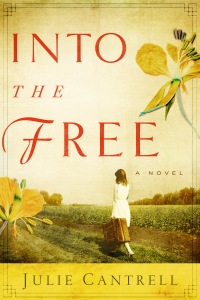
Allen Mendenhall Interviews Julie Cantrell

In Arts & Letters, Book Reviews, Creative Writing, Fiction, Humanities, Literature, News and Current Events, Novels, Southern Literary Review, The South, Writing on February 29, 2012 at 6:10 am

Julie Cantrell was editor-in-chief of the Southern Literary Review.  She teaches English as a second language to elementary school students and is a freelance writer who has published two children’s books. Julie and her family run Valley House Farm in Mississippi.  Her first novel, Into the Free, was released by David C. Cook in 2012.


Julie, so glad to be doing this interview.  First of all, congratulations on the publication of Into the Free, which, at the moment, is number 23 on the Amazon Kindle bestseller list.  What does it feel like to have completed your first novel?

It’s amazing! The entire journey has been joyful for me, but to see it reach readers across the world is incredible. Having it become a bestseller is simply surreal. I admit I’m a bit numb watching it climb the charts, and I keep thinking it will end in a few minutes – a strange little bubble of joy that is about to pop. For that reason, I’ve been doing the happy dance nonstop and am just going to enjoy the fun while it lasts.

The main character of the book is Millie Reynolds.  How did you come up with Millie?  Did you know what she would be like—her personality, her attitudes, her struggles—before you started writing, or did she sort of come to you as you worked?

Well, to be honest, I never intended to write from a child’s point of view. I originally set out to write about the “Gypsy Queen,” but it just wasn’t the voice I heard. Then I saw a scene of a poor, depressed woman standing on a porch watching the Travelers leave town. She wanted to leave with them, but she was too afraid to take the first step. So I sat down to write her story, but it wasn’t her voice I heard either. Instead, Millie sat in her tree and told me her story. I know it sounds kooky, but I guess I just have a very vivid imagination. I’m happy to introduce Millie to readers, and I hope they love her as much as I do.

You once told me that you had two kids, four cows, three goats (two of which were then due with babies that you’d have to bottle feed), two dogs, two cats (one stray that arrived pregnant), a horse that likes a lot of attention, a flock of hens, a newly arrived carton of chicks, a husband, and a full-time job as a speech therapist.  How did you ever manage to finish writing Into the Free

It sounds crazy, doesn’t it? In fact, we’ve grown bigger since then! I still work in an elementary school, but now I teach English as a Second Language, so I was able to reduce my hours to part-time this year. With a full-time farm, a teaching job (which is never really part-time, as any teacher will tell you), two kids, a wonderful hubby, freelance gigs, and an active community life, we stay very busy. I usually write between the hours of 3 am and 5 am, when the rest of the world is sleeping. I just love it more than sleep.

Tell us a little about your choice of setting for the novel?

I am a southern girl, through and through. I spent my childhood in Louisiana before leaving the south after graduate school. I loved living in various states across the country, but our family relocated to Mississippi seven years ago, returning to our southern roots. I find this state incredibly rich with everything needed to whip up a story. I never considered setting it anywhere other than Mississippi. However, I like to mix things up a bit, so let’s see where the sequel takes us.

Any advice for aspiring novelists who might come across this interview?

Yes. I say, Go for it! If writing is what you love, be willing to make sacrifices to keep that in your life. Only you know what you were born to do, and only you know how to live the life that makes you happy. Life is short. Choose wisely.

Thank you, Julie.  This has been a great interview.  I’m thrilled to see the success of Into the Free, and I would encourage readers of this site to purchase a copy right away. 

Thank you, Allen. I am honored to be interviewed here on a site I have always loved. You’ve done a fabulous job with Southern Literary Review, and I know your readers all agree. Kudos!

On Ugliness

In Arts & Letters, Creative Writing, Essays, Writing on February 21, 2012 at 8:18 pm

Allen Mendenhall

The following essay originally appeared here at The Legendary (July 2010).

I am, at this writing, looking over a spider’s corpse, the little thing having spooked me into murder. It hurried across my papers at an alarming speed for so small a creature and then halted suddenly when I flinched and pushed my chair back from the desk. At this the miniature monster reared himself aloft, his front legs and chelicerae raised and ready for attack, his size strangely exaggerated. “This is ugly,” I gasped to no one in particular.

I’ve heard that spiders have thousands of eyes so it’s no wonder that the thing supposed me threatening. Heck, I was threatening, whether I was one or a thousand. I reached for my newspaper and, foregoing reflection, swatted the brittle beast over and over until its yellow guts, an oozy snot-like substance, spattered all over an otherwise unblemished copy of Charles Frazier’s Cold Mountain. “Ugh,” I sighed, relieved and rubbing my sticky hands together, “that was ugly.”

Sometimes I short-circuit reflection, especially when, as then, an unusual thing startles me or otherwise makes me want to tell somebody something. What do I mean? I’m not sure exactly. I think I mean to say I’m a talker. It’s a terrible habit, this talking. And a nervous one too. Although Freud might disagree, today’s psychologists suggest that babble is a sign of egomania or a warped sense of prerogative. Folks back home simply refer to this as “diarrhea of the mouth.”

What a yucky, demented feeling I get when at dinner parties people glance around the room while I’m talking to them. They’re hoping, I know, that somebody will pass by and relieve them of their duties. “Oh, say, have you met Jonathan?” they’ll interject, grabbing poor Jonathan by the arm and stationing him in front of me. “Jonathan also went to law school. Y’all have something in common.”

I might have been relating the story of my religious conversion or of my struggle with cancer but my now-retreating listener wouldn’t even know. Why? Because I’ve chattered him out of caring. Now I’m standing there staring at an obviously uncomfortable Jonathan whose eyes scan the room for the nearest and next substitute. He seems ugly to me, and I to him. Read the rest of this entry »

Bogus on Buckley

In America, American History, Arts & Letters, Book Reviews, Communism, Conservatism, Historicism, History, Humanities, Libertarianism, Politics, Writing on February 9, 2012 at 8:34 am

Allen Mendenhall

It was customary practice in my family to gather at my grandparents’ house for Sunday dinner after church.  Loyal to our Southern traditions, we would, after eating, divide company: men into the living room, women into the kitchen or den.  My brother and I, still children, would sit silently, for the most part, while my grandfather, father and uncles bandied about the names of politicians and discussed the day’s sermon or newspaper headlines. 

I first learned of William F. Buckley Jr. during these Sunday afternoons, as he was often the topic of conversation.  I was too young to know much, but young enough to learn a lot quickly, so I began to follow this man, this Buckley, to the extent that I could, from those days until the day that he died in February 2008.  

Overcommitted to supposedly universal political ideals and to the spread of American liberal democracy throughout the world, Buckley was not my kind of conservative.  He could be tactless and cruel, as when he violated the ancient maxim de mortuis nil nisi bonum (“Of the dead, speak no evil”) in an obituary to Murray Rothbard wherein he wrote that “Rothbard had defective judgment” and “couldn’t handle moral priorities.”  Buckley then trumpeted some unflattering anecdotes about Rothbard before likening Rothbard to David Koresh. 

Despite such tantrums and vendettas, I always liked Buckley.  Something in the way he conducted himself—his showy decorum, flaunted manners and sophisticated rhetoric—appealed to me.

Carl T. Bogus, an American law professor and author of the biography Buckley, seems to share my qualified respect for Buckley, despite disagreeing with Buckley on important political and theoretical issues.  “I should tell the reader up front,” Bogus warns, “that I am a liberal and thus critical—in some instances, highly critical—of Buckley’s ideology.”  Yet, adds Bogus, “I admire William F. Buckley Jr. enormously.”     

Unlike bobble-headed television personalities and think tank sycophants, Bogus does justice to his subject, treating Buckley’s ideas evenhandedly on the grounds that he (Bogus) is “disheartened by the present state of partisan animosity,” one solution to which, he says, “is to take opposing ideas seriously.”  Bogus not only takes Buckley’s ideas seriously, but credits them for changing America’s political realities.    Read the rest of this entry »

Review of Lions of the West by Robert Morgan

In America, American History, Arts & Letters, Book Reviews, Historicism, History, Humanities, Nineteenth-Century America, Politics, Southern History, The South, Writing on January 31, 2012 at 6:46 am

Allen Mendenhall

This review originally appeared here at the Southern Literary Review.

Good histories don’t just tell stories; they make arguments.  Robert Morgan’s arguments in Lions of the West, subtle though they are, run as follows: historians and storytellers cannot help but view dramatic shifts of history as products of the actions of famous individuals; nevertheless, what happens in the course of history is attributable to numerous common folk acting independently and with disparate motivations.  Even the most comprehensive history cannot tell the stories of all these individuals, each of whom, in the narrative of the American West, could be numbered among the great “lions.” 

“While it is understandable,” Morgan explains, “that we see history mostly in terms of the deeds of a few, our grasp of what actually happened will be flawed and limited if we do not consider the story of the almost invisible many who made the notable deeds possible, even inevitable.”  Despite this claim, Morgan seems taken by the Great Man theory of history, and one of the epigrams to his book, which gets repeated in the Prologue, is Emerson’s remark that there is “properly no history; only biography.”

Morgan’s stated purpose is to “create a living sense of the westward expansion of the United States through brief biographies of some of the men involved.”  In realizing this goal, he offers a nod to other popular historians and storytellers such as Joseph J. Ellis, Gordon S. Wood, and David McCullough.  Each of these men writes histories free of the monotony and tendentious urgency of academic historians, yet each is also committed to facts and small details as indicia of greater narrative patterns. 

Morgan admits, as he must, that Lions of the West is, at best, “only a partial story.”  That’s not a shortcoming peculiar to Morgan’s narrative but a reality of human experience: all histories, like all memories, are partial.  Morgan himself submits that “written history is distortion through selection,” and that by its nature “narrative can represent only by implication, explicit about some parts, suggesting the many.”  No history could recount all the constituent parts that make up the whole; no history, in other words, could recreate the past.  For that reason, an author’s values and priorities are reflected in the subjects he or she chooses to undertake. 

Morgan’s values and priorities can be gleaned from his decision to profile ten individuals whose lives and toils characterize the American West in all its outlandishness and glory: Thomas Jefferson, Andrew Jackson, John Chapman (“Johnny Appleseed”), David (“Davy”) Crockett, Sam Houston, James K. Polk, Winfield Scott, Kit Carson, Nicholas Trist, and John Quincy Adams.  Of these, all but Chapman and Adams maintained significant ties to the South or would have considered themselves, or by others would have been considered, Southerners. Read the rest of this entry »