See Disclaimer Below.

Archive for the ‘News and Current Events’ Category

Review of “Teaching Law and Literature”

In Arts & Letters, Book Reviews, Fiction, Humanities, Jurisprudence, Law, Law-and-Literature, Literary Theory & Criticism, Literature, News and Current Events, Novels, Pedagogy, Teaching, Writing on April 24, 2012 at 8:33 am

Allen Mendenhall

Teaching Law and Literature.  Austin Sarat, Cathrine O. Frank, and Matthew Anderson, eds.  New York: Modern Language Association, 2011.  vii + 507 pp.  $25, paper.

What began as a coordinated, idiosyncratic project in American and British law schools has become a common component of curricula in English departments across the globe.  Law and literature as a subject and as a movement has gained purchase over the last three decades.  Inaugurated in 1973 with the publication of James Boyd White’s The Legal Imagination, which highlighted, among other things, the affinities between legal and literary rhetoric, law and literature has splintered into so many narrowed foci that today it is just as common to see courses like “Law in Late 19th Century American Literature” as it once was to see courses called, quite simply and broadly, “Law and Literature.”

To celebrate and explain this movement, The Modern Language Association (MLA) has released Teaching Law and Literature, an edition with forty-one essays by some of the most prominent scholars in the field, including none other than White himself.  Although law and literature has enjoyed ample funding and has become the subject of an increasing number of journals and conferences, not enough work has been done on the pedagogical aspects of the discipline.  Put another way, the discipline has yet adequately to address the question of how professors ought to teach the interplay of law and literature to students.

That is a gap that this book seeks to fill.  According to editors Austin Sarat, Cathrine O. Frank, and Matthew Anderson, Teaching Law and Literature  “provides a resource for teachers interested in learning about the field of law and literature and how to bring its insights to bear in their classrooms, both in the liberal arts and in law schools.”  Despite that stated goal, the book is weighted toward undergraduate education, and the editors admit as much in their introduction.

At a time when American law schools are under fire for admissions scandals and fabricated data, professors of law and literature—and law professors interested in humanistic and jurisprudential approaches to law teaching—would do well to turn their attention to undergraduates.  When budget cuts and faculty purging befall the legal academy, as they likely will, law and literature (and its various offshoots) will be the first curricular elective to suffer.  A discipline whose proponents struggle to articulate its purpose—will a course in law and literature help law students to pass a bar exam or to become better lawyers?—may not survive the institutional scrutiny of deans, administrators, and alumni associations.

Yet it is the urgent quest for validation that makes law and literature such an important subject.  At its core, law and literature is about grand questions: Why study literature at all?  What use do novels, plays, poems, and the like have for the general public and for the practical, workaday world in which lawyers serve a necessary function?  Might the recurring themes of justice, fairness, and equality expressed in canonized texts from disparate cultures and communities point to something recognizable and distinctive in the human condition?  And are there paralyzing limits to specialized knowledge of periods and genres when so many law and literature scholars, working out of different traditions and trained in supposedly autonomous disciplines, arrive at the same or similar generalizations regarding human experience?

One such generalization, interestingly enough, is that complicated relationships between people—whether based in race, gender, class, or whatever—ought to be understood in terms of ambiguity and contingency rather than certainty and absolutes, and that simple answers will hardly ever suffice to illuminate the nuances and contradictions of any given phenomenon, especially law.  That law is too often reduced to blackletter, blanket rules is not lost to writers of imaginative literature, who, many of them, have used law and legal institutions to enable critiques and explorations of complex social and philosophical problems.

It is little wonder, in light of the compatibility between literary and legal rhetoric or hermeneutics, that a Maryland appellate judge recently wrote in his concurrence that “[t]his case is E.M. Forster’s A Passage to India all over again.  Something happened up there at the Marabar Caves.  Was it an attempted rape?  Was it some form of hysteria triggered by strongly ambivalent emotions imploding violently in a dark and isolated catacomb?  Or was it some unmappable combination of the two as moods and signals shifted diametrically in mid-passage?  The outside world will never know.”  Here is a judge employing a work of literature to demonstrate a point about the limitations of human knowledge.  Law provides topoi in countless works of literature, and works of literature, as this judge apparently recognizes, can supply context and profundity to the deforming routines and desensitizing rituals of everyday law practice.  Without following the judge through to the end of his reasoning, one can sense in his lines a stark awareness of the incapacity of human faculties and hence the perspectival nature of what the philosophers call “justice.” Read the rest of this entry »

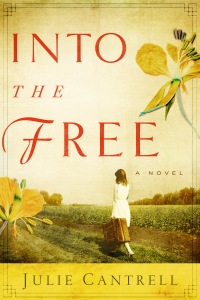
Allen Mendenhall Interviews Julie Cantrell

In Arts & Letters, Book Reviews, Creative Writing, Fiction, Humanities, Literature, News and Current Events, Novels, Southern Literary Review, The South, Writing on February 29, 2012 at 6:10 am

Julie Cantrell was editor-in-chief of the Southern Literary Review.  She teaches English as a second language to elementary school students and is a freelance writer who has published two children’s books. Julie and her family run Valley House Farm in Mississippi.  Her first novel, Into the Free, was released by David C. Cook in 2012.


Julie, so glad to be doing this interview.  First of all, congratulations on the publication of Into the Free, which, at the moment, is number 23 on the Amazon Kindle bestseller list.  What does it feel like to have completed your first novel?

It’s amazing! The entire journey has been joyful for me, but to see it reach readers across the world is incredible. Having it become a bestseller is simply surreal. I admit I’m a bit numb watching it climb the charts, and I keep thinking it will end in a few minutes – a strange little bubble of joy that is about to pop. For that reason, I’ve been doing the happy dance nonstop and am just going to enjoy the fun while it lasts.

The main character of the book is Millie Reynolds.  How did you come up with Millie?  Did you know what she would be like—her personality, her attitudes, her struggles—before you started writing, or did she sort of come to you as you worked?

Well, to be honest, I never intended to write from a child’s point of view. I originally set out to write about the “Gypsy Queen,” but it just wasn’t the voice I heard. Then I saw a scene of a poor, depressed woman standing on a porch watching the Travelers leave town. She wanted to leave with them, but she was too afraid to take the first step. So I sat down to write her story, but it wasn’t her voice I heard either. Instead, Millie sat in her tree and told me her story. I know it sounds kooky, but I guess I just have a very vivid imagination. I’m happy to introduce Millie to readers, and I hope they love her as much as I do.

You once told me that you had two kids, four cows, three goats (two of which were then due with babies that you’d have to bottle feed), two dogs, two cats (one stray that arrived pregnant), a horse that likes a lot of attention, a flock of hens, a newly arrived carton of chicks, a husband, and a full-time job as a speech therapist.  How did you ever manage to finish writing Into the Free

It sounds crazy, doesn’t it? In fact, we’ve grown bigger since then! I still work in an elementary school, but now I teach English as a Second Language, so I was able to reduce my hours to part-time this year. With a full-time farm, a teaching job (which is never really part-time, as any teacher will tell you), two kids, a wonderful hubby, freelance gigs, and an active community life, we stay very busy. I usually write between the hours of 3 am and 5 am, when the rest of the world is sleeping. I just love it more than sleep.

Tell us a little about your choice of setting for the novel?

I am a southern girl, through and through. I spent my childhood in Louisiana before leaving the south after graduate school. I loved living in various states across the country, but our family relocated to Mississippi seven years ago, returning to our southern roots. I find this state incredibly rich with everything needed to whip up a story. I never considered setting it anywhere other than Mississippi. However, I like to mix things up a bit, so let’s see where the sequel takes us.

Any advice for aspiring novelists who might come across this interview?

Yes. I say, Go for it! If writing is what you love, be willing to make sacrifices to keep that in your life. Only you know what you were born to do, and only you know how to live the life that makes you happy. Life is short. Choose wisely.

Thank you, Julie.  This has been a great interview.  I’m thrilled to see the success of Into the Free, and I would encourage readers of this site to purchase a copy right away. 

Thank you, Allen. I am honored to be interviewed here on a site I have always loved. You’ve done a fabulous job with Southern Literary Review, and I know your readers all agree. Kudos!

Allen Mendenhall Interviews J. Neil Schulman, Prometheus Award–Winning Author of Alongside Night

In Artist, Arts & Letters, Austrian Economics, Creative Writing, Creativity, Economics, Fiction, Film, Humanities, Imagination, Libertarianism, Literary Theory & Criticism, Literature, News and Current Events, Novels, Philosophy, Screenwriting, Television, Television Writing, Writing on January 17, 2012 at 9:00 am

J. Neil Schulman

J. Neil Schulman is a novelist, actor, filmmaker, journalist, composer, and publisher.  Among his many books are Alongside Night and The Rainbow Cadenza, both of which won the Prometheus Award.  Visit his website at http://jneilschulman.rationalreview.com/.


The following interview originally appeared here at Prometheus Unbound: A Libertarian Review of Fiction and Literature.

AM:  Right off the bat, it strikes me that I don’t know what to call you.  Will Neil work?

JNS:  Sure. It’s J. Neil Schulman in credits, and Neil in person.

AM:  Anyway, thank you for doing this interview, Neil.  You’ve had a fascinating and unique career.  You’ve written novels, short fiction, nonfiction, screenplays, and other works.  Which of your works is your favorite and why?

JNS:  Every artist gets asked this question sooner or later. I asked it of Robert A. Heinlein when I interviewed him in 1973, and his answer was, “The latest one I’ve been working on.”

I’ve only completed one movie so far — Lady Magdalene’s — so it’s a Hobson’s Choice on that one. Ask me again when I’ve made two! But a lot of people also seem to like the script I wrote for The Twilight Zone, “Profile in Silver.”

I’ve written three novels. My first, Alongside Night [editor’s note: free in pdf], seems to be my most accessible and popular. I consider my second novel, The Rainbow Cadenza, to be my most layered, literary, and richest in explicit philosophy. My third novel, Escape from Heaven, is my favorite. It may not be as timely as my first novel or literary as my second novel, but it’s the one that’s closest to my heart…both the funniest thing I’ve ever written, and the one which is most deceptively simple. It appears to be a lightweight piece of comic fantasy, but it’s full of ideas that if examined more closely turn both traditional theology and rationalist philosophy on their heads.

Short stories? I’ll pick a few: “The Musician,” “Day of Atonement,” and “When Freemen Shall Stand” — all in my collection Nasty. Brutish, and Short Stories — and my latest short story, “The Laughskeller,” published on my blog, J. Neil Schulman @ Rational Review.

AM:  Your worldview is, in a word, libertarian.  Why is that?  How does libertarianism come across in your writing?

JNS:  In my nonfiction essays it comes across explicitly. In fiction, drama, and comedy, I try to examine libertarian themes without preaching. I was probably most subtle doing this in The Rainbow Cadenza. The utilitarian politics advocated by the chief villain, Burke Filcher, is so self-consistent that a lot of readers have thought this character speaks for the author. In fact, I wrote the novel to attack utilitarianism as a nullification of the natural individual rights I believe in. The novel reduces utilitarianism to absurdity — it’s a formal satire of it.

Alongside Night is less subtle, though I’m probably more successful in the new movie script than the 1970s novel when it comes to letting the audience make up its own mind. I have learned some refinements of my craft in the last three decades.

Alongside Night by J. Neil SchulmanAM:  I recently noticed that you commented on a post at the Austrian Economics and Literature blog edited by my good friend Troy Camplin.  Tell me about the influence that Austrian economics has had on you.

JNS:  I would say that Austrian economics — and more fundamentally, the analytical tools of praxeology and games theory — have been fundamental to my work for my entire professional career. They’re not the only tools in my kit, but they get shopworn as much as any of them. Austrian economics is most explicit in Alongside Night, projecting the social and political consequences of fiat money hyperinflation — but I used games theory in plotting “Profile in Silver” and applied praxeology to the afterlife in Escape from Heaven. Read the rest of this entry »

Agrarianism vs. The Life Well-Lived

In America, Arts & Letters, Conservatism, News and Current Events, Politics on January 16, 2012 at 12:05 am

James Banks is a doctoral student studying Renaissance and Restoration English literature at the University of Rochester. He also contributes to the American Interest Online. He has been a Fellow with the Intercollegiate Studies Institute Honors Program; in addition to The Literary Lawyer, he has written for the Intercollegiate Review, First Principles and The Heritage Foundation’s blog The Foundry. A native of Idaho’s panhandle, he lives in upstate New York and serves in the New York Army National Guard.

Agrarianism has been an organized antagonist of American capitalism for longer than Marxism has, and it provides a welcome avenue for those who reject the gospel of a bourgeoisie paradise but are averse to the cosmopolitan and authoritarian tendencies of Marxism. It has occasionally found its way into public policy, such as the Second Bush Administration’s efforts to turn all Americans into property owners (though, by that point, “the family farm” had become a suburban home with a two car garage and white picket fence). Most recently, a debate boiled up in the blogosphere over a comment made by First Things editor Joe Carter arguing that Agrarianism was essentially utopian in nature.

Front Porch Republic—which, from what I can make out, is not explicitly Agrarian but is highly sympathetic to its tenets—was quick to come back with a number of repartees. Nonetheless, these repartees (for this reader anyway) only accentuated some of the problems with the ideology that they sought to defend. Front Porch Republic’s best contribution to the debate is Mark T. Mitchell’s. Professor Mitchell is an author of considerable ability and one who—in as far as I can make out—comes pretty close to living the philosophy that he advocates. I would not question the consistency of his views, just the correctness.

In his discussion of Wendell Berry’s Agrarianism, Mitchell writes:

The agrarian is guided by gratitude. He recognizes the giftedness of creation and accepts the great and awful responsibility to steward it well. Such a recognition “calls for prudence, humility, good work, propriety of scale.”[3] In the use of the land, soil, water, and non-human creatures, the final arbiter, according to Berry, is not human will but nature itself.[4] But this is not to suggest that Berry is some sort of pantheist. Instead, “the agrarian mind is, at bottom, a religious mind.” The agrarian recognizes that the natural world is a gift, and gifts imply a giver. “The agrarian mind begins with the love of fields and ramifies in good farming, good cooking, good eating, and gratitude to God.” By contrast, the “industrial mind “begins with ingratitude, and ramifies in the destruction of farms and forests.”

I can sympathize with the desire to live close to the soil (and would purchase a farm could I afford it). The problem with the argument, though, is that it implies a fundamental distinction between the “agrarian mind” and the “industrial mind”; in truth, the difference between the two is one of degree rather than fundamental difference. Perhaps the agrarian mind “recognizes that the natural world is a gift,” but does it recognize it as such more than does the mind of the hunter/gatherer? And, if not, why should we not go further and work to incorporate elements of the hunter/gatherer’s economy into our postmodern existence? Read the rest of this entry »

Law and Literature at the Seventh Annual Meeting of the Property and Freedom Society

In Arts & Letters, Austrian Economics, Conservatism, Economics, Humane Economy, Humanities, Law, Law-and-Literature, Libertarianism, Literary Theory & Criticism, Literature, News and Current Events, News Release, Philosophy, Politics, Western Philosophy on January 14, 2012 at 9:55 am

Allen Mendenhall

The Seventh Annual Meeting of the Property and Freedom Society will take place in Bodrum, Turkey, at the Hotel Karia Princess, from Thursday, September 27, through Monday, October 1, 2012.  Readers of this site may be interested in some of the proposed talks for this event.

Hans-Hermann Hoppe and Stephan Kinsella will speak on Philosophy and Law.  Professor Hoppe’s paper is titled “The Nature of Man: Does Any Such Thing Exist?”  Mr. Kinsella’s paper is titled “The Market for Law.”

Sean Gabb and Benjamin Marks will speak on Literature and Literary Criticism.  Dr. Gabb’s paper is titled “On Literature and Liberty.”  Mr. Marks’s paper is titled “On H. L. Mencken as a Libertarian Model (and Some Romantic Libertarian Delusions).”

Other literati to speak include Jeffery Tucker, who interviewed me about literature and the economics of liberty and who now is the executive editor for Laissez Faire Books, and Theodore Dalrymple.


Joyce Corrington Publishes New E-Books

In Arts & Letters, Creative Writing, Fiction, Humanities, John William Corrington, Law, Literature, News and Current Events, News Release, Novels, Writing on January 4, 2012 at 9:00 pm

Allen Mendenhall

Joyce Corrington, a long-term friend and supporter of this site whose interview with me appeared back in September, recently republished, in e-book format, the four New Orleans mysteries she wrote in a series with her late husband John William Corrington.  The books are available at the following links:

So Small a Carnival

A Project Named Desire

A Civil Death

The White Zone

Joyce’s latest novel, Fear of Dying, the fifth in the series, came out in 2011.

2011 in Review

In America, Arts & Letters, Communication, Conservatism, Economics, Essays, History, Humanities, Justice, Law, Libertarianism, News and Current Events, News Release, Philosophy, Politics, Rhetoric, Television, Western Civilization, Western Philosophy on January 1, 2012 at 9:54 am
By Slade Mendenhall and Brian Underwood
 
 
Slade Mendenhall is a founding editor of themendenhall.com. He is a student at the University of Georgia majoring in Economics and Mass Communications. His writing interests include screenwriting, fiction and essays on the subjects of philosophy, capitalism, political thought, and aesthetics. His New Years resolution is to progress in the completion of an as-yet-untitled novel (his second).
 
Brian Underwood is a second-year student at the University of Georgia where he studies history and political science as majors and philosophy as a minor. Originally a strong supporter of the Republican Party, Brian moved away from allying himself with the Republicans in politics towards a more “policy over party” position following the 2008 election. As a result, he became an avid reader of historical, philosophical, and other academic works. Moving ever further towards the “libertarian” end of the Nolan Chart, he eventually joined the Objectivist Club and the Young Americans for Liberty after arriving at UGA. Now, he simply defines himself as a “Capitalist.” His main writing interests include philosophy, politics, history, and economics.
 
The following post originally appeared over at themendenhall.
 
An endeavor to measure the shifts and turns of a nation’s ideology can only be compared to an attempt at sensing the turning of the Earth beneath one’s feet. It is at once ubiquitous and elusive, all-encompassing and indistinguishable. Yet, there are, on occasion, times at which one is struck by sudden jolts of rapid motion and change so disruptive that it forbids all attempts at understanding what course or direction it is taking. Swept up, we must at once answer the questions of where we are, to where we are going, and how we are to get there. We must either repair our faulted ideologies or face the consequences of our own contradictions. It may well be that 2011 is to be remembered as such a year. True, it lacked the singular purposefulness of 2010’s drive to repudiate the health care legislation, rid Congress of its unrestrained desire for ever greater government controls, and nullify the Obama administration’s oppressive regulatory policies wherever possible. Different times, however, call for different spirits. 2011 was the time for the promises of the 2010 congressional elections to be put into act, the time to put that ideology to work. The result was often well-intended but imperfect, hindered by the lingering Democratic control of the Senate and complicated by a perpetual series of compromises that left no one satisfied and sent congressional approval ratings to all-time lows of 12.7% at year’s end. As the unemployment rate stagnated, Americans were given a grim look into the engine room of partisan politics where principle is so often held subordinate to considerations of loyalty and appearance.Though it has yet to reflect in our economic condition, things are, politically, better than they were twelve months ago. For the first time in generations, there is a growing sector of average Americans who believe, both practically and ethically, in the merits of political and economic freedom. The challenge now will be carrying the enthusiasm they have cultivated since 2010 forward, through the brutish struggles in Washington’s backrooms and the uncertainty of Iowa’s ballot boxes, toward the elections of 2012 and, with hope, an era of ever-greater victories for the principles upon which our nation was founded. As always, winning our future means understanding our past. It is with that consideration that we look back on the events of the last year as we say goodbye to 2011.
 
A year of trouble and turmoil, 2011 has been as much affected by conflicts abroad as it has by the struggle between the changing tides of American ideologies and the onerous traditions of politics past. Scarcely had the year begun when it was upended by a sudden explosion of conflicts in the Middle East, beginning with the public suicide of a young man in protest of the Tunisian government which transpired to an international wave of political uprisings now known as the Arab Spring. That movement would incite conflicts in nations from North Africa to Syria and bring about the fall of such corrupt dictators as Egypt’s Hosni Mubarak and Libya’s Muammar Ghaddafi. Though the movement wages on in the bloodied streets of Syria, where rebels come to blows daily with a brutal and oppressive regime, its ultimate results and effects on American interests are as yet undecided. Much will depend on the current and future political struggles within those now shaken nations, and history could as easily come to see these events as a vacuum from which emerged a newly energized and vindicated rise of Islamic Totalitarianism as it could the pure and heroic struggle for freedom that the Western media so actively portrayed it to be.
 
  One consideration in particular must be made in regard to that circumstance, however: the nature of those revolutions, the violence in Egypt against Coptic Christians, the presence of Al Qaeda factions among the ranks of Libyan rebels, and the recent political victories of the Muslim Brotherhood in Egypt portend a dark future for those nations. If popular revolutions can be divided among those most akin to the American Revolution and the French Revolution, that which has transpired in the Middle East this year is definitively the latter. They are not movements based primarily on principles of individual rights. Were they, groups such as the Muslim Brotherhood would have been ousted along with Mubarak. Instead, they are less a push for freedom than they are a push against an oppressor, complicated by the fact that this is a part of the world which has never been exposed to true political freedom or come to accept the philosophical principles which are prerequisite to its realization. Tragically, the American media proved in its coverage of these events its dire inability to make that distinction.
 
In this publication’s view, the Leftist elements of the media were motivated by a desire to vindicate their long-expressed views on America’s Middle East policy since the beginning of the Iraq war. Doubtless, there are a myriad of arguments against our having gone to war in Iraq — most reputably that which states that Iraq was not the greatest or most immediate threat to American security, that the very costly armed welfare mission into which that conflict devolved was in no way carried out in the best interests of American soldiers or citizens, that our efforts would have been better served elsewhere. However, this is not the logic or sentiment which is most fervently held by these advocates. Since the beginning of that war, there has been a considerable segment of the Left which has argued against it on the grounds that the principle of self-determination grants nations the right to practice any form of oppression and denial of individual rights they please, so long as they hold majority support; that political freedom is a Western product that we happen to have chosen, but that any other nation’s choice of tyranny is equally valid because they chose it. Fast-forwarding to this year’s Arab Spring, these same advocates are some of the movement’s most ardent supporters, on the grounds that it shows that, left to their own devices, the peoples of such nations will eventually throw off their own shackles and choose freedom without Western support or guidance. Were this the case, the nations of the Middle East which have undergone revolutions this year deserve our commendations. However, we remain dubious that this is the case. Those who believe that freedom and prosperity are the predestined results of these revolutions will, we fear, be demonstrably proven wrong by whatever variant of oppressive control emerges in these very fragile regions in the coming years. What future instability or, worse, stability under dangerous conditions will mean for America’s interests in the region remain to be seen, but it is a problem that should be carefully observed to maintain our security and best interests.Ironically, in their advocacy of these revolutions, the Left has inherited a trademark intellectual error from the Bush administration: the belief that popular elections and a system of democracy are the source and cause of freedom. This is a grievous inversion that leads man to the conclusion that institutions and their organization can effectively supplant the role of ideas in the guidance of his actions. Though popular elections are an integral part of a free political system, they are its product, not its cause. Only a rational political philosophy of individual rights can ever be the cause of true and lasting freedom. Returning to our previous comparison, in the case of America, its revolutionaries had inherited roughly a century of Enlightenment thought in which they were well-versed and whose principles they explicitly understood. That knowledge of the Enlightenment values of reason and individualism led those men to the design of a government meant to acknowledge and secure them. France’s exposure to Enlightenment thought was quite equal to England’s, but its revolution was driven less by intellectuals and more by a mob, inspired less by a circumspect outlook upon what could be than by the violent, angry rejection of what was. In short: less talk of ideas, more guillotines. To which do the current uprisings in the Middle East better compare and what does that suggest about the political future to be expected there? It is significant that those here in America, the nation of the Enlightenment, are today so unaware of the role of philosophy in its beginnings… and its future.Despite the rather grim prospects of revolutionaries in the Middle East to establish any long-term system of freedom and prosperity, the ideological struggles waged in America this year have proven that its intellectual foundations are alive and well here in the States. What’s more, there are signs that they could be experiencing a popular– and lasting– resurgence. The Tea Party candidates around the country were inaugurated to their congressional seats in January after having run their campaigns on the principles of a free market, fiscal responsibility, and constitutionally limited government. Joining them were welcomed conservative state officials throughout the nation in such volumes as had not been seen since before the Great Depression.  Their rallying cry: to oppose the unyielding growth of government and its power over the lives of private citizens. Their victories were numerous and significant (if as much for what they prevented as what they created), though it seemed, at times, that every victory had its casualties and every two steps forward saw one step back. Democratic power in the Senate made for unproductive compromises and grand-scale debates that evinced more in theatrics than tangible results.This was never more clearly displayed than in the summer debt and budgetary crises, with the tantalizing threat of government shut-down looming over our heads. Americans bore witness to the paltry efforts of Congressto wean itself from excessive outlays, where merely promising to increase spending at a decreasing rate was portrayed as “budget cuts” and an unwillingness to abolish or defund a single government bureaucracy left the fundamental problems of America’s  leviathan state firmly intact. Unsurprisingly, though shut-downs were averted and compromises reached, the political instability over so crucial an issue led to the first downgrade of America’s debt to below AAA. In ensuing months, as compensation, we were offered  another grand spectacle in the form of a “Super-Committee” convened to tackle the problem of America’s mounting foreign debt. Tragically, it was stacked with the most diametrically opposite representatives from Left and Right and, predictably, politics yet again trumped the interests of American citizens’ well-being. Read the rest of this entry »

Allen Mendenhall Interviews Ace Atkins

In Artist, Arts & Letters, Book Reviews, Creative Writing, Fiction, Humanities, News and Current Events, Novels, Southern Literary Review, Writing on December 12, 2011 at 8:46 am

Ace Atkins is the author of nine novels, most recently The Ranger and Infamous.  A former journalist at The Tampa Tribune, Atkins has been nominated for a Pulitzer Prize for his investigation into a 1950s murder.  He lives on a farm outside Oxford, Mississippi.

The following interview first appeared here at Southern Literary Review.

AM: What I suspect everyone wants to know is, how do you stay so prolific?  How do you write so much, so quickly?

AA: I’m very fortunate to be a full-time novelist. I’ve been writing full time since 2001 and that gives me the freedom to concentrate completely on my stories. Many terrific writers I know have to carve out time from from their jobs to work on a book. I am able to go to my office every day and work on that new novel. I feel pretty damn lucky and that in turn means I get to work on more projects.

AM: You seem to have located The Ranger in regions of the South that you know well.  Would you call this book “Southern literature”? 

AA: Absolutely. I don’t get into working in a certain genre—that’s up to readers and critics—and can hurt the writer and reader. My new series of novels could not be set anywhere else but the South and certainly centers on many Southern themes. I gain a lot of inspiration from the gritty world of Faulkner’s crime stories and turn my attention to the descendants of those people. 

AM:    I noticed that country music and country musicians appear throughout The Ranger.  Can you tell us about the significance of this to the novel?

AA: My first four novels were stylistically and thematically about blues. I always wanted to work on a novel that felt like an old Johnny Cash ballad—a solider returning home to town, unrequited love, guns and violence. I listened to a lot of Johnny Cash and also tons of Outlaw Country—Waylon, Merle, etc.—when coming up with the background of Quinn Colson.

AM: Who is Colonel George Reynolds?  I noticed his name in the Acknowledgments. 

George is the guy who saved my ass. I had contracted to write a novel about a U.S. Army soldier without knowing enough about the modern war in Afghanistan. Colonel Reynolds contacted me from Camp Phoenix in Afghanistan about signing a copy of my novel, Devil’s Garden. He offered help if I ever needed. It turned out, I needed help immediately. He offered terrific insight direct from the battle front and introduced me to the real Ranger who provided the background for Quinn Colson. 

I could not have written the book without him and he still provides me with a ton of answers to picky questions. Read the rest of this entry »

Can the Humanities Be Saved?

In Arts & Letters, Humanities, Literary Theory & Criticism, Literature, News and Current Events, Pedagogy, Teaching on December 1, 2011 at 12:00 am

James Banks is a doctoral student studying Renaissance and Restoration English literature at the University of Rochester. He also contributes to the American Interest Online. He has been a Fellow with the Intercollegiate Studies Institute Honors Program; in addition to The Literary Lawyer, he has written for the Intercollegiate Review, First Principles and The Heritage Foundation’s blog The Foundry. A native of Idaho’s panhandle, he lives in upstate New York and serves in the New York Army National Guard.


Humanities professors hear the bell tolling and are probably beginning to wonder if the next toll will be the last. In response to the impending crisis of student debts, the Modern Language Association (MLA) issued a “formal statement” condemning the rapid increase in tuition and calling on federal and state institutions to do something about it:

Public attention has been directed recently to the educational debt students accumulate in the course of undergraduate, as well as graduate, study. A major contributing factor has been the increasing portion of educational costs students must bear in the form of loans. To reduce debt burdens in the future, we call on Congress, state legislatures, and institutions of higher education to calibrate educational costs and student aid in ways that will keep student debt within strict limits. We also call on them to hold in check tuition increases, which often far outpace inflation, and to ensure that degree programs allow for timely completion.

This statement may be gobbledygook; it’s easy for academics to call for keeping student tuition within strict limits, but it is very hard to actually curb tuition rates. If the MLA wanted to make news, it would have issued a few recommendations for how to, say, tear down the gymnasium, privatize student housing, experiment with virtual conferences, or limit salary increases.

MLA’s concern about student debt and funding for the humanities is still news, though. It indicates that humanities departments are getting wind of the fact that, in tough economic times, they are going to be the first to lose students, and with state governments and universities tightening their belts, programs losing students are going to be first to get axed, if that’s what things come to.

Humanities departments won’t save themselves by doing what they have always done, which is to make moralist pronouncements and then leave the hard work of paying the bills to the administrations and government. Survival of these departments will require a more radical stance. Critics of the humanities predictably responded to the MLA statement by saying that humanities departments have brought the impending crisis on themselves by teaching classes with names like “GaGa for Gaga: Sex, Gender and Identity” instead of the good old-fashioned “Introduction to Chaucer, Shakespeare and Milton.”

It’s true that humanities departments would probably have more students if they stuck to a more traditional curriculum (which would also make for less embarrassing conversations between students and their grandparents, who want to know what their grandchildren are studying at school), but humanities departments have changed less than conservative critics claim. Although curriculum content in the humanities has evolved, humanities students can still read Shakespeare if they want to, and the place of the humanities in universities has not changed radically. 

The idea behind departments like English, philosophy and history was not to help people live longer but to help them live better. Writers, philosophers and historians may not be more moral than the average human being—in many cases, they are less so—but wrestling with the moral dilemmas that the humanities present could at least train tomorrow’s leaders to exercise their moral instincts. Humanities departments still see themselves as being the moral conscience of the higher education system, and, by extension, high culture.

However, as the moral standards of the academy and America’s mainstream culture have diverged, humanities departments have been demoted from being moral authorities to being moralistic beadles; to the rest of the academy, humanities faculty are ivory tower preachers who occasionally publish articles on America’s promiscuous history of imperialism and who host forums about cultural failures at the nexus of race, class and gender. Read the rest of this entry »

Ciceronian Society Annual Conference, March 29-31, 2012: Call for Papers

In Arts & Letters, Conservatism, Humanities, News and Current Events, News Release, Western Civilization on November 30, 2011 at 8:27 am


Allen Mendenhall

The Ciceronian Society will be holding its annual meeting at the University of Virginia, March 29-31, 2012. This will be an academic conference in which panelists can present on a variety of topics related to the themes of Tradition, Place, and ‘Things Divine.’ A more elaborate description of these core-themes and their relation to the humanities is provided on the Ciceronian Society website

Possible panel themes include the following: 


  1.  The Relationship of Modern Thought to Tradition and the Divine. 
  2.  Greek and Roman Thought. 
  3.  Place, ‘Things Divine,’ and Tradition in Medieval Thought
  4.  Human Scale, Decentralism, and Federalism
  5.  American Thought/Experience and Tradition and Place
  6.  Literature, Localism, History, and the Divine. 
  7.  Agrarianism, Localism, and Economics 
  8.  Social-Political Theology