See Disclaimer Below.

Archive for the ‘Book Reviews’ Category

“Gone,” Edited with Photography by Nell Dickerson

In Arts & Letters, Book Reviews, History, Humanities, Nineteenth-Century America, Southern History, Southern Literary Review, The South, Writing on May 9, 2012 at 7:45 am

Allen Mendenhall

The following review originally appeared here in the Southern Literary Review.

I’ve always maintained a spectator’s curiosity in the rituals and practices of photography.  I can’t take a good picture, no matter which side of the camera I’m on, but I appreciate the idea of reducing the world to a more manageable form, something I can look at and admire without getting overwhelmed by the sheer magnitude and kinetics of it all.

I used to have a friend who was a photographer, and I would watch her take pictures.  She tried, once or twice, to teach me the nuances and particulars of photography, but I’m too proud to fail at new activities, so I strive never to undertake them.

Photographs are, folks say, moments stuck in time.  That makes them especially melancholy if their subjects, as it were, are decaying, rotting, or dying.  That’s what I realized when I leafed through the pages of Gone, a brilliant, conversation-starting, coffee-table book bearing the subtitle “A Heartbreaking Story of the Civil War,” and the sub-sub-title “A Photographic Plea for Preservation.”

Gone makes history even as it documents history.  Its images of antebellum Southern churches, plantations, and homes—some dilapidated, some just barely restored—ought to remind Southerners of the need for preserving the finest monuments of, and to, our complicated history.

That the photographer is Nell Dickerson, cousin to the late, great historian and novelist Shelby Foote, who needs no introduction to readers of this publication—although we editors have given him one—only adds a sense of authenticity to this project.  It’s as if in image and word and authorial kin, the book is tied to a past that struggles, and fails, to remain present; and it’s in that failing that the book achieves its most meaningful and poignant expression.

We Southerners place a premium on the fixed, the immutable, the known, perhaps because we understand that the things we value—family, hearth, home, community, place, religion—are bound to change.  We mourn change as we mourn loss, because all change entails loss, and it’s our tendency to mourn that gives us a unique, constructive identity.

We define ourselves as a people who have lost, or have lost something.  It’s a position that doesn’t survive interrogation, but there it is, a tragic ethos (and, for that matter, pathos) that we hope will stay the same when all else is, if not different, then almost unfamiliar.  Almost. Read the rest of this entry »

Review of “Teaching Law and Literature”

In Arts & Letters, Book Reviews, Fiction, Humanities, Jurisprudence, Law, Law-and-Literature, Literary Theory & Criticism, Literature, News and Current Events, Novels, Pedagogy, Teaching, Writing on April 24, 2012 at 8:33 am

Allen Mendenhall

Teaching Law and Literature.  Austin Sarat, Cathrine O. Frank, and Matthew Anderson, eds.  New York: Modern Language Association, 2011.  vii + 507 pp.  $25, paper.

What began as a coordinated, idiosyncratic project in American and British law schools has become a common component of curricula in English departments across the globe.  Law and literature as a subject and as a movement has gained purchase over the last three decades.  Inaugurated in 1973 with the publication of James Boyd White’s The Legal Imagination, which highlighted, among other things, the affinities between legal and literary rhetoric, law and literature has splintered into so many narrowed foci that today it is just as common to see courses like “Law in Late 19th Century American Literature” as it once was to see courses called, quite simply and broadly, “Law and Literature.”

To celebrate and explain this movement, The Modern Language Association (MLA) has released Teaching Law and Literature, an edition with forty-one essays by some of the most prominent scholars in the field, including none other than White himself.  Although law and literature has enjoyed ample funding and has become the subject of an increasing number of journals and conferences, not enough work has been done on the pedagogical aspects of the discipline.  Put another way, the discipline has yet adequately to address the question of how professors ought to teach the interplay of law and literature to students.

That is a gap that this book seeks to fill.  According to editors Austin Sarat, Cathrine O. Frank, and Matthew Anderson, Teaching Law and Literature  “provides a resource for teachers interested in learning about the field of law and literature and how to bring its insights to bear in their classrooms, both in the liberal arts and in law schools.”  Despite that stated goal, the book is weighted toward undergraduate education, and the editors admit as much in their introduction.

At a time when American law schools are under fire for admissions scandals and fabricated data, professors of law and literature—and law professors interested in humanistic and jurisprudential approaches to law teaching—would do well to turn their attention to undergraduates.  When budget cuts and faculty purging befall the legal academy, as they likely will, law and literature (and its various offshoots) will be the first curricular elective to suffer.  A discipline whose proponents struggle to articulate its purpose—will a course in law and literature help law students to pass a bar exam or to become better lawyers?—may not survive the institutional scrutiny of deans, administrators, and alumni associations.

Yet it is the urgent quest for validation that makes law and literature such an important subject.  At its core, law and literature is about grand questions: Why study literature at all?  What use do novels, plays, poems, and the like have for the general public and for the practical, workaday world in which lawyers serve a necessary function?  Might the recurring themes of justice, fairness, and equality expressed in canonized texts from disparate cultures and communities point to something recognizable and distinctive in the human condition?  And are there paralyzing limits to specialized knowledge of periods and genres when so many law and literature scholars, working out of different traditions and trained in supposedly autonomous disciplines, arrive at the same or similar generalizations regarding human experience?

One such generalization, interestingly enough, is that complicated relationships between people—whether based in race, gender, class, or whatever—ought to be understood in terms of ambiguity and contingency rather than certainty and absolutes, and that simple answers will hardly ever suffice to illuminate the nuances and contradictions of any given phenomenon, especially law.  That law is too often reduced to blackletter, blanket rules is not lost to writers of imaginative literature, who, many of them, have used law and legal institutions to enable critiques and explorations of complex social and philosophical problems.

It is little wonder, in light of the compatibility between literary and legal rhetoric or hermeneutics, that a Maryland appellate judge recently wrote in his concurrence that “[t]his case is E.M. Forster’s A Passage to India all over again.  Something happened up there at the Marabar Caves.  Was it an attempted rape?  Was it some form of hysteria triggered by strongly ambivalent emotions imploding violently in a dark and isolated catacomb?  Or was it some unmappable combination of the two as moods and signals shifted diametrically in mid-passage?  The outside world will never know.”  Here is a judge employing a work of literature to demonstrate a point about the limitations of human knowledge.  Law provides topoi in countless works of literature, and works of literature, as this judge apparently recognizes, can supply context and profundity to the deforming routines and desensitizing rituals of everyday law practice.  Without following the judge through to the end of his reasoning, one can sense in his lines a stark awareness of the incapacity of human faculties and hence the perspectival nature of what the philosophers call “justice.” Read the rest of this entry »

Henry Hazlitt, Literary Critic

In American History, Arts & Letters, Austrian Economics, Book Reviews, Creative Writing, Creativity, Economics, Essays, Ethics, Fiction, History, Humane Economy, Humanities, Liberalism, Libertarianism, Literary Theory & Criticism, Literature, Philosophy, Politics, Western Civilization, Western Philosophy, Writing on March 20, 2012 at 9:05 am

Allen Mendenhall

The following appeared here at Prometheus Unbound and here at Mises.org.

Remembered mostly for his contributions to economics, including his pithy and still-timely classic Economics in One Lesson (1946), Henry Hazlitt was a man who wore many hats. He was a public intellectual and the author or editor of some 28 books, one of which was a novel, The Great Idea (1961) — published in Britain and later republished in the United States as Time Will Run Back (1966) — and another of which, The Anatomy of Criticism (1933), was a trialogue on literary criticism. (Hazlitt’s book came out 24 years before Northrop Frye published a book of criticism under the same title.) Great-great-grandnephew to British essayist William Hazlitt, the boy Henry wanted to become like the eminent pragmatist and philosopher-psychologist William James, who was known for his charming turns of phrase and literary sparkle. Relative poverty would prevent Hazlitt’s becoming the next James. But the man Hazlitt forged his own path, one that established his reputation as an influential man of letters.

In part because of his longstanding support for free-market economics, scholars of literature have overlooked Hazlitt’s literary criticism; and Austrian economists — perhaps for lack of interest, perhaps for other reasons — have done little to restore Hazlitt’s place among the pantheon of 20th century literary critics. Yet Hazlitt deserves that honor.

He may not have been a Viktor Shklovsky, Roman Jakobson, Cleanth Brooks, William K. Wimsatt, John Crowe Ransom, Allen Tate, Lionel Trilling, Dwight Macdonald, or Kenneth Burke, but Hazlitt’s criticism is valuable in negative terms: he offers a corrective to much that is wrong with literary criticism, both then and now. His positive contributions to literary criticism seem slight when compared to those of the figures named in the previous sentence. But Hazlitt is striking in his ability to anticipate problems with contemporary criticism, especially the tendency to judge authors by their identity. Hazlitt’s contributions to literary criticism were not many, but they were entertaining and erudite, rivaling as they did the literary fashions of the day and packing as much material into a few works as other critics packed into their entire oeuvres. Read the rest of this entry »

Allen Mendenhall Interviews Julie Cantrell

In Arts & Letters, Book Reviews, Creative Writing, Fiction, Humanities, Literature, News and Current Events, Novels, Southern Literary Review, The South, Writing on February 29, 2012 at 6:10 am

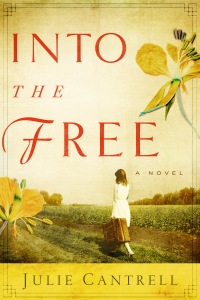
Julie Cantrell was editor-in-chief of the Southern Literary Review.  She teaches English as a second language to elementary school students and is a freelance writer who has published two children’s books. Julie and her family run Valley House Farm in Mississippi.  Her first novel, Into the Free, was released by David C. Cook in 2012.


Julie, so glad to be doing this interview.  First of all, congratulations on the publication of Into the Free, which, at the moment, is number 23 on the Amazon Kindle bestseller list.  What does it feel like to have completed your first novel?

It’s amazing! The entire journey has been joyful for me, but to see it reach readers across the world is incredible. Having it become a bestseller is simply surreal. I admit I’m a bit numb watching it climb the charts, and I keep thinking it will end in a few minutes – a strange little bubble of joy that is about to pop. For that reason, I’ve been doing the happy dance nonstop and am just going to enjoy the fun while it lasts.

The main character of the book is Millie Reynolds.  How did you come up with Millie?  Did you know what she would be like—her personality, her attitudes, her struggles—before you started writing, or did she sort of come to you as you worked?

Well, to be honest, I never intended to write from a child’s point of view. I originally set out to write about the “Gypsy Queen,” but it just wasn’t the voice I heard. Then I saw a scene of a poor, depressed woman standing on a porch watching the Travelers leave town. She wanted to leave with them, but she was too afraid to take the first step. So I sat down to write her story, but it wasn’t her voice I heard either. Instead, Millie sat in her tree and told me her story. I know it sounds kooky, but I guess I just have a very vivid imagination. I’m happy to introduce Millie to readers, and I hope they love her as much as I do.

You once told me that you had two kids, four cows, three goats (two of which were then due with babies that you’d have to bottle feed), two dogs, two cats (one stray that arrived pregnant), a horse that likes a lot of attention, a flock of hens, a newly arrived carton of chicks, a husband, and a full-time job as a speech therapist.  How did you ever manage to finish writing Into the Free

It sounds crazy, doesn’t it? In fact, we’ve grown bigger since then! I still work in an elementary school, but now I teach English as a Second Language, so I was able to reduce my hours to part-time this year. With a full-time farm, a teaching job (which is never really part-time, as any teacher will tell you), two kids, a wonderful hubby, freelance gigs, and an active community life, we stay very busy. I usually write between the hours of 3 am and 5 am, when the rest of the world is sleeping. I just love it more than sleep.

Tell us a little about your choice of setting for the novel?

I am a southern girl, through and through. I spent my childhood in Louisiana before leaving the south after graduate school. I loved living in various states across the country, but our family relocated to Mississippi seven years ago, returning to our southern roots. I find this state incredibly rich with everything needed to whip up a story. I never considered setting it anywhere other than Mississippi. However, I like to mix things up a bit, so let’s see where the sequel takes us.

Any advice for aspiring novelists who might come across this interview?

Yes. I say, Go for it! If writing is what you love, be willing to make sacrifices to keep that in your life. Only you know what you were born to do, and only you know how to live the life that makes you happy. Life is short. Choose wisely.

Thank you, Julie.  This has been a great interview.  I’m thrilled to see the success of Into the Free, and I would encourage readers of this site to purchase a copy right away. 

Thank you, Allen. I am honored to be interviewed here on a site I have always loved. You’ve done a fabulous job with Southern Literary Review, and I know your readers all agree. Kudos!

Bogus on Buckley

In America, American History, Arts & Letters, Book Reviews, Communism, Conservatism, Historicism, History, Humanities, Libertarianism, Politics, Writing on February 9, 2012 at 8:34 am

Allen Mendenhall

It was customary practice in my family to gather at my grandparents’ house for Sunday dinner after church.  Loyal to our Southern traditions, we would, after eating, divide company: men into the living room, women into the kitchen or den.  My brother and I, still children, would sit silently, for the most part, while my grandfather, father and uncles bandied about the names of politicians and discussed the day’s sermon or newspaper headlines. 

I first learned of William F. Buckley Jr. during these Sunday afternoons, as he was often the topic of conversation.  I was too young to know much, but young enough to learn a lot quickly, so I began to follow this man, this Buckley, to the extent that I could, from those days until the day that he died in February 2008.  

Overcommitted to supposedly universal political ideals and to the spread of American liberal democracy throughout the world, Buckley was not my kind of conservative.  He could be tactless and cruel, as when he violated the ancient maxim de mortuis nil nisi bonum (“Of the dead, speak no evil”) in an obituary to Murray Rothbard wherein he wrote that “Rothbard had defective judgment” and “couldn’t handle moral priorities.”  Buckley then trumpeted some unflattering anecdotes about Rothbard before likening Rothbard to David Koresh. 

Despite such tantrums and vendettas, I always liked Buckley.  Something in the way he conducted himself—his showy decorum, flaunted manners and sophisticated rhetoric—appealed to me.

Carl T. Bogus, an American law professor and author of the biography Buckley, seems to share my qualified respect for Buckley, despite disagreeing with Buckley on important political and theoretical issues.  “I should tell the reader up front,” Bogus warns, “that I am a liberal and thus critical—in some instances, highly critical—of Buckley’s ideology.”  Yet, adds Bogus, “I admire William F. Buckley Jr. enormously.”     

Unlike bobble-headed television personalities and think tank sycophants, Bogus does justice to his subject, treating Buckley’s ideas evenhandedly on the grounds that he (Bogus) is “disheartened by the present state of partisan animosity,” one solution to which, he says, “is to take opposing ideas seriously.”  Bogus not only takes Buckley’s ideas seriously, but credits them for changing America’s political realities.    Read the rest of this entry »

Review of Lions of the West by Robert Morgan

In America, American History, Arts & Letters, Book Reviews, Historicism, History, Humanities, Nineteenth-Century America, Politics, Southern History, The South, Writing on January 31, 2012 at 6:46 am

Allen Mendenhall

This review originally appeared here at the Southern Literary Review.

Good histories don’t just tell stories; they make arguments.  Robert Morgan’s arguments in Lions of the West, subtle though they are, run as follows: historians and storytellers cannot help but view dramatic shifts of history as products of the actions of famous individuals; nevertheless, what happens in the course of history is attributable to numerous common folk acting independently and with disparate motivations.  Even the most comprehensive history cannot tell the stories of all these individuals, each of whom, in the narrative of the American West, could be numbered among the great “lions.” 

“While it is understandable,” Morgan explains, “that we see history mostly in terms of the deeds of a few, our grasp of what actually happened will be flawed and limited if we do not consider the story of the almost invisible many who made the notable deeds possible, even inevitable.”  Despite this claim, Morgan seems taken by the Great Man theory of history, and one of the epigrams to his book, which gets repeated in the Prologue, is Emerson’s remark that there is “properly no history; only biography.”

Morgan’s stated purpose is to “create a living sense of the westward expansion of the United States through brief biographies of some of the men involved.”  In realizing this goal, he offers a nod to other popular historians and storytellers such as Joseph J. Ellis, Gordon S. Wood, and David McCullough.  Each of these men writes histories free of the monotony and tendentious urgency of academic historians, yet each is also committed to facts and small details as indicia of greater narrative patterns. 

Morgan admits, as he must, that Lions of the West is, at best, “only a partial story.”  That’s not a shortcoming peculiar to Morgan’s narrative but a reality of human experience: all histories, like all memories, are partial.  Morgan himself submits that “written history is distortion through selection,” and that by its nature “narrative can represent only by implication, explicit about some parts, suggesting the many.”  No history could recount all the constituent parts that make up the whole; no history, in other words, could recreate the past.  For that reason, an author’s values and priorities are reflected in the subjects he or she chooses to undertake. 

Morgan’s values and priorities can be gleaned from his decision to profile ten individuals whose lives and toils characterize the American West in all its outlandishness and glory: Thomas Jefferson, Andrew Jackson, John Chapman (“Johnny Appleseed”), David (“Davy”) Crockett, Sam Houston, James K. Polk, Winfield Scott, Kit Carson, Nicholas Trist, and John Quincy Adams.  Of these, all but Chapman and Adams maintained significant ties to the South or would have considered themselves, or by others would have been considered, Southerners. Read the rest of this entry »

Book Review: Paul Cantor and Stephen Cox’s Literature and the Economics of Liberty

In Arts & Letters, Austrian Economics, Book Reviews, Communism, Conservatism, Economics, Essays, Fiction, History, Humane Economy, Humanities, Law-and-Literature, Liberalism, Libertarianism, Literary Theory & Criticism, Literature, Novels, Philosophy, Politics, Western Civilization, Western Philosophy on January 23, 2012 at 4:53 am

Allen Mendenhall

The following book review originally appeared here in the Fall 2010 issue of The Independent Review.

Humans are not automated and predictable, but beautifully complex and spontaneous. History is not linear. Progress is not inevitable. Our world is strangely intertextual and multivocal. It is irreducible to trite summaries and easy answers, despite what our semiliterate politicians would have us believe. Thinking in terms of free-market economics allows us to appreciate the complicated dynamics of human behavior while making sense of the ambiguities leading to and following from that behavior. With these realities in mind, I applaud Paul Cantor and Stephen Cox for compiling the timely collection Literature and the Economics of Liberty, which places imaginative literature in conversation with Austrian economic theory.

Cantor and Cox celebrate the manifold intricacies of the market, which, contrary to popular opinion, is neither perfect nor evil, but a proven catalyst for social happiness and well-being. They do not recycle tired attacks on Marxist approaches to literature: they reject the “return to aesthetics” slogans of critics such as Allan Bloom, Harold Bloom, and John M. Ellis, and they adopt the principles, insights, and paradigms of the Austrian school of economics. Nor do Cantor and Cox merely invert the privilege of the terms Marxist and capitalist (please excuse my resort to Derridean vocabulary), although they do suggest that one might easily turn “the tables on Marxism” by applying “its technique of ideology critique to socialist authors, questioning whether they have dubious motives for attacking capitalism.” Cantor and Cox are surprisingly the first critics to look to Austrian economics for literary purposes, and their groundbreaking efforts are sure to ruffle a few feathers—but also to reach audiences who otherwise might not have heard of Austrian economics.

Cantor and Cox submit that the Austrian school offers “the most humane form of economics we know, and the most philosophically informed.” They acknowledge that this school is heterodox and wide ranging, which, they say, are good things. By turning to economics in general, the various contributors to this book—five in all—suggest that literature is not created in a vacuum but rather informs and is informed by the so-called real world. By turning to Austrian economics in particular, the contributors seek to secure a place for freedom and liberty in the understanding of culture. The trouble with contemporary literary theory, for them, lies not with economic approaches, but with bad economic approaches. An economic methodology of literary theory is useful and incisive so long as it pivots on sound philosophies and not on obsolete or destructive ideologies. Austrian economics appreciates the complexity and nuance of human behavior. It avoids classifying individuals as cookiecutter caricatures. It champions a humane-economy counter to mechanistic massproduction, central planning, and collectivism. Marxism, in contrast, is collectivist, predictable, monolithic, impersonal, linear, reductive–in short, wholly inadequate as an instrument for good in an age in which, quite frankly, we know better than to reduce the variety of human experience to simplistic formulae. A person’s creative and intellectual energies are never completely products of culture or otherwise culturally underwritten. People are rational agents who choose between different courses of action based on their reason, knowledge, and experience. A person’s choices, for better or worse, affect lives, circumstances, and communities. (“Ideas have consequences,” as Richard Weaver famously remarked.) And communities themselves consist of multiplicities that defy simple labels. It is not insignificant, in light of these principles, that Michel Foucault late in his career instructed his students to read the collected works of Ludwig von Mises and F. A. Hayek. Read the rest of this entry »

Additional Thoughts on Gary W. Gallagher’s The Union War

In American History, Arts & Letters, Book Reviews, Historicism, History, Nineteenth-Century America, Slavery, Southern History, The South, Western Civilization on December 23, 2011 at 10:50 am

Allen Mendenhall

Recently I reviewed Gary W. Gallagher’s The Union War (Harvard University Press, 2011) for The University Bookman.  The review (“Why the Union Soldiers Fought”) is available here.  I have not said all I mean to say about Gallagher’s book, so this post records some additional thoughts.

I began my review with the tale of the “Lost Women and Children of Roswell.”  It was difficult as a child, knowing this story and others like it, to view the Union Army as completely righteous and pure, or to justify the eradication of certain evils like slavery with other widespread and destructive evils like war.  Despite being a Southerner with ancestors who fought for the Confederacy, I’m ambivalent about the War because of the various and totalizing perspectives that were thrust upon me when I was young, and because of my general opposition to war and nationalism, to say nothing of the complex figuring of race that played a defining role in bringing about the conflict.

As I went from middle school to high school, and then college to graduate school, the less likely I was to reduce the causes of the War to one or two factors, and the more likely I was to believe that anyone’s view of the War is already tainted by biases and assumptions.  Over time, I learned never to rule out alternate ways of viewing the War or the Confederacy.  I decided that no one would ever discover the intellectual trump card that would prevail over other viewpoints about the War that killed more men than all other wars in American history, combined.

There’s always more than one way of looking at a conflict, be it this War or some other one.  And our imperfect understanding of conflicts—of anything, really—always consists of generalizations based on the confines of personal experience.  We can read about the events encompassing the War, and we can guess at the logic and beliefs that explain those events.  But we can never relive the War or experience it in real time; and if we are honest, we must say that we can never read all there is to read about the period, never fully know the way a nineteenth-century mind thought, never entirely understand the quotidian realities of the men and women of all races at those times and in those places.  Being human, moreover, we make mistakes and assumptions.  Most of us revise our errors when we notice them.  But some don’t.  Some try to rationalize the logic of the unrealities to which they cling.  Read the rest of this entry »

Allen Mendenhall Interviews Ace Atkins

In Artist, Arts & Letters, Book Reviews, Creative Writing, Fiction, Humanities, News and Current Events, Novels, Southern Literary Review, Writing on December 12, 2011 at 8:46 am

Ace Atkins is the author of nine novels, most recently The Ranger and Infamous.  A former journalist at The Tampa Tribune, Atkins has been nominated for a Pulitzer Prize for his investigation into a 1950s murder.  He lives on a farm outside Oxford, Mississippi.

The following interview first appeared here at Southern Literary Review.

AM: What I suspect everyone wants to know is, how do you stay so prolific?  How do you write so much, so quickly?

AA: I’m very fortunate to be a full-time novelist. I’ve been writing full time since 2001 and that gives me the freedom to concentrate completely on my stories. Many terrific writers I know have to carve out time from from their jobs to work on a book. I am able to go to my office every day and work on that new novel. I feel pretty damn lucky and that in turn means I get to work on more projects.

AM: You seem to have located The Ranger in regions of the South that you know well.  Would you call this book “Southern literature”? 

AA: Absolutely. I don’t get into working in a certain genre—that’s up to readers and critics—and can hurt the writer and reader. My new series of novels could not be set anywhere else but the South and certainly centers on many Southern themes. I gain a lot of inspiration from the gritty world of Faulkner’s crime stories and turn my attention to the descendants of those people. 

AM:    I noticed that country music and country musicians appear throughout The Ranger.  Can you tell us about the significance of this to the novel?

AA: My first four novels were stylistically and thematically about blues. I always wanted to work on a novel that felt like an old Johnny Cash ballad—a solider returning home to town, unrequited love, guns and violence. I listened to a lot of Johnny Cash and also tons of Outlaw Country—Waylon, Merle, etc.—when coming up with the background of Quinn Colson.

AM: Who is Colonel George Reynolds?  I noticed his name in the Acknowledgments. 

George is the guy who saved my ass. I had contracted to write a novel about a U.S. Army soldier without knowing enough about the modern war in Afghanistan. Colonel Reynolds contacted me from Camp Phoenix in Afghanistan about signing a copy of my novel, Devil’s Garden. He offered help if I ever needed. It turned out, I needed help immediately. He offered terrific insight direct from the battle front and introduced me to the real Ranger who provided the background for Quinn Colson. 

I could not have written the book without him and he still provides me with a ton of answers to picky questions. Read the rest of this entry »

Review of Forensic Fictions by Jay Watson

In Arts & Letters, Book Reviews, Fiction, Georgia, Humanities, Jurisprudence, Justice, Law, Law-and-Literature, Literary Theory & Criticism, Literature, Novels, Rhetoric, Rhetoric & Communication, Southern History, Southern Literary Review, The South, Writing on December 5, 2011 at 10:56 pm

Allen Mendenhall

The following review originally appeared here at the Southern Literary Review.  If you enjoy this review, please consider subscribing to the Southern Literary Review.  I became the managing editor of the Southern Literary Review in November.


Kudos to the University of Georgia Press for this recent reprint of Jay Watson’s Forensic Fictions, which has become something of a classic among law-and-literature scholars.  A pioneering project, Forensic Fictions stands as the first critical work to interrogate the lawyer figure in Faulkner’s oeuvre.

Watson submits that law is vast and multidimensional, “at once a deeply normative cultural system, a vehicle of ideology (in its constructive and destructive manifestations), a force of social stability and control, an entrenched and often blindly self-interested institution, and not least of all a human vocation, a form of practice that in some instances achieves the status of a calling.” 

In Faulkner’s fiction, law helps to highlight the complexity, sometimes liberating and sometimes disorienting, of the “everyday” aspects of Southern culture, institutions, and traditions.  Law is more than bills, statutes, judge-made opinions, codes, and the like.  Law isn’t a monolithic animal but a multiplicity of people and institutions; a product of self-serving performances by lawyers, judges, and politicians; and an accumulation of arguments couched in topoi of guilt and innocence, right and wrong, justice and equality.  Law is, simply put, a network of human relations and a collection of stories. 

Watson’s book examines how lawyers and laws constitute and presuppose authority in the microcosm of Yoknapatawpha.  “Lawyers of course advocate by narrating,” Watson explains, “by telling their clients’ stories in the language of the law.”  Lawyers, then, are raconteurs, and laws are products of language, even as they institute language.

Watson suggests that Faulkner internalized the “conspicuous and complicated presence” of real-life lawyers—Dean R.J. Farley, Governor Lee M. Russell, General James Stone, Ben Wasson, Jim Kyle Hudson, and Lucy Somerville Howorth, to name just a few—and then expressed mixed feelings about lawyers and the legal community in his writings.  Although not a lawyer himself, Faulkner could boast of a legal pedigree, having been born into a family and a society overflowing with attorneys.  Faulkner’s multifaceted and often contradictory ideas about law reflect these cultural associations.

Watson uses the term “forensic fictions” to refer to Faulkner’s depictions “of the legal vocation and the practice of law, a practice that extends from the official space of the courtroom and the professional space of the law office to the farthest reaches of the community.”  Thus conceived, law is not only a communicative vehicle but also a way of life, as mundane as it is exciting. 

Watson works out of the paradigms of forensic discourse.  He treats law as a theater of differences and disparate perspectives and as a vast system of interrelated parts.  An “important subtext” for Faulkner’s forensic fictions, according to Watson, “is the conviction that the values and concerns of the storyteller can and must carry over from a limited, private, aesthetic realm into a public world outside, where verbal creations can reinforce, challenge, or otherwise inform social norms.”

Three novels—Intruder in the Dust, Knight’s Gambit, and Requiem for a Nun—make up what Watson dubs Faulkner’s “forensic trilogy.”  These novels portray the lawyer as citizen-spokesperson, able to appropriate the public sphere as a space for social celebration or critique. Read the rest of this entry »