See Disclaimer Below.

Archive for the ‘Arts & Letters’ Category

Allen Mendenhall Interviews Joyce Corrington

In Art, Arts & Letters, Creativity, Fiction, Film, History, Humanities, Information Design, John William Corrington, Law, Literature, News and Current Events, Novels, Philosophy, Screenwriting, Television, Television Writing, Writing on September 22, 2011 at 8:31 am

Joyce Corrington is a writer who, with her late husband John William “Bill” Corrington, wrote several films, including The Omega Man (1970), Box Car Bertha (1971), and The Battle for the Planet of the Apes (1973).  Also with Bill Corrington, she co-authored four novels: So Small a Carnival (1986), A Project Named Desire (1987), A Civil Death (1987), and The White Zone (1990).  She was head writer for such television series as Search for Tomorrow, Texas, General Hospital and Superior Court, and she has been a co-executive producer for MTV’s The Real World.  She holds a Ph.D. from Tulane University.  Her latest book, Fear of Dying, is available in both Kindle e-book and paperback format.  Formerly a Malibu resident, she now resides in New Orleans. 

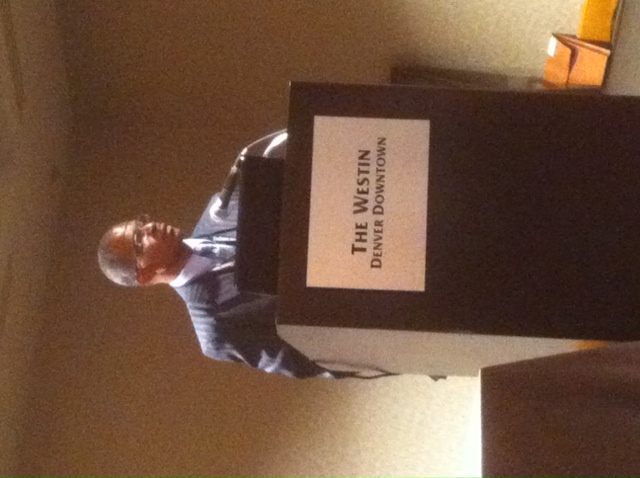
Photo by Robert Corrington

Joyce, thank you so much for doing this interview.  I’m surprised we haven’t done one before.  You’ve been an enormous help to me over the years.  You even allowed me to stay at your home in New Orleans so that I could do research on your late husband, Bill.  During that time I learned that you hold a Ph.D. from Tulane University, and taught Chemistry at Xavier University for ten years.  Tell me, how did a person with that background become a writer?

I’m sure it would never have happened if I hadn’t met and married Bill when we were both at Rice University.  He was working on a doctorate so he could earn a living teaching, but he wanted to write.  Bill succeeded in publishing a number of well-received novels, which I typed and edited for him.  But we did not become co-writers until Roger Corman read one of Bill’s novels and invited him to write a movie script.  This was not something Bill especially wanted to do.  But it paid better than college teaching, so we evolved a film writing partnership, whereby I would create a detailed story structure and Bill would write a script following my outline.  After six films, we became involved in writing television series and continued our writing partnership there and in the four New Orleans mystery books we published.  Bill passed away as the fourth was being written, so I completed it.

Why did you choose to continue the series?

After Bill died I found it difficult to get the same kind of writing jobs we had been used to doing.  I think this was because all of my credits were as half of a writing team and producers felt uncertain whether I could do the job by myself.  Thus I had about two years where I had little to do and, while I read a lot during that time, I also began writing a sequel to our New Orleans mystery series.  I think I wanted to prove that I could do it by myself.  Just after finishing the manuscript for Fear of Dying, I was hired to help produce The Real World, a job which I held for eleven seasons.  I did not get around to publishing Fear of Dying until I retired from that job. Read the rest of this entry »

Poetry by Troy Camplin

In Art, Artist, Arts & Letters, Creative Writing, Creativity, Humanities, Poetry, Writing on September 20, 2011 at 7:58 pm
Troy Camplin holds a Ph.D. in humanities from the University of Texas at Dallas. He has taught English in middle school, high school, and college, and is currently taking care of his children at home. He is the author of Diaphysics, an interdisciplinary work on systems philosophy; other projects include the application of F.A. Hayek’s spontaneous order theory to ethics, the arts, and literature. His play “Almost Ithacad” won the PIA Award from the Cyberfest at Dallas Hub Theater.


Introduction

In the unbelievable and unknown –
In the unrefined and those without thought –
In the unremarkable and unwise –
We find our leaders
We find our heroes
We find our artists
I see it – there is a sun on the horizon –
The rosy fingers of an ancient dawn –
A rebirth of everything from everything we have torn apart –
A world in fragments – no longer a world –
Fragments gathered up –
A world reborn from the fragments –
A world reborn from the past, the ancients –
Greeks, Romans, Chinese, Africans, Arabs, Indians, and aborigines –
Yet –
I am not a postmodernist
And I am not a classicist
And I am not a romantic
And I am not a modernist
And I am not a naturalist
No –
I am each of these – and none
I am the moon and the sun
I am the earth and the sea
I am woman and man
Seriousness and fun
Fragments and unity
Plurality and one

An Astrology

I stand, stare at the Cantor dust of stars,
Stand alone in the open field of grass
That glows in the silver of the moon brass
And dark emerald under a rising Mars.
I wage a silent war within my mind
As I wait in vain for a happiness
These stars cannot bring me. My loneliness
Soaks into the ground to be left behind.
I turn away from Mars and search the sky –
The false-star Venus must be out among
The stars and darkness, a beacon for me
To connect my life to, so I can fly
And leave this lonely-soaked ground a far-flung
Memory. I want to love and to be.


Etre Sartre

In France was an atheist, superb
At finding new ways to disturb –
A communist brand,
A Nazi’s friend, and
Philosophy based on a linking verb.

Foucault’s Nietzschean Genealogy

In Art, Arts & Letters, Historicism, History, Humanities, Literary Theory & Criticism, Philosophy, Politics, Rhetoric, Western Philosophy, Writing on September 17, 2011 at 10:02 am

Allen Mendenhall

“Genealogy […] requires patience and knowledge of details, and it depends on a vast accumulation of source material.  Its ‘cyclopean monuments’ are constructed from ‘discreet and apparently insignificant truths and according to a rigorous method’; they cannot be the product of ‘large and well-meaning errors.’  In short, genealogy demands relentless erudition.  Genealogy does not oppose itself to history as the lofty and profound gaze of the philosopher might compare to the molelike perspective of the scholar; on the contrary, it rejects the metahistorical deployment of ideal significations and indefinite teleologies.  It opposes itself to the search for ‘origins.’”

                                      —Michel Foucault, from “Nietzsche, Genealogy, History”

This brief passage by Foucault has three references to Nietzsche.  The essay from which the passage is drawn demonstrates Foucault’s immense debt to Nietzsche, citing as it does no other thinker but Nietzsche (save for a fleeting reference to Paul Ree, whose term “Ursprung,” or “origin,” Nietzsche adopts).  Of all Nietzsche’s ideas and practices, genealogy is the one that Foucault cultivates most impressively.  Genealogy is a methodology by and with which one documents or tracks the development of ideas and their relation to human organization.  In other words, genealogy traces knowledge to its systemic formations across various networks of discourse.  That is why genealogy “requires patience” and “depends on a vast accumulation of source material.”  It is a process, and processes take time to work out. 

Genealogy does not recover origins because origins are not recoverable.  Origins are fluid, not fixed; they are not, strictly speaking, origins at all—if, that is, “origins” is taken to mean single, absolute causes or definite, immutable sources.  Rather, for Foucault, “origins” is a term of convenience—perhaps strategically essentialized—referring to sets of beliefs and activities that constitute discursive structures mobilized by numerous truth claims.  That is why Foucault can employ the term “origins” in one sentence and then, in a subsequent sentence, seemingly reverse course by calling origins “chimeras.”  The point is not to define or explain origins; the point is to discredit the idea of origins as self-evident and immanently knowable. 

Origins themselves are inaccessible; the emergence and development of structures based on ideas, however, are not only accessible, but also edifying.  Foucault’s genealogy, therefore, seeks to collect data about numerous truth claims and then to explain how these data form and shape culture.  As Foucault says of genealogy, “It opposes itself to the search for ‘origins.’”  Note the quotation marks around “origins.”  Those marks suggest an intent to divest that term of its expressive purchase.  Origins are knowable only as points of loss or complication, only as intricate and multifaceted constructs that, when examined closely, signify multiple and heterogeneous phenomena and that thus enable and sustain further inquiry.     Read the rest of this entry »

Allen Mendenhall Interviews Richard Miles

In Advocacy, Arts & Letters, Communication, Ethics, Law, News and Current Events, Politics, Prison, Rhetoric, Rhetoric & Communication, Teaching, Writing on September 14, 2011 at 9:23 am

Richard Miles spent years in prison after being wrongly convicted and sentenced to 80 years.  He lives in Texas and speaks about false imprisonment.

Richard, thanks for doing this interview.  You and I have gotten to know each other through email correspondence.  I believe you first contacted me after reading my review of Dorothy and Peyton Budd’s Tested: How Twelve Wrongly Imprisoned Men Held Onto Hope (Dallas, TX: Brown Books Publishing Group, 2010).  You are one of those twelve men.  Tell us how you became part of the book.  What do you think of the book, now that you’ve seen the final product?

The first time anyone heard of or read anything about Richard Ray Miles was in The Dallas Morning NewsI remember that morning as if it was yesterday.  To be arrested for murder and attempted murder, at the age of 19, was a horrific experience, but to wake up Monday morning and read that I was the shooter, in a murder I didn’t commit, tore out my insides.  Mr. Mendenhall, my fight for innocence was not just for me—I knew I was innocent—but for my mom and dad.  I didn’t want the story to be the last thing that my father—a minister in the neighborhood who had to hear accusations about his son—to read.  So, when the book Tested was completed, it was like a dream come true: now Dallas residents could read about MY INNOCENCE. 

You’ve been through a lot.  Would you mind telling us your story?  Start wherever you want to start.

I was born in Dallas to Thelma Malone and Richard Miles.  My parents split when I was young, but not long after my mom met William Lloyd and married him.  I was probably about five when that happened, so to say I was without a father is false.  My dad, William, became a minister when I was still young, so I grew up in a very strict, religious household.  Going to church every day was not out of the ordinary.  For the most part, my older sister, two younger brothers and I had a very good upbringing.

As far as schooling goes, I was very smart and interested in learning.  I went to an academy for middle school and then to Skyline High School, which was one of the most prestigious schools at the time.  When I made it to Skyline, I began to feel something different.  I felt that my parents were way too strict on me.  As young children do, I began to rebel—nothing too extreme, but rebellious nevertheless.  I was kicked out of Skyline at the end of 11th grade and was transferred to Kimball.  Kimball and Skyline were two totally different places to learn.  To be more precise, Kimball was a Hood School; its reputation preceded itself.

By the time I got into Kimball and got ready to take my senior exams, I got a reputation for coming to school drunk.  Mind you, I was not a drinker, so any little thing was not good.  The long and short is that I made it all the way to the 12th grade, but did not graduate.  I left home a little after that, never to be in the streets or in a gang because I was working at McDonalds, and I actually liked the idea of having a job.  All that changed when my friend came to pick me up from my parents’ house.  He asked me about selling drugs.  I had never been introduced to that, and by mere peer pressure, my entire life was turned around.

I struggled on the streets for probably one year, but that was enough to experience a life I will never return to.  On May 15th, I was walking home, not knowing there was a shooting miles away, and I got picked up for a murder and an attempted murder.  I have never shot a gun in my life, nor ever thought about stealing or tried to steal someone’s things by force.  So, I knew I would be going home soon. The whole interrogation lasted probably five or six hours.  Because my friend had driven me home and wasn’t with me when I was walking and got picked up, I gave the detective phone numbers of people who could identify my whereabouts.  My friend had gone to his girlfriend’s place.  That’s why I was walking by myself.  All in all, I gave the detective four phone numbers of people who could verify my whereabouts and confirm that I was not the shooter. The detective left and came back about an hour later.  He said, “Your story checked out, but you killed that man, and you’re going to prison.”  I was lost at that point.

I stayed in the county jail for 17 months before I went to trial.  I was given a court-appointed lawyer. In August 1995, I had a jury trial.  

There were ten witnesses, nine of whom said I was not the shooter.  No weapon was ever found, and the fingerprints that were retrieved were neither mine nor the victims’. One person who was shot testified that I did not look like the shooter, and my alibis came as well.  Nevertheless, I was found guilty of murder and attempted murder and sentenced to 80 years in prison. 

After I had sent out numerous letters and spent 14 years in prison, I was contacted by an organization out of Princeton, New Jersey, that picked up my case and found in the police record an anonymous phone record received before I went to trial.  This record mentioned the real shooter as well as other confidential information.  This stuff had never been turned in.  Based on that and other exculpatory evidence, I was released in October 2009; I was the first non-DNA release under District Attorney Craig Watkins

Now I’m awaiting full exoneration, even though the DA and my judge pronounced me innocent. Read the rest of this entry »

What is a Research Paper, and How Does It Implicate Disciplinarity?

In Arts & Letters, Communication, Law, Legal Education & Pedagogy, Legal Research & Writing, Pedagogy, Rhetoric, Rhetoric & Communication, Teaching, Writing on September 8, 2011 at 10:51 pm

Allen Mendenhall

Richard L. Larson interrogates the “research paper” signifier. He claims that this signifier lacks settled meaning because it “has no conceptual or substantive identity” (218). He calls the term “generic” and “cross-disciplinary” and claims that it “has virtually no value as an identification of a kind of substance in a paper” (218). Despite its empty or fluid meaning, the term “research paper” persists inside and outside English Departments, among faculty and students, at both university and secondary school levels. The problem for Larson is that by perpetuating the use of this slippery signifier, writing instructors mislead students as to what constitutes research and thereby enable bad research.

The term research paper “implicitly equates ‘research’ with looking up books in the library and taking down information from those books” (218); therefore, students learning to write so-called research papers inadvertently narrow their research possibilities by relying on a narrow conception of research as library visitation, note-taking, or whatever, without recognizing other forms of research that may be more discipline-appropriate: interviews, field observations, and the like (218). Using the term “research paper” to describe a particular type of activity implies not only that other, suitable practices are not in fact “research,” but also that students may dispense with elements of logic and citation if their instructors didn’t call the assignment a “research paper.” Really, though, research papers teach skills that apply to all papers, regardless of whether instructors designate a paper as “research.” In a way, all papers are research papers if they draw from sustained observation or studied experience.

Having argued that the term research paper is a vacant signifier—vacant of identity if not of meaning (not that the two are mutually exclusive)—Larson argues that the “provincialism” (220) of writing instructors (by which he means writing instructors’ presumption that they can and should speak across disciplines despite their lack of formal training in other disciplines) leads to a problem of territoriality. Some information belongs in the province of other disciplines, Larson seems to suggest, and writing instructors should not assume that they know enough about other disciplines to communicate in a discipline-appropriate setting. Some knowledge, in other words, lies outside the writing instructor’s jurisdiction. I’m ambivalent on this score. Read the rest of this entry »

Friedrich Nietzsche’s On the Genealogy of Morals: A Critical Précis

In Art, Artist, Arts & Letters, Ethics, Humanities, Law, Philosophy, Rhetoric, Western Civilization, Writing on September 1, 2011 at 11:44 pm

Allen Mendenhall

We remain unknown to ourselves, we seekers after knowledge, even to ourselves: and with good reason.  We have never sought after ourselves—so how should we one day find ourselves?  It has rightly been said that: ‘Where your treasure is, there will your heart be also’; our treasure is to be found in the beehives of knowledge.  As spiritual bees from birth, this is our eternal destination, our hearts are set on one thing only—‘bringing something home.’

                                             —    Friedrich Nietzsche, On the Genealogy of Morals

Nietzsche employs an aphorism to open the third essay of On the Genealogy of Morals (GM).  That approach seems fitting for this critical précis, the aphoristic epigram to which quotes none other than Nietzsche himself.

The opening declarative here—“We remain unknown to ourselves”—signals the ancient Greek imperative: “Know thyself.”  That Nietzsche converts the imperative to a declarative is suggestive.  The imperative expresses a command: the emphatic utterance of an authoritative demand (“do this”).  The declarative is a descriptive assertion: the positive utterance of fact or opinion.  The imperative, if issued by the right person and not meant as merely advisory, presupposes the power to enforce or induce the substance of the command.  A speaker that commands another to know himself assumes that the other will act, can act, or ought to act in accordance with what he, the speaker, orders.  The speaker of a declarative statement, on the other hand, conveys information; the transmission of data from the speaker to the listener does not necessarily signify a desire that the listener act, or refrain from acting, in accordance with the data or the speaker’s wishes. 

Nietzsche uses the declarative to describe our epistemic state or to posit an idea about our epistemic state.  His articulation necessarily undermines the idea that we already have answered the call to know ourselves.  Either we have ignored the command to know ourselves (“We have never sought after ourselves”), or we have failed to comply with it—or both.  To the extent that Western philosophy could, at Nietzsche’s moment, be reduced to these two words—“know thyself”—Western philosophy had, if we believe Nietzsche’s declaration, failed or decayed.  What Nietzsche seeks to posit, in more assertive or, one might say, more declarative terms, is a radical rewriting and reinterpretation of knowledge itself.  To know ourselves, we must know what we know and how we know it, or know what we think we know and how to overcome it.  We have blurred the distinction between knowledge and morals; we have internalized weak epistemic truth claims across time; a genealogy of morals is necessary to trace and thereby illuminate our understanding of ourselves. Read the rest of this entry »

Dragon*Con Convention in Atlanta

In Arts & Letters, Fiction, Georgia, Humanities, Literature, News and Current Events, News Release, Writing on August 31, 2011 at 8:25 am

Allen Mendenhall

The Dragon*Con convention will take place in Atlanta from September 2 through September 5.  The convention features events and workshops about science fiction and fantasy, gaming, comics, literature, art, music, and film.

The Comedy of Errors at the New American Shakespeare Tavern

In Arts & Letters, Humanities, Literature, News and Current Events, News Release, Shakespeare, Theatre on August 31, 2011 at 8:16 am

Allen Mendenhall

Tomorrow marks a preview of The Comedy of Errors, directed by Drew Reeves and performed at the New American Shakespeare Tavern in Atlanta.  Performances begin on September 3 and last through September 11, with additional performances on September 17, September 23, September 29, and October 2.  View show information here.

AJC Decatur Book Festival

In Arts & Letters, Creative Writing, Essays, Fiction, Humanities, Literature on August 31, 2011 at 7:56 am

Allen Mendenhall

The Atlanta Journal-Constitution Decatur Book Festival will take place this weekend (September 2 – 4, 2011).  Click here for more details.  The festival features lectures and book signings by over 300 others.  The complete list of authors is available here.

Power Made Perfect in Weakness

In Art, Arts & Letters, Communication, Creative Writing, Emerson, Essays, Humanities, Law, Literature, Poetry, Shakespeare, Teaching on August 28, 2011 at 1:30 pm

Allen Mendenhall

I wrote the following piece about three weeks ago, while I was vacationing in Destin, Florida, with my family.

If we expect others to rely on our fairness and justice we must show that we rely on their fairness and justice.

Calvin Coolidge

My wife and I are on vacation in Florida.  Yesterday morning, over a cup of coffee and a doughnut, sitting on the balcony and reading the newspaper amid sounds of seagulls and the grating roll of morning waves, I noted that one Michael Stone—a blind man, XTERRA champion, and 10-time Ironman triathlete who recently published a book, Eye Envy—will speak at the University of North Florida on August 13.  I haven’t read Stone’s book, but it’s apparently a resource not only for those suffering from vision-loss any degenerative disease.

Stone began to lose his sight in 2004.  His blindness is a result of a rare disease called cone-rod dystrophy.  Despite his handicap, he has accomplished amazing things, but not without the help of others.  During races, he relies on guides, who shout directions and warnings to him.

I’ll never understand why God makes some people handicapped and others not, why some must rely on others, and some must be relied on.  Someday and for a time, everyone relies on someone or something and is relied on by someone or something.      Read the rest of this entry »