See Disclaimer Below.

Archive for June, 2016|Monthly archive page

“Sojourn,” Part Six, A Serialized Story by Yasser El-Sayed

In Arts & Letters, Creative Writing, Fiction, Humanities, Literature, Short Story, Writing on June 29, 2016 at 6:45 am

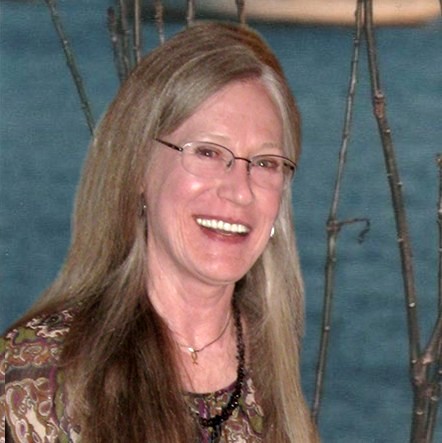
Yasser El-Sayed

Yasser El-Sayed has recently published fiction in Natural Bridge, The New Orphic Review, The Marlboro Review, Red Truck Review, and elsewhere. His short stories have been nominated for the Pushcart Prize in 2014 and in 2008. Yasser’s prose focuses upon the intersections of Arab and American experience both in the Middle East and the United States, including the contemporary American South. He is at work on a short story collection, Casket and Other Stories. Yasser is a physician and professor at Stanford University where he specializes in high-risk obstetrics. He lives and writes in Northern California.


At the end of another of these evenings—there were no other evenings to be had—Neena invited them to linger. “A nightcap. Just the three of us,” she said.

Abu-Bakr had left earlier than usual that night, exclaiming loudly that there were signs the unrest was spreading and he had to attend to business, and then he strode military style out of the bar. To which Joanne had quipped within ear-shot, “Working. Imagine that.”  But with him gone, both Joanne and Nabil could relax and enjoy their moment with Neena.

Behind the bar, Neena poured Nabil a scotch, a cognac for herself.

“Just mineral water for me,” said Joanne.

Neena tilted her head, eyed Joanne for a moment. “I have noticed this before, but now I am sure. My dear, you are pregnant.”

Nabil smiled, nodded.

“Mon Dieu! Félicitations! Mabrouk!””

“Thank you,” replied Joanne stiffly.

“Not exactly planned,” added Nabil.

“A little complicated,” Joanne said.

Neena made a face and shook her head. “How complicated is it? The process well understood, no?” She laughed, said, “Ah oui. Je comprends. You are not together, really together in that way. Not married.”

She poured Joanne’s mineral water. “No alcohol. The hardest part about being pregnant,” she said. “But I still adored it. How far? Can’t be too far?”

“Just barely,” said Joanne. “A few weeks only.”

“My daughter. She is in Canada now. She came back many years ago after her father died, for his funeral. Agreed to see me. Briefly.”

Suddenly the glass panes in the doors to the terrace rattled as if they might shatter in their frames and there was the roar of fighter jets overhead, low and deafening.

Joanne cried out and Nabil gathered her in. For a moment they both looked to the ceiling.

Neena slumped in her seat; her face sank in her hands. “Who knows what will happen,” she said, when the jets had passed. “Will it be better? True, everywhere across the country it is terrible. Getting worse. No freedom. No future. But here in this small corner of the desert we drink, we sing, we dance. A small victory. My only victory.”

Joanne watched her closely. She had told Nabil that she liked Neena. She saw in Neena something of her own restlessness. She reached out and touched Neena’s hand. Neena responded, immediately taking Joanne’s hands in her own. “You could leave,” Joanne said. “Your daughter in Canada. How lucky she would be!”

Neena, who had been taking in Joanne with a warm gaze, threw back her head and laughed. “My daughter would not be feeling lucky,” she said. “I am too careless for her. She is like her father. He comes from a family of masons. They all love laying one perfect brick on top of the other. Careful does it. Careful does it. Doesn’t really matter what is being built, just as long as it’s straight and strong and the pieces all fit perfectly and the mortar isn’t making a mess. No unseemly edges. I am too unseemly.”

She stopped and shook her head, her face suddenly lit up with the urgency to make a point. “Did I tell you my mother was from Paris? I kept in touch with a few relatives there. And yes I thought at one point I might go there. I did in fact. Not for long though. I came back. You think you are from somewhere. Convince yourself of that. But not really. Suddenly you are just where you are. I caught the plane to Paris in Alexandria. I hadn’t been back to Alexandria for a long time, but each time I return I hardly recognize it. No. Seriously. It just keeps getting worse. I keep thinking how can it get worse? How can it get more crowded, more polluted, dirtier, more open sewers, more grime everywhere? How? But it does. It always surprises me. A talent really. An amazing gift for decline. So then I was really excited to leave. And when the plane took off, I said finally out of here. Gone. And I land in Paris and there is cooler air, cleaner streets, order, a beginning and end to the day. Each morning I get up in my little rented apartment. I make coffee, but it isn’t like the coffee I know. It isn’t mud. I tell myself I am sure I can find my coffee. I just have to look and find an Arab or Turkish store. In Paris they must be everywhere. Outside the streets are cleaner, there is no dust, no open sewers. El dinya nadeefa. Al aalam nadeef. No donkey carts pulling an open carriage with wares. But people hardly look at you as you walk past them. And there is the texture and smell of metal everywhere, steel, the glint of it, sunlight distilled to nothing, sharp as a knife, without warmth. That is what starts to strike me. The night rolls in. The lights go off. Each person in their own small cubicle. Their own prison. Isolement. That’s when I start to miss this place. Miss the desert. The smells, the merging of night and day, of water and sand, of past and present. I returned. Je suis revenue. Alone. Hina fee beity. Home.”

Joanne shifted in her seat. “I can see why you love this place,” she said. “Besides, with the restaurant you have no time to feel lonely.”

Neena brought her hands, which had been flying about, back to her lap. “The restaurant is failing. It has been for too long. No one cares anymore about the battlegrounds and the cemeteries. Those that did are themselves dying. I imagine them fading away in nursing homes all over gray Europe. Mon Dieu—but there were so many good years!”

“Your husband,” said Nabil. “How about him? How did he feel about this place?”

“My late husband. No. We lived apart for many years before he died. He stayed in Alexandria, with my daughter.”

A wave of irritation swept over Nabil. “So you just moved out here. One day you said, “I’ll leave my husband and daughter and move to the desert, build a restaurant.”

Joanne threw Nabil a hostile glance, but if Neena took offence at his words she didn’t show it. “You must understand some of this,” she said. “This not belonging. Then also perhaps I was not meant to be a wife to any man.”

She took the empty glass from Nabil’s hand. “Another?”

Nabil shook his head. She walked their glasses to the sink behind the bar.

“But I did not always feel alone here. One summer, soon after I started the restaurant, I met a young woman.” She had her back to them, rinsing the dishes. “She was from Alexandria. She used to stop by the restaurant every summer she was here with her family. She spoke French, which was nice. She was beautiful and lonely and there was a certain understanding. An attraction we couldn’t deny. We became close. I would look forward to the summers just to see her. We’d exchange letters the rest of the year. She wouldn’t let me visit her in Alexandria, but here, here it was different. She hated this place, and I was her reprieve.” Neena stopped, smiled, shrugged her narrow shoulders. “Stories. Too many stories. I could keep you up all night with them.”

Nabil stood up suddenly.  “It’s late,” he said. “We should go.”

Neena regarded him for a moment. “Not so late, Nabil. Mais bien. I’ll see you tomorrow night, though,” she said, then added quickly, “and please, please the cemeteries. You can’t leave without seeing the cemeteries.”

To be continued….
“Sojourn,” Part Five, A Serialized Story by Yasser El-Sayed

In Arts & Letters, Creative Writing, Fiction, Humanities, Literature, Writing on June 22, 2016 at 6:45 am

Yasser El-Sayed

Yasser El-Sayed has recently published fiction in Natural Bridge, The New Orphic Review, The Marlboro Review, Red Truck Review, and elsewhere. His short stories have been nominated for the Pushcart Prize in 2014 and in 2008. Yasser’s prose focuses upon the intersections of Arab and American experience both in the Middle East and the United States, including the contemporary American South. He is at work on a short story collection, Casket and Other Stories. Yasser is a physician and professor at Stanford University where he specializes in high-risk obstetrics. He lives and writes in Northern California.


Nabil stood by the French windows and gazed out onto the beach. “We’ll stay put for now,” he said. “We’re safe here. Who knows what it will be like in Alexandria.” He imagined the airport shut down, the pressing crowds at the terminals.

“I don’t know,” said Joanne. “We’ve come all this way. We can still travel around like we’d planned. The whole country can’t be shut down.” She paused. “Besides, who knows when we will have this time alone together again? Just the two of us.”

Nabil said nothing.

“Nabil. You know we’ll need to decide soon,” she added hesitantly. “By the time we get back to the States.”

Nabil nodded. His eyes tracked the turbulent wake of a police motor boat, flag fluttering furiously in the head wind, as it cut through the waters off the hotel, then disappeared behind a swathe of massive sand dunes along the coastline.

They were at Neena’s every evening, something to occupy the long nights. They had come to recognize the few remaining tourists from the resort.  Abu-Bakr would always swagger in late, perch on his barstool and survey the scene. He never touched alcohol, just ordered a steady stream of coffee, tea, and water.  Neena made her grand entrance, the same every night, stopping by each table, lingering with Nabil and Joanne. At the end of one evening, struggling to sustain the mood amid her dwindling clientele, she set up a microphone at the far end of the bar, and sang along with Edith Piaf, Frehel, Jacqueline François, Gilbert Bécaud. She had a nice voice, swayed to the music as she sang, and seemed to lose herself for a while. By closing time she was clearly drunk, steadying herself against a chair, propping her wispy frame against the bar, pouring another glass of her favorite red wine.

But both Nabil and Joanne looked forward to the nightly stroll to Neena’s, the sun low on the horizon, the searing white bleakness of the desert in midday now transmogrified by the setting sun into a tumultuous blaze of red and orange, and a turquoise hue coalescing in the distance.  And once there, his first drink ordered, Nabil would feel the weight of the day’s anxieties lift slowly.  He was secure in the cool depth of the bar. Even Abu-Bakr – his way of imposing himself into their midst – ebbed into the shadowy recesses of the bar.

“This is what happens when you stay and stay and stay, so long that you can’t imagine leaving,” Neena confided to Nabil and Joanne. She was tearful, her face distorted in the dim light. “I am going bankrupt. Soon I will have nothing! Nothing!” She said this holding her arms out to them, a moment later clasping her hands to her chest, a broken sob escaping her lips, her head hung despondently.

“My dear Neena! What’s all this?’ said Abu-Bakr, dislodging himself from the bar stool and pulling a seat up to their table. “Why the tears. Always tears. Then too much laughter. Then tears. It is always one or the other with you, no?”

“The country is on fire,” she snapped at him. “And what are you doing? You the big police chief. You and your friends who got us to this point.”

“We each do what we can. Why I am here every night, no?” replied Abu-Bakr curtly. “Keeping a close eye on everything. Everything! Keeping chaos from swallowing us up. Making sure no trouble-makers hiding here or there. Provocateurs. Destroyers of our country.”

Joanne laughed out loud. “Really?” she said. “That’s your job? That’s what you’ve been doing?”

Nabil glared at her and shook his head sharply.

Abu-Bakr smiled. “We adapt with the times, no? Just like our friends in America. They dance with us when the times are good, waltz away when the times are bad. Proclaim their innocence. Always their innocence.”

Neena shrugged, stood up abruptly, and said to Abu -Bakr “Vous m’ennuyez!” Then she brushed past him. She changed the CD.  Tempo now fast and furious.

“The Gypsy Kings.” Joanne exclaimed happily. “Bamboleo. I love that song,”

Abu-Bakr rose, held a fat paw out to her. “So a dance?” he asked. “Nothing cheers old Neena up like the sight of good friends dancing.”

“I think we are all too tired for dancing,” Nabil interjected.

Joanne didn’t respond; she kept her arms folded in front of her.

Abu-Bakr ignored Nabil and persisted, “Or are you afraid? Will you run away?”

Joanne stared at him.

“Maybe another time,” said Nabil.

Joanne laughed, rolled her eyes. “Alright,” she said. “Why not?”

She swung past Abu-Bakr, and he turned on his heels after her, caught up to her and pulled her close  He tried to spin her around the small open area in front of the bar, moved jerkily with her across the floor, his glistening face almost touching hers. She rested her hands gingerly on his shoulders, avoiding the two large stains soaking his shirt.  Like a songbird on the back of a lunging rhinoceros, Nabil thought.  He started to get up, but Neena waved him down, took it upon herself: “Let her go you buffoon!  Dégoûtant! She’s drowning in your sweat.”

Abu-Bakr pulled up short, let his hands fall off Joanne’s waist and stepped back. He turned to Joanne, palms up, and offered an exaggerated bow.

But Joanne glared at him, turned on her high heels, and strode straight to Nabil.  “Air,” she said.

“Perhaps I am not a good enough dancer,” said Abu-Bakr as he followed Joanne back to the table. “I am, as they say, self-taught.”

“You are, as they say, a fool,” said Neena sharply. “Take her out to the terrace Nabil. A nice breeze. Away from all this.”

“Let’s go,” said Nabil. He tried to put his arms around Joanne’s shoulders, but she shrugged him off.

On the terrace, in the moonlight, Nabil turned his back to the sea and leaned against the wooden railing. He said, “That fat fuck.”

“Oh please,” Joanne said. “I could give a damn. Just with all of you sitting around it felt like a spectacle.”

She turned away from him and clicked to the end of the terrace. Nabil followed, stood behind her, neither close nor far.

She peered out over the Mediterranean, white caps out there.  Finally, she said, “I don’t mind staying here.” She held herself tight. “I don’t mind one bit. I don’t need to go anywhere else.”

“Let’s see how things go,” Nabil said.

“It’s okay,” she said.

“Maybe there will be trains out of Alexandria and we can get to Cairo. Figure things out from there.”  He put a hand on her waist.

She shook her head, brushed windswept hair from her eyes. “It’s just fine with me to stay for now. Can’t imagine that it’s any better anywhere else.” She took a deep breath and peered out at the water that was dappled in the moonlight.  “Let’s go back in.”

In the bar the German couple was sitting at a table in the back and talking with worried intensity. The Australian hiker had dozed off in a corner, his sunburned legs and scruffy boots stretched out in front of him, his chin on his chest. A small contingent of Chinese tourists had stood up from their table to leave. Neena was nowhere in sight.

Abu-Bakr was sitting on his stool at the bar and waved them over. He looked at Nabil and then Joanne, a contrite expression on his face.  “I’m very sorry. Very sorry. I did not mean to upset. Truly. Please sit a while” The television was broadcasting images from Cairo, where traffic was moving smoothly across the Kasr El Nil Bridge. At the bar, Nabil placed himself between Abu-Bakr and Joanne.  “Nothing about the protests?” Nabil said.  “Never a word.”

Abu-Bakr laughed. “This orchestrated coup against the government will never work,” he said. “They like to bark; they like the sound of their own barking. When did you say you were last in Egypt?”

“I left when I was ten. A long time ago,” said Nabil.

“Yes, you have been gone too long. You don’t understand Egyptians anymore. I, sir, have lived here my whole life. I have been in this town for more than two decades! I know police work and I know people. These people you see demonstrating on television, it means nothing. Anyway, believe me, people are fundamentally cowards, even here in Egypt. They say a lot of things. Yes, sometimes they even do things. Sometimes terrible things. Then they run away. They pack up, they take their daughter, their son, whomever, and they run away. Sometimes to America, no?”

“I’m not sure I understand what you’re getting at,” replied Nabil.

Abu-Bakr adjusted his rear in the stool, which groaned, and he gazed past Nabil at Joanne, who was sitting stony faced. “My dear Joanne, my dear, All-American Joanne.  I am not the enemy. Please understand, I speak the truth. We here are complacent. Of course we are. We have been tamed by the whip, by poverty, by the centuries, by the cattle prod in the rectum. We are a hollow shell of a people, the detritus of history. There is nothing we won’t accept. Beat us and we will crawl. Yell and we will scuttle away.”

Joanne waited a few beats and said, “I think that’s pretty pathetic.”

He yawned and stretched his arms out in front of him. He seemed pleased with his monologue.

“Well,” Nabil said.  “It’s getting late.”

Abu-Bakr looked at Joanne and a sleepy smile crept over his face. “You are a believer, no? You believe in human energy, in the transformative ability of the human spirit, in the capacity of man to alter his fate and the course of human events. A can-do spirit! Manifest Destiny! The western frontier! How precious. How American. Here we have been slogging the same slice of narrow terrain for thousands of years. That is our frontier.”

The cleaning lady came out from the kitchen carrying a large rubber container for the dirty dishes. Abu-Bakr waved her over. “An example,” he said to Joanne.

“No,” Nabil said. “That’s enough.”

“But please,” Abu-Bakr said. “It is important I make things clear.  Mounira—come over here.”

Mounira approached hesitantly, a wavering smile on her face. “What! You think I am going to bite?” Abu-Bakr said to her. “You speak a little English, yes. I just have a question for you.”

Mounira nodded.

“My friends here are visiting from America. You know USA! USA! USA!”

Mounira nodded again. “They want to know the way to the Statue of Liberty. You know the famous one I’m talking about. Where is it exactly? Down the highway somewhere?”

“Yes,” she said.

“Before Marsa Matrouh?”

“A few miles before. A couple of towns before.”

“Thanks Mounira,” said Abu-Bakr. “Now that wasn’t so bad!”

After she left he turned to Joanne and said, “See what I mean. Statue of Liberty. She has no clue. Just, yes sir. Absolutely sir. Anything you say sir.”

“That’s absurd,” said Joanne. “She’s probably thinking you are an idiot. She’s humoring your stupidity.”

In the shadows by the kitchen entrance, Nabil saw Mounira staring back at them.

Abu-Bakr wagged a finger at Joanne. Under his breath he chanted: “USA!  USA!”

“That’s enough,” Nabil said.

To be continued…

Claire Hamner Matturro Reviews Robert Bailey’s “Between Black and White”

In Arts & Letters, Book Reviews, Books, Creative Writing, Fiction, Humanities, Justice, Law, Law-and-Literature, Literature, Novels, Southern Literary Review, Southern Literature, The Novel, The South, Writing on June 15, 2016 at 6:45 am

ClaireHamnerMatturroforSoLitRev

Claire Hamner Matturro, a former lawyer and college teacher, is the author of four legal mysteries with a sense of humor. Her books are Skinny-Dipping (2004) (a BookSense pick, Romantic Times’ Best First Mystery, and nominated for a Barry Award); Wildcat Wine (2005) (nominated for a Georgia Writer of the Year Award); Bone Valley (2006) and Sweetheart Deal (2007) (winner of Romantic Times’ Toby Bromberg Award for Most Humorous Mystery), all published by William Morrow. She remains active in writers’ groups, teaches creative writing in adult education, and does some freelance editing. Visit her at www.clairematturro.com.

The review originally appeared here in Southern Literary Review.

Following the success of his powerful debut legal thriller, The Professor (Thomas & Mercer 2015), Bailey offers a second, stunning story in the series. In his novel Between Black and White (Thomas & Mercer March 2016), Bailey establishes beyond doubt that he is an author to be read and reckoned with.

Between Black and White is closely tied to Bailey’s first book and involves several of the same characters. In The Professor, readers were introduced to aging former law professor Tom McMurtrie, who returns to the courtroom after being forced out of his teaching position at The University of Alabama School of Law. Tom teams up with Rick Drake, an impetuous young attorney and his one-time student. Together, in The Professor, Tom and Rick pursue a tense and dangerous wrongful death lawsuit.

While Tom and Rick dominate The Professor, another lawyer—Bocephus Haynes, or Bo—steps into that story at critical times to boost and support Tom. Bo is a bigger than life black University of Alabama football star who blew out his knee and, instead of retreating into depression over the loss of a pro football career, goes to law school. Tom is one of his professors, and the two develop a close friendship.

As much as The Professor was Tom and Rick’s story, Between Black and White is Bo’s story. In the prologue, we meet Bo as a five-year-old who watches members of the Ku Klux Klan lynch his beloved father. From the opening pages of Chapter One—which finds a disheartened, angry Bo getting drunk on the anniversary of his father’s brutal lynching—to the shocking, violent conclusion, Bo leaps off the pages with boldness and spirit. But like all well-crafted fictional heroes, he is flawed, and his failings land him in a courtroom as the sole defendant in a capital murder case.

His near fatal flaw: hunger for revenge. Obsessed with punishing the man who lynched his father, Bo shapes his professional life around that goal. After graduating with honors from The University of Alabama School of Law, Bo turns down offers at prestigious law firms. He returns to his home town, Pulaski, Tennessee, to a solo law practice as the city’s only black attorney—and to pursue the man he holds responsible for his father’s death. Too many people in the city of Pulaski know Bo is driven by his fixation to punish the man he blames for his father’s lynching. His wife has even left him because his drive to avenge his father’s murder has endangered their two children.

Since Bo was five years-old, he has blamed Andrew Davis Walton, a powerful businessman in Pulaski, for his father’s death. Once the Imperial Wizard of the Tennessee Knights of the KKK, Walton shook off the robes of the Klan and made millions in the stock market. Known as the “the Warren Buffett of the South,” he tried to make amends for his Klan actions.

Yet people have a long memory when it comes to the Klan—and no one more than Bo. Though Walton was hooded the night five-year-old Bo witnessed the lynching, Bo recognized Walton’s voice. But no one in law enforcement was ever willing—then or later—to prosecute Walton on the testimony of a child claiming to identify a voice.

On the 45th anniversary of his father’s lynching, Bo gets drunks in a local bar. Walton and Maggie, Walton’s aging, beautiful wife and one of the local landed aristocracy, seemingly accidentally run into Bo in the bar. Face to face with Walton, Bo threatens him in front of witnesses by quoting the Old Testament’s “eye for an eye.”

After the bartender breaks up the confrontation, Walton steps outside. But before Bo leaves the bar, Maggie returns to tell him that Walton is dying. She asks that Bo leave her terminally ill husband alone. Bo staggers out, lamenting to himself that Andy Walton was going to die before he could bring him to justice.

That night, someone shoots Walton and stages a mock lynching at the site where Bo’s father was lynched four and a half decades before.

Physical evidence points directly at Bo. Everyone in the legal community knows he had the motive and opportunity. Even before Bo recovers from his hangover, he is in jail. The prosecutor, a fierce woman attorney who has butted heads with Bo in court before, decides to seek the death penalty.

Pulaski was the birthplace of the Ku Klux Klan, and many residents and officials in the city strive to live that down. So when the murder, with its roots in the old KKK lynching, puts Pulaski and its Klan heritage back in the spotlight of national media, city officials attempt to pressure Bo to plead guilty and avoid the further media circus of a trial.

Bo refuses. He is innocent of murdering Walton—or so he claims, though no one in law enforcement believes him. He calls on his former law professor and close friend, Tom, to defend him. Reluctantly, Tom agrees and retains local attorney Raymond “Ray Ray” Pickalew, another former U of A football player. Rick, who is now Tom’s law partner, is dragged into the case as well.

Though Tom and Rick sense a setup, they struggle against multiple roadblocks—and the overwhelming physical evidence of Bo’s guilt—to determine who had a motive to kill Andy Walton and frame Bo. During their quest, Tom is assaulted and sidelined by his injuries; Ray Ray is a drunk with an attitude, and young. Overwhelmed Rick is left to unravel the seemingly unrelated pieces of a complex, emotional puzzle. Villains from The Professor return to taunt and threaten Tom and Rick, adding further intricacy to the plot.

Thus, Bailey sets up the classic formula of a legal thriller. Mind you, formula is not used as a derogatory term here. Shakespeare’s sonnets were formula and critics do not dismiss them in disparaging terms. As used here, formula simply refers to the structure and elements that define a genre or a literary style. In a legal thriller where the focus is on a criminal defendant on trial for his or her life, readers expect the odds to be stacked against the defendant. They expect the defense attorneys to be complicated, troubled, overwhelmed and conflicted. And, owing perhaps to the Perry Mason standard, readers expect a surprise witness and revelation near the close of the trial which allows the defense attorneys to prevail and the defendant to be found not guilty.

There are, of course, notable exceptions to this basic formula. Lincoln Lawyer and A Time to Kill come to mind. Both of those legal thrillers had guilty defendants, yet with vastly differing twists at the end.

Given the formulaic elements at play in the genre, a successful legal thriller author has to avoid creating a stale, mechanical plot that reads like a written version of a paint-by-number canvas. Yet the author has to keep the plot within the confines of the genre or publishers will scratch their heads and throw the manuscript on the reject pile.

In other words, authors working within a prescribed genre face a kind of delicate yet vicious circle. On the one hand, they must write within the parameters of their chosen genre. But, on the other hand, they have to do something new, exciting and fresh. It’s kind of like saying: Color within the lines. But don’t color within the lines.

Within this catch-22, the author has to give the reader something more—and something different. This Bailey does, and does with a bang.

Yet, having said that much, to say much more about the surprising, original twists of Between Black and White risks spoiling the plot. Thus, this reviewer will only observe that per the Perry Mason/John Grisham model, an unexpected witness with a startling revelation does pop up at the end of the trial. But just when the reader settles back to relax and believe that justice has been achieved, something complicated, violent and utterly surprising happens.

It isn’t just that Bailey knows how to surprise us, but he also writes well. Very well. Make no mistake on that point. His sentences are clear, clean, distinctive, and when they need to hit with a punch, they do. His pacing is excellent—an edge-of-the-seat, can’t-put-it-down momentum fuels the storyline from the prologue to the climatic ending. His characters are well-drawn, his sense of place and world-building excellent. The plot is intricate, but believable. There is redemption for some characters, resolution for others—and those that deserve neither are left to flounder in their own hell. Justice is achieved, albeit in a confused, violent way.

In short, Bailey wrestles what in less talented hands could have been a formulaic story into something wholly fresh, engaging, and ultimately rich and satisfying. This is a book you want to own and read.

“Sojourn,” Part Four, A Serialized Story by Yasser El-Sayed

In Arts & Letters, Creative Writing, Fiction, Humanities, Literature, Writing on June 8, 2016 at 6:45 am

Yasser El-Sayed

Yasser El-Sayed has recently published fiction in Natural Bridge, The New Orphic Review, The Marlboro Review, Red Truck Review, and elsewhere. His short stories have been nominated for the Pushcart Prize in 2014 and in 2008. Yasser’s prose focuses upon the intersections of Arab and American experience both in the Middle East and the United States, including the contemporary American South. He is at work on a short story collection, Casket and Other Stories. Yasser is a physician and professor at Stanford University where he specializes in high-risk obstetrics. He lives and writes in Northern California.


By the time the food came, kabobs for Nabil, chicken for Joanne, the bar had filled up slightly.

“Not so good about the airport,” said Nabil. “I’m thinking this was all a mistake. We shouldn’t have come.” His mood turned dark. He stared at his plate, a worried expression settling on his features.

They recognized some of the faces from the hotel – Joanne pointed out a German couple they had met briefly in the hotel lobby, also a young man with unruly sandy hair and an Aussie T-shirt.  A comforting handful of others sat in groups of two or three; most looked like tourists from Europe and Asia.

Nabil’s food was mediocre; the kabobs too few and too lean. Joanne had chosen well, her chicken perfectly regal on its bed of puree. But the atmosphere had picked up with the chatter of customers and soon a more comfortable air had settled in, the events moving across the country momentarily receding into the background.  Nabil, relaxed, his fears abating, found he could eat. Joanne dug into her food, stopping only to watch as a woman they had not noticed before strolled through the dining room and chatted with a few of the guests. Behind her, Nabil saw, to his surprise, the police chief, Abu-Bakr. He had stepped back from the woman once she started conversing with the diners, and made his way to the bar counter, settling himself on a stool, a few feet away from their table. His trousers, taut over each substantial thigh, looked more than uncomfortable, his girth spilling over his belt as he sat hunched over on the barstool. He glanced over at Nabil and Joanne, nodded his head in acknowledgement. Joanne regarded Abu-Bakr briefly, waved a few vague fingers in his direction, turned her attention back to her dinner.

The woman walked into the bar. She was older, slender, small, clad in a black evening gown, silver hair tied up in a bun, a string of pearls shimmering across the pale skin of her throat. She looked overdressed for the setting, but somehow comfortable in her presentation, as if in her mind she was somewhere else, presiding over a different kind of clientele in a different kind of place.

“Neena in the flesh?” Joanne said.

They watched her move around the tables and greet patrons.  Soon, she stopped at their table.  “Hallo,” she said, in French-accented English. “How do you like your meal?”  Her face was a perfect oval of carefully placed eyeliner and shadow, blush and lipstick, nice but still failing to hide her age.

Joanne said, “The roasted chicken is divine.”

“Very nice,” Nabil lied. “Looks like things are picking up a little.”

“You must be American,” Neena said. “We get so few Americans these past few years. British, French, Italian, German, even Canadians, everything. But no Americans. It’s a shame. Malheur de la politique.” She had a throaty voice, a habit of stretching out certain words for emphasis, her mannerisms a little too expressive, as if this were a speech she had practiced and delivered countless times before. “Le monde est vraiment petit n’est-ce-pa? No need for all these problems.”

Abu-Bakr overheard the exchange, laughed, leaned over in their direction and said, “Neena, perhaps our American friends could inform us as to why in god’s name they hate us so much?”

Ignore him,” said Neena. “Unfortunately I have to tolerate his presence.”

“We are American,” said Nabil to the woman. “But my father’s family was from around here. Used to own land around here.”

Neena nodded distractedly. She placed a hand lightly on Nabil’s shoulder, smiled warmly at Joanne. She assumed a faraway expression, two fingers floating momentarily across her temple as if to smooth out the fine worry lines. “Well I was raised in Alexandria, but I vastly, vastly prefer this place. I’ve been here so, so long now. Fell in love with the desert. Madly. The terrible, wonderful emptiness of it all. And then history of this town. The wars that raged.” She pointed east in the direction of the old battlefields of El Alamein.

She stopped, ran a finger absent-mindedly across a loose strand of hair. “What’s the family name?” she asked.

“Awad,” replied Nabil.

Something like recognition passed briefly over her face.  She covered with more verbiage. “You should come back. You should come back every night. There is nothing else to do around here. We can talk more. Nous pouvons parler toute la nuit! I need to understand more why you are here.” And with that she bade them a good evening and paused for a moment by Abu-Bakr at the bar.

Joanne saw her exchange a few words with Abu-Bakr, and both glanced quickly in their direction. Then Abu-Bakr rose from his seat and followed her back into the dining room.

Nabil was looking around the bar trying to catch their waiter’s attention.

“When did you say the airport closed?’ Nabil asked the waiter after he finally brought them their check.

“Just few hours ago. Tonight.”

“Any news on when it will re-open?” Nabil said trying to sound more nonchalant than he felt.

The waiter shrugged. “No one knows,” he said. “No one knows anything.” He nodded, looked past them into the dining room, his attention focused there where it was busier.

When they had stepped outside the restaurant, Joanne said, “What did she mean by that comment?”

“Who? By what?”

“Neena. Understanding why we are here?”

Nabil shrugged, “Who knows. Just her English turned around.”

A few cars were parked at odd angles in the small dirt cul de sac at the front of the restaurant. There was something that felt especially familiar to Nabil about this place. He’d sensed it the moment they’d first come upon the restaurant. It was more pervasive now, perhaps the alcohol, the quality of the light approaching dusk. He stood for a moment looking around him. Behind them was the sea, the sound of waves breaking on the shore. Before them, a dirt path, bordered on either side by a barren terrain of sand and scrub grass, led back to the highway. Joanne held herself close to Nabil as they ambled along.

“Somewhere here,” Nabil said. “It looks different now. I think we were standing near here. She was trying to cross.”

They’d stopped at the edge of the highway.  The sun was low, and Joanne shielded her eyes from the dusky red glow off the desert.

“It’s more built up now. I remember an empty road, desert, lots of open space.”

Joanne looked around. The small storefronts on either side of the highway, the few scattered homes nearby, the level road ahead. She laughed and said, “built up?”

They doubled back down the highway away from the town and towards the resort. Nabil spotted the convoy first. “Look,” he said.  The armored vehicles, at first hazy in the distance, were rapidly approaching them, then passing, throwing up clouds of dust. Green tarp covered the beds, but the back flaps were open, revealing rows of seated soldiers, rifles at hand. The last vehicle stormed past with a heart-seizing blare of its horn. They froze and watched until the convoy was out of sight, speeding in the direction of Alexandria.

To be continued…

“Sojourn,” Part Three, A Serialized Story by Yasser El-Sayed

In Arts & Letters, Fiction, Humanities, Literature, Short Story, Writing on June 1, 2016 at 6:45 am

Yasser El-Sayed

Yasser El-Sayed has recently published fiction in Natural Bridge, The New Orphic Review, The Marlboro Review, Red Truck Review, and elsewhere. His short stories have been nominated for the Pushcart Prize in 2014 and in 2008. Yasser’s prose focuses upon the intersections of Arab and American experience both in the Middle East and the United States, including the contemporary American South. He is at work on a short story collection, Casket and Other Stories. Yasser is a physician and professor at Stanford University where he specializes in high-risk obstetrics. He lives and writes in Northern California.


The resort was running a limited dining service, the disturbances having left the establishment nearly vacant. The front desk directed them to a small restaurant called Neena’s, within walking distance. The path from the beach house curved along the back of the hotel compound, then past a fading parking lot to a dusty road lined with towering, spindly palm trees, their reed-like motion in the sea breeze at once resilient and unsteady.

Neena’s was located a half mile down the highway, barely in town, which wasn’t much—a few miles of low-flung limestone homes and stores, narrow roads. The restaurant was a clean, modest affair; a small dining area led into a dimly lit bar. There Joanne chose a table by the bar and ordered a mango juice. Nabil ordered a Stella, the local beer for more than a century. The bartender drifted between the dining area and bar, straightening out the wrinkles on the tablecloths, and making subtle adjustments to the seating, in no apparent hurry to get their drinks. The decor was simple, mostly paintings of ancient Cairo and Alexandria during the Abbasid period depicting men in turbans and flowing gowns gathered around crowded market-places, or camped in clusters in an expanse of desert outside the Citadel. Scratchy music played overhead.

“That’s the singer Umm Khalthoum,” Nabil said. “I grew up on this. She was my father’s favorite. In New Jersey after we first arrived in America it was all he listened to. Every night when he thought I was asleep. He would sit there in the living room in the dark with the same record playing night after night, filling the place with cigarette smoke.”

“More actual detail about him than you have ever shared, Nabil,” said Joanne.

At home, they lived two hours apart. He saw Joanne on weekends. She was a financial analyst at a firm in San Francisco. He lived outside Sacramento, a technical writer at a civil engineering company. They shared a fondness for books and movies, restaurants, wine. He loved her apartment in the Marina district, the flood of sunlight from the expansive bay window, overlooking the Pacific and a slice of the Golden Gate Bridge.  He would drive to San Francisco most Friday nights, head back home late Sunday.  The distance kept them together, they always said. The pregnancy an accident, both of them momentarily unhinged, relying just this once on a timely withdrawal. Coitus interruptus interrupted.

Their drinks came. “What is she saying?” asked Joanne.

“Love. Despair. A little more love. A touch more despair.”

“Of course he was thinking of your mother.”

“Maybe,” said Nabil.

“What does that mean? His young wife drowns on vacation. Leaves him with a small boy to raise alone. He is devastated. Escapes to America. A new life.”

Nabil sipped his beer. “My mother hated it here. Did I tell you that?”

Joanne shook her head, regarded him. “No. As I recall the official line is you don’t much remember anything about her.”

Nabil looked away, eyed the array of liquor bottles along the glass shelves above the bar. He had kept reminiscence of his time here as a child at a distance, even to himself. Joanne, at one point frustrated by his resistance, had eventually abandoned her forays into the topic. Still, but for Joanne, there would have been no trip here. “You get on a plane,” she had said, and meant that he spare her the drama. She’d been right, and now that they were here, it felt absurd not to allow himself the freedom to give more form and substance to his memories, share more with her.

When his beer was finished, Nabil tried to catch the bartender’s attention, but the man was in the dining area, his back to them. Nabil sighed and leaned back in his seat. “She was from Alexandria, a city girl, private school, French sprinkled in with the Arabic at home. Piano lessons. Marble foyer with ridiculous plaster busts of Beethoven and Mozart. All the pretenses. My father tormented her for it. ‘Why Merci? What’s wrong with Shokran?’ Here he reclaimed his place. Returned to his roots. I’d feel it. Everything harder. Coarser. His language changing. His laugh.”

Joanne said, “All you ever told me is that you came to the U.S. with him. That you picked up and moved every few years after that.”

“We were not close and we rarely spoke of her or of this place.

“You said he never married again, but there must have been someone, another woman sometime along the way?”

“No. Not that I saw. And we never stayed in one place for long.  New Jersey, Detroit, Pittsburgh, Saint Louis. He avoided everyone.”

“Even other Arabs?” Joanne said. She played with an edge of her napkin, looked up at Nabil.

Especially other Arabs. He kept to himself. Listened to Umm Khalthoum.  He drove a cab, worked night shift as a janitor, manned convenience stores. Anything.”

“Such a depressing childhood, Nabil,” she said. “I thought mine was bad enough.”

Nabil shrugged.  “He was not a bad father. He provided everything I needed. But yes, what I remember most are gray skies, cold winters, run down apartments in random cities.”

A young waitress, hair in a pony tail, dressed in a simple tan skirt and green blouse brought over quarters of pita bread in a basket and small saucers of hummus and tahini and olives. Nabil handed her his empty beer glass and ordered a scotch, but the girl didn’t seem to understand what a scotch was.  He pointed to the bottles of liquor behind the bar, tried again, the girl listening carefully.  “Ah,” she said, nodding quickly before seeking out the bartender who had just come in from the dining room.

Joanne leaned back in her seat, she was wearing jeans and a white button down that left her arms bare. “It’s so peaceful here,” she said. “Was there truly nothing your mother liked about this place?”

Nabil shook his head. “She loathed the summers. Long months of nothing but desert and sea, and the three of us alone.  Even as a kid I’d sense it as she prepared for the trip out here. Each piece of clothing ironed and folded and neatly packed in suitcases. Like she was putting some part of herself in storage.”

Joanna crossed her arms, hugged herself, rubbed her arms gently with each hand.

“Are you cold?” Nabil asked. “I can have them lower the air conditioning.”

Joanna shook her head. “No. I’m fine. Just trying to imagine things, that’s all.” She scooped up a dollop of hummus with the pita bread and offered it to Nabil. He waved it away, and she plopped it into her mouth.

“There was one time I do remember clearly. She was holding my hand, looking back at him.”  His father in the sun and haze, white shirt, sleeves rolled half way up his arms, black trousers. “I was pulling back from her, and she kept holding onto me, tugging, cajoling me to cross the highway with her until she finally just gave up. And we stood there at the edge of the road and watched him approach.”

The bartender brought over Nabil’s scotch. Nabil thanked him, gestured at the empty bar and asked, “Where are your customers?”

The bartender waved in the general direction of the hotel. “People try to go away,” he said. “But airport shut down.”

To be continued…