See Disclaimer Below.

Archive for the ‘Uncategorized’ Category

Allen Mendenhall on “War Room” Discussing Price Controls and ESG

In Uncategorized on September 3, 2024 at 7:35 am

Campus protests have reached Alabama. What should our universities do?

In Uncategorized on June 5, 2024 at 12:57 pm

This piece originally appeared here in The Alabama Political Reporter and here in AL.com.

It’s graduation season, yet controversy has overshadowed the end of the academic year at colleges across America.

You’ve likely seen troubling images from college campuses where students express anger over the Israel-Hamas conflict, which began when Israel retaliated against a surprise attack by Hamas on innocent Israeli civilians last October.

Riot gear, tasers, tear gas, mass arrests, handcuffed students, white students calling black cops the KKK, chants of “from the river to the sea,” police dragging away zip-tied faculty—these illustrate the escalating chaos.

How did we get here?

On April 17, Columbia University’s president testified before Congress on antisemitism at her institution. Meanwhile, students at Columbia staged a prolonged campus sit-in, demanding divestment from Israeli ties and businesses. They set up tent encampments, sparking a movement that spread from Ivy League schools to prominent public ones like the University of Alabama.

Passions run high on contentious issues like Gaza. Let’s set them aside, arguendo, to concentrate on legal and normative considerations regarding controversial speech regulation. Campus protests, after all, present a learning opportunity on permissible conduct and expression.

In a universe of purely private interactions, speech regulation is straightforward. If you insult me in my home or business, I can ask you to leave or limit what you may say. Unless private individuals or businesses act on behalf of the government or serve as its surrogate, their restrictions on speech are constitutional.

The First Amendment prohibits only government-imposed speech restrictions. However, many private universities commit to safeguarding free speech in their policy manuals, promotional materials, and student handbooks. They must be held accountable to the standards they establish in these documents.

The First Amendment does not shield students from criminal liability for acts like theft, vandalism, destruction of property, assault, or battery. Committing crimes does not fall under First Amendment rights, and students cannot evade punishment for such actions.

As long as students protest peacefully and within lawful guidelines, committing no crimes or violence, their speech is generally protected on public campuses.

What of these lawful guidelines?

Government, including public universities, can regulate speech’s time, place, and manner with content-neutral rules that serve a significant government interest while allowing alternative communication channels.

Government typically regulates speech that conflicts with others’ rights to speak or act. For example, it may restrict protests on public highways to ensure access for medical emergencies such as a pregnant woman going into labor or an ambulance rushing a heart attack patient to the emergency room. Disruptive behavior near healthcare facilities can exacerbate patients’ conditions, warranting regulation.

Certain regulations on time, place, and manner facilitate rather than impede speech. For instance, a university might differentiate between expressive and disruptive behavior to allow a visiting speaker hosted by a student group to articulate his views without interruption, cancellation, or deplatforming.

Other time, place, and manner regulations protect against violations of rights to health, peace, or safety. A university may forbid bullhorn use near dorm rooms at night or intervene if a mob tries to incite a riot or block a Jewish student’s path to class while shouting antisemitic slurs.

Even ardent libertarians will call the police if agitators disturb their sleep by shouting threats outside their home at 1:00 a.m.

Under First Amendment jurisprudence, the government cannot regulate speech because of its message or subject matter. Laws restricting speech based on its content are presumptively invalid. Accordingly, one’s opinions on events in Gaza are irrelevant when determining the legality of speech or protests about that subject at public universities.

Courts and legislatures have established numerous exceptions to the principle of unrestricted speech. Fraud, perjury, incitement of imminent lawless action (“fighting words”), distribution of child pornography, defamation, false police reports (consider, e.g., the Carlee Russell situation), and unauthorized sharing of highly classified information are prohibited.

Performative expressions that aren’t written or spoken utterances deserve protection but can be regulated. Wearing an armband to protest war is permissible whereas setting off fireworks in a Latin classroom isn’t.

Universities are unique among institutions in their dedication to advancing knowledge. Their administrators face the challenging task of protecting speech and academic freedom while ensuring the safety of students and staff. They risk losing funding or donations by permitting offensive behavior. Addressing demands for political action, such as creating a Palestinian state or providing aid to Ukraine, is beyond their scope and involves national security and foreign policy.

As hubs of intellectual curiosity, universities should adopt a broad definition of speech that they enforce impartially to allow students and professors to express controversial views. Open inquiry contributes to the accumulation of knowledge by stimulating further study and research.

Universities must allow protest and assembly in public spaces. While prioritizing free speech, they must recognize that the threat of violence can deter others from expressing themselves. When students feel safe to share their beliefs, speech thrives. However, if their security is at risk, students may hesitate to voice ideas.

Private universities of course have wider latitude to limit speech. Christian universities can prohibit the promotion of atheism in classrooms or mandate that faculty affirm belief in the Trinity. 

Public or private universities implementing valid speech policies should ensure that penalties are proportionate to the offense, avoiding excessive punishment. They can encourage high standards of speech and conduct without resorting to coercion or compulsion. The key is to ensure that student compliance with lawful speech regulations is voluntary.

Context matters; what’s acceptable in one situation may not be in another. Burning the American flag in protest outside the State Capitol Building may be constitutionally protected. Doing the same on a neighbor’s property without his permission is unlawful.

Freedom of speech, an Enlightenment ideal, doesn’t enjoy a long history. British common law historically did not value free speech. It criminalized seditious libel. The American colonies in the seventeenth and eighteenth centuries penalized blasphemy. Some Founders who ratified the First Amendment later supported the Alien and Sedition Acts, which punished criticisms of the government.

Although principles of free speech emerged during Revolutionary America, they didn’t gain widespread legal protection until the 20th century. Today, Americans can criticize their government with impunity, and the government may not discriminate against specific viewpoints. Alabama’s public universities are no exception.

Summoning the police or riot force on student protestors is a last resort, even if those engaged in civil disobedience aim for their eventual arrest.

Funny how the political pendulum swings. In the 1960s and 70s, young leftist activists advocated free speech for peace and nonviolence. Recently, conservatives have championed unfettered expression following campus crackdowns against conservative speakers. However, some conservatives now call for strict measures against student protestors, including those critical of Israel.

The political right should not pressure universities to censor disagreeable or objectionable speech. Instead, it should foster constructive dialogue and respond to expression with expression.

Our Word to the Wise comes from a quote probably erroneously attributed to Justice Holmes: “My right to swing my first ends where your nose begins.” This axiom reflects the libertarian essence of our free speech jurisprudence, which strives to facilitate speech while ensuring it doesn’t violate others’ rights.

University administrators who appreciate the wisdom of Holmes’s words will be better equipped to handle potentially volatile situations involving speech controversies.

“Dear Neighbor,” by Amy Susan Wilson

In Uncategorized on April 21, 2021 at 6:45 am

Amy Susan Wilson’s publications include Fetish and Other Stories (Balkan Books) and her stories and poems have appeared in numerous publications. Her fiction currently chronicles the rural South in the Covid era. She resides in Oklahoma. (www.reddirtpress.net)

May 9, 2020

Dear Neighbor:

We have become aware that two raccoons are living as pets at your domicile, 1214 Maple Street, caddy corner to Dill Street with the big new streetlight teenagers knock out with rocks and whatnot.

In our Covid-Gone-To-Heck era, tweens, teens alike are getting into trouble as they are bored with the online schooling and yet, keeping raccoons as pets lacks causation.  I understand youth being a little rambunctious if not downright spunky, leading to destruction of lights and such—but we cannot accept raccoon-pets as any cause-effect even in these dark times.  In short, why you insist raccoons are pets is beyond us.

For the health and good of the neighborhood and our addition, Park Lawn, we must demand removal of the raccoons from your property.

Walking raccoons on pink leashes with sparkly, fake diamonds from Maple to Emmet Avenue and looping to Ashford Street and on down the sidewalk to Broadway does NOT make them pets. Or outfitting them in pink-purple-y dog sweaters. Finding them under your carport eating birdseed out of a ripped sack propped next to a wheelbarrow is a sympathy-moment I realize, but not grounds for turning wild creatures into domesticated pets; in short, these are not wiener dogs or shih-tzus.

I know they were babies when you found them. Cute and cuddly now, as one year old toddlers, raccoons grow big claws that can shovel your eyeball out in one swipe! Or that of the retarded boy down the street who is also an autism-ADHD child and whatnot.

Okataloa City Ordinance Section 12 4.b. states: Undomesticated and/or livestock animals are not to be housed within city limits….

This is found online, for citizen convenience, Animal Control Section of City Government website. (See: www.cityofokataloa./ord/animalcontrol).

Certainly, we are not saying you cannot have pets. As Christians, we value the animals that the Lord made for us to enjoy as companions. Take for instance, parakeets, dogs of non-violent nature such as the Labradoodle, hamsters, goldfish, and the like.

Acting in Christian compassion, a four-day grace period is given so you may have requisite time to release said raccoons into the woods by Lake Okataloa (the most appropriate habitat). Upon passing of four days, Okataloa Animal Control will be dispatched to your property.

We pray you do the right thing in the allotted timeframe extended to you.

Cordially,

The Neighbors

May 13, 2020

Dear Neighbor (Mr. Finney),

When I took the pie to your home and rang your doorbell, it was a peace offering and gesture of good will. Yet, your plumpish kitten, Mischief, skipped in front of my feet jet-pilot fast so I tripped and the lemon meringue upshot onto your chin, Hawaiian shirt collar.  I plunked down on your front porch and a mountain-sized knot developed on my keister cheek, left side. Of course, I am not suing though it could be perceived of as a tort claim. My not major yet moderate injury was bluish-purple for six days; I walked with a limp, even while consuming the maximum doses of Extra Strength Tylenol.

You denied writing me the letter before the pie flipped into your face, but I recall from our block parties, pre-pandemic, you routinely said, “and whatnot.” As a retired educator of twenty-nine years, having served the Okataloa School District as Senior Horizons Coordinator and prior, as a Language Arts educator both at the middle school and Okataloa Adult Education Center, I do pick up on diction quite well.

I had hoped to reach a compromise regarding the raccoon issue.

While the City of Okataloa ordinance states: “… livestock may not be housed within city limits…” you remain silent on the matter of the Pitts family having a chicken coop in their backyard.

Additionally, you remain silent regarding the problems that arise from those individuals who place feed bowls topped with Meow Mix for feral cats, which populate our Maple Street cul-de-sac. In fact, you adopted a one-too-many kittens, feral, and do not obtain vaccinations or flea medications or spay/neuter these felines, I hear.

To recapitulate, I was on your doorstep wishing to offer a truce and no petty tit-for-tat nonsense. I remain open to civil discussion.

Very Sincerely,

Other Neighbor

Edith Baxter

M.Ed. Literacy Studies

May 18, 2020

Dear Neighbor:

Again, we insist upon removal of the non-pets. Educator or not, this does not excuse you from your legal duty to re-house what the law refers to as “wild animals”, i.e.: undomesticated non-livestock.

We are Christians, as stated in the past correspondence, so we will extend the deadline to contact Okataloa Animal Control by six days. But this timeframe only.

We pray that you step up to the plate so this matter can be put to rest so to speak and what not.

Peace in Christ,

The Neighbors

June 3, 2020

Dear Mr. Finney,

I am unclear as to why you refer to yourself as “neighbors” when it is exclusively you who raises this “raccoon issue.” “One” is singular, hence, “neighbor.”

Yet, my primary purpose of this communication is to inform of the forthcoming article regarding Lucy and Desi. This morning, the Okataloa News Star reporter, Jan Maxwell, photographed Lucy and Desi for the Sunday edition. A full-page feature spread will run in two to three weeks. (Dicta: The sweaters are aqua and salmon, not pink and “purple-y.” You will note this in the pictures that will accompany the article).

Certainly, I was sorry to learn that an unknown person/s lit a firecracker and rammed it up the tailpipe of your 2017 Ford Taurus. As you stated in your initial letter, youth are a little if not a lot “rambunctious” due to the homeschooling during Covid. Masks also prove restrictive for us all, especially for tweens and teens.

In closing, I challenge and encourage you to move beyond this realm of critter-focus and praise God through actions that He would find pleasing, such as daily devotional reading of Ephesians.

Very Sincerely Yours,

Your Neighbor

Edith Baxter

June 16, 2020

Dear Neighbor:

I read at Doyle’s Donut Shop. Seating was limited to six only (drive-thru the preferred donut-getting method), but Doyle still had several copies of the paper for us die-hards who like coming into the shop for the honey- glazed bear claws. While Jan Maxwell thinks that raccoons trotting the neighborhood like poodles is a-okay, the boys at Doyle’s were saying a b-b shot to the raccoon rumpuses would not be a bad thing!

Yet, as a born again Christian, God does not want intentional harm to come to his creatures. No, He wants them to live their lives in their natural habitat.

We appreciate the expression of concern for the welfare of our Taurus and my person. The firecracker that popped off inside the tailpipe did no damage. Melvin at Melvin’s Transmission Shop said it was good as new. Tailpipes cost a pretty penny so a saved expense and whatnot.

While we do respect and appreciate your concern, we still must insist on removal of those raccoons.

This letter serves as final notice.

Very Sincerely Yours,

The Neighbors

July 31, 2020

Dear Mr. Finney,

My deepest sympathies. Your house burning to a crisp by unknown cause, is tragic. Suffering third degree burns to your face, chest, legs, arms and hands is beyond heart wrenching.

All church members county-wide and those of the Tri-County Synagogue are praying for you.

Daily, I drive and/or walk past the plot of land where your house stood, the Berkshire Hathaway “For Sale” sign staked in the front lawn. I hear the City of Okataloa has made an offer and if accepted will build a Community Garden with a pergola.

Certainly, it is realized that you cannot pen a letter of response; again, my condolences and heartfelt sorrow regarding the bandaging of your hands, including all digits, for the upcoming eight months.

Update: The McKinney’s have taken in Mischief and is fed Fancy Feast moist food each evening meal and receives hairball control formula dry food, Meow Mix, each morning. The McKinney’s also installed a pet door so she can hop in the garage on cold winter nights.

While small tidbits of news, I hope these words bring you comfort during this trying time.

Prayers and Blessings,

Edith Baxter

Lucy and Desi
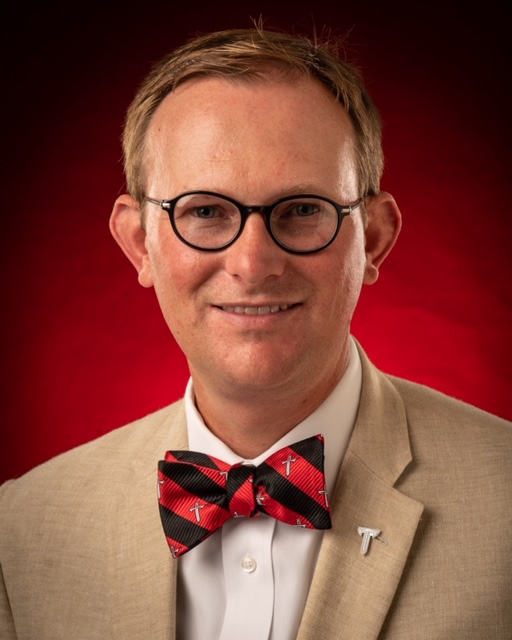
Interview with Judge Jeffrey Sutton

In Uncategorized on March 3, 2021 at 6:45 am

Interview With Thomas Kaufmann, Author of “Historic Alabama Bells”

In Uncategorized on February 17, 2021 at 6:45 am

Allen Mendenhall Interviews Annie Donaldson Talley Regarding Presidential Transitions

In Uncategorized on January 13, 2021 at 6:45 am

“Good People,” A Poem by Bruce Craven

In Uncategorized on January 6, 2021 at 2:33 pm

Bruce Craven is a member of the Columbia Business School Executive Education faculty in New York City. In addition to directing and teaching in a variety of executive programs, he teaches graduate business students his popular elective Leadership Through Fiction.  His book Win or Die: Leadership Secrets from Game of Thrones, was published in March 2019 by Thomas Dunne Books, an imprint of St. Martin’s Press.  The book is currently being translated into Russian and Turkish. He wrote the novel Fast Sofa (1993) which was published in Japanese and German. He also co-wrote the script for the film adaptation, starring Jennifer Tilly, Jake Busey and Crispin Glover. His collection of poetry, Buena Suerte in Red Glitter will be published in 2019 by Red Dirt Press. He lives with his wife and two sons in the Coachella Valley in California.

Good People

In eighteen sixty four, the National

Union Party crushed the Democratic

Party. War Democrats gave electoral

college boost to Lincoln. Heroic

men died as the Union held an election

during a civil war.  Soldiers could vote

from the front. Confederate men’s defection

disenfranchised them. They killed for the hope

of Dixie, state’s rights, maybe enslavement’s profit.

My ancestors fell in both categories.

Good people? Undoubtedly. Still, some saw fit

to conscript humans to serve them in a story

of power, threat, even linking their right

to Christian justice. Moral truth called for a fight.

Literature and the Economics of Liberty: A Throwback to 2011

In Uncategorized on December 30, 2020 at 1:55 pm

What Libertarians Can Contribute to the Study of Literature

In Uncategorized on December 23, 2020 at 6:45 am

Justice Versus Social Justice

In Uncategorized on December 16, 2020 at 6:45 am