See Disclaimer Below.

Archive for the ‘Southern Literary Review’ Category

Review of John Shelton Reed’s Dixie Bohemia

In American History, Arts & Letters, Book Reviews, History, Humanities, Literary Theory & Criticism, Literature, Southern History, Southern Literary Review, The South, Writing on October 31, 2012 at 8:45 am

Allen Mendenhall

The following review first appeared here in Southern Literary Review.

John Shelton Reed’s Dixie Bohemia is difficult to classify. It’s easier to say what it isn’t than to say what it is.

It isn’t biography.  It isn’t documentary.  It isn’t quite history, although it does organize and present information about a distinct class of past individuals interacting and sometimes living together in a unique, definable space.

It isn’t quite sociology either, although Reed is, by training and profession, a sociologist, and sociology does, every now and then, sneak its way into the pages.

Maybe it’s best to suggest that the book is a bit of all of these, but it’s also an annotated edition of Sherwood Anderson and Other Famous Creoles: A Gallery of Contemporary New Orleans.

Written and compiled by William Spratling and William Faulkner, whom Reed affectionately dubs the “Two Bills,” Sherwood Anderson and Other Famous Creoles, first published in 1926,was something of a joke: its oft-rambunctious subjects weren’t really creoles, but simply friends of the authors, and most weren’t, by most measurable standards, famous.

Reed’s stated goal, one of them at least, is to provide an “introduction to a Bohemian crowd of artists, writers, journalists, musicians, poseurs, and hangers-on found in the French Quarter in the mid-1920s.”  This eclectic and creative crowd comprises what Reed calls a social circle, or, in more academic parlance, a “loose network of relationships linked by friends in common,” “by association with the same institutions,” and “by common interests.”

Reed explains that social circles, by nature, “have no formal leaders, but they may have their notables,” and they have their cores, too.  The leader of the so-called “famous Creoles” is Sherwood Anderson, and the core, as you might have guessed, is the French Quarter.

Tulane University, with all of its energy, entertainers, and eccentrics, enabled and sustained the circle that produced the local arts, literature, and culture.  The area and its residents gained a national, indeed international, reputation.  As Meigs Frost, a reporter who made the cut as a famous creole, put it, “So many of us here are internationally famous locally.”

Reed’s subtly sociological introductory chapters place his subjects, which were also the two Bills’ subjects, into their historical context—and what a wild, exotic, and at times erotic context it is.  His comprehensive research is delivered with such wit and enthusiasm that one can forget this work is scholarship written by a former professor and published by a university press.

His occasional use of the first person and confessional, qualifying asides—“as far as I know,” “Some may find it easier than I do,” “to my mind artists should not be judged on what prejudiced observers see in their work,” “It is difficult to discuss this,” “I have mentioned,” “I know of someone,” “it’s fair to say,” “It’s hard to imagine”—will let you know, or let you guess at, where he stands on an issue or acknowledges an assumption on his part.  Such delicate humility—or is it just honest colloquialism?—is rare for a person who made his career in the university, and it would be a shame if readers neglected to notice it.

Peopled with absinthe-drinking, music-loving debauchers, 1920s New Orleans was a place where madams and brothels were as common as jambalaya and gumbo; where music poured into the streets, which smelled of spices, sex, and booze; where bootleggers (this was the Prohibition Era, remember) set up shop next to cops (who were customers of the brothels and the bootleggers); where the only limit on free love, it seemed, was the stultifying effect of alcohol; where parties—especially costume balls—were considered failures if nobody got naked; and where vivacious theater, daily newspapers, and edgy literary periodicals flourished.

If this milieu seemed excessive, radical, intemperate, even libertine, it was also in a way conservative: there was among its dwellers a ubiquitous impulse to preserve and maintain.  History, both that being made and that made already, was important to the artists and writers.  The districts, the streets, the homes, the buildings, the sidewalks—all of them required and received care and protection, and all of them underwent systematic revitalization.  The literati, as conservationists, were afraid that the world they had inherited, and to some extent made, was endangered.

Fans of Reed have come to expect certain things: the informal idioms and plain speech he uses while dissecting, with surgeon-like precision, complex people and institutions; the surprising clarity he brings to understudied topics; and the delightful, conversational prose with which he arrests your attention, transports you into another world, and then releases you back into your own world.

In this, his latest, he does not disappoint.  As always, he delivers—and in so doing provides telling insights into a minor renaissance in American literary history.  His discussions of race and sexuality will inspire (or provoke) future study, but more importantly he has addressed some of the least known phases of some of the most known American litterateurs.

Reed doesn’t need my endorsement.  But he’s got it.

Matthew Simmons Reviews J. Mark Hart’s “Fielder’s Choice”

In Arts & Letters, Creative Writing, Fiction, Humanities, Literary Theory & Criticism, Literature, Novels, Southern Literary Review, Writing on June 26, 2012 at 8:00 am

Matthew Simmons was born and raised in Whiteville, North Carolina.  He lived in Raleigh for eight years, where he went to college at North Carolina State University, roasted coffee for a living, and developed a taste for single-malt Scotch.  Currently a Ph.D. student in English at the University of South Carolina, Matt lives in Columbia, South Carolina, where he tries to garden and regularly rides his bicycle in coat and tie.

The following review appeared here at the Southern Literary Review.

Years ago, after reading Richard Russo’s Mohawk, I decided I needed more flexibility in labeling fiction.  Obviously, there was pulp, there was genre fiction, and there was the rarified air of “lit-tra-ture.”  But what I’d found in Mohawk seemed to somehow occupy parts of all of those labels simultaneously and effortlessly.  I needed a name for this effortless occupation of different registers, and it came to me halfway through another, similar book.  What I was reading was, in fact, the Great American Middlebrow Novel.  Such is a book that tries to be more than an afternoon or a weekend’s entertainment; nevertheless, its writing is highly readable.  It does not set out to explore the eternal complexities of the human experience, but rather tries to show the suppleness and myriad realities that make up an individual or a group’s experience of a specific place, at a particular time.  That last bit is incredibly important.  The GAMN is a book of specificities, of particularities, and it plumbs these specificities and particularities to give us some access to the localized truths of a moment.  J. Mark Hart’s forthcoming debut novel, Fielder’s Choice, tries its damnedest to show itself as worthy of the title, and succeeds, with varying degrees of success, at achieving this goal.

Hart’s locale and moment are Birmingham, 1969.  Brad Williams, our narrator, wants to avoid the hellish fires of the steel mills.  But there is a fate worse than the mills also possibly awaiting him:  the jungles of Vietnam.  Working class, his only hopes at escape are for his athletic prowess on the baseball diamond to win him a college scholarship, as well as drawing a high draft number.  The first of these hopes is immediately compromised—a lifetime shortstop, senior year finds Brad moved over to second to accommodate Robbie, a black student transferred to West Lake High via integration, who is a superior shortstop to Brad in every way.

And thus are the specifics of Hart’s novel—a Birmingham trying to live down the specter of Bull Connor’s hoses and dogs, and a young man trying to find his place in this uncertain newness.  At its best, Fielder’s Choice does a truly wonderful job of presenting a city struggling to understand itself and an 18-year-old boy trying both to fit into this city and get out of it.  Hart’s presentation of Brad is, in many ways, wonderfully well-done.  Similarly, the city’s tensions are admirably sketched, and Birmingham, as a character itself, feels incredibly alive and compelling.  Hart’s debut novel thus promises to join the august company of the Great American Middlebrow novel, an achievement to be lauded—especially when the author, an attorney by day, is only moonlighting as a novelist.

Promising though it may be, Fielder’s Choice is also, at times, deeply problematic.  The prose can be clunky and wooden:  explaining his friend’s father’s drinking habits, Brad speaks of “[the father’s] customary can of Pabst Blue Ribbon beer, or, in his vernacular, a ‘PBR.’”  Contrast that passage with any number of gorgeous moments from Brad’s courtship of Susie and you’ll find yourself frustrated—Hart can, at times, be an immensely lyrical and even beautiful writer, and you’ll wish he always was.  But significantly more troubling than some hiccups with the prose is the novel’s reliance on flat, stereotypical characters.  Of course the hippie would be a Yankee, and of course he would drive a VW with a day-glo peace sign on the back window.  Of course the main antagonist would be named Bubba, and would be a violent, reactionary, bigoted redneck.  Robbie, the African-American shortstop who forces Brad to move positions, often seems like little more than a plot device and a means for developing Brad’s character—a shame and even an error, as Robbie begins as one of the most promising characters in the novel.

And while Paxton, the Yankee hippie, becomes more sympathetic as the novel progresses, it is not because his character deepens, but because Brad becomes more involved in the anti-war movement.  Meanwhile, the Bubbas of the novel are never any more than boogeymen, “hicks,” to use Brad’s distressingly frequent verbiage, who wave the Confederate flag and stand in the way of progress.  Near the novel’s end, Brad glowing speaks of Birmingham moving into the “New South,” and we understand that Brad understands Bubba and his ilk not so much as people as impediments to the birth of this “New South.”  Brad’s voice thus carries a nascent sense of cosmopolitan elitism.  And while I see this as a legitimate and even necessary act of characterization, I’m nevertheless troubled that Brad gets off scot-free in this regard.  The Bubbas of the novel, and of Southern history, are of course inexcusably wrong in their racial attitudes and certainly on the wrong side of history.  But this does not make them any less complexly human, something that Brad never recognizes, and something Hart never calls him to task for.  We cannot present a fully nuanced picture of the South at this time—which is, again, what I think Hart wants to do—if we merely write off the Bubbas of the world, wrong-headed and misguided as they may be, as merely villainous “hicks” resembling Snively Whiplash more than flawed human beings.

This not to denigrate how fine the novel is on the whole.  Brad himself is a deeply compelling and well-realized hero.  Susie, Brad’s love interest and female counterpart, helps to Hart’s exploration of 1969 Birmingham in sophisticated ways, and Susie and Brad’s relationship is at turns soaring, titillating, crushingly painful, and immensely familiar to us all.  Hart presents the changing relationships between Brad and his childhood best friend BJ, as well as between Brad and his father, powerfully and complexly.  Brad, and those characters closest to him, are wonderfully rendered, strongly presented, and, at times, heart-wrenchingly achieved.

This is all to say that Fielder’s Choice is a novel of real promise, despite some significant problems.  Mr. Hart has given us a very fine representation of a boy becoming a man in a place and time that are immensely complicated, and we are moved to joy and frustration alongside Brad.  It is a deeply enjoyable novel, one I found myself tearing through in three days—no short task for a nearly 500-page book.  And while it has its problems—the writing is sometimes too flat, the characters often too stock, the ending perhaps too neat—I am amazed, again, that this is a first novel by a man whose vocation is not fiction.  And while the problems may keep Mr. Hart’s first novel from being a Great American Middlebrow Novel, it comes mighty close.  Ultimately, Fielder’s Choice is a very good book about a very complex time.  I’m a fan.

Review of Coleman Hutchinson’s Apples and Ashes

In America, American History, Arts & Letters, Book Reviews, Fiction, Historicism, History, Humanities, Literary Theory & Criticism, Literature, Nineteenth-Century America, Novels, Southern History, Southern Literary Review on June 20, 2012 at 8:00 am

Allen Mendenhall

The following review first appeared here at the Southern Literary Review.

Confederate literature and literary culture have not received the critical consideration that they warrant.  Not only that, but they have been dismissed as scant and mediocre.  Scholars of the South and of the Civil War—even those whose work has reached wide audiences—have paid more attention to other humanistic fields than to literature, particularly to Confederate literature and particularly during the so-called “fighting” years of 1861-1865.  This neglect, argues Coleman Hutchison in Apples and Ashes, is regrettable because “the Confederacy gave rise to a robust literary culture.”

Several factors account for the dearth of scholarship on Confederate literature, not least of which is the fact that the Confederacy existed for only a short time, during which Confederate writers had to overcome, among other things, ink and paper shortages; many of these men and women struggled to see their work reach print in cities occupied by Union troops.  Accordingly, much of what might have become Confederate literature was lost or unpublished, yet the relative shortage of Confederate literature was not due to lack of talent, but to printing paralysis.

Another reason Confederate literature has failed to become a common subject of study is the presumption that this topic is not worthwhile, largely because Confederate cultural values have been discredited.  There is, today, the tendency to demonize or denounce any person who would take seriously the claims and writings of Confederate partisans, politicians, and highbrows.  Yet to take something seriously is not to endorse it, and to proclaim certain intellectual matters off-limits—even if those matters are highly complex and, when studied carefully, telling about contingencies and urgencies of our own day—is dangerous and foolish indeed.  Hutchison is just as aware of the importance of Confederate literature as he is of the importance of disclaiming it.  “To write about the Confederate nation,” he says, “is to risk being seen as endorsing its right to exist.”  He adds, emphatically, that his book “is by no means an apology for the Confederacy or Confederate nationalism,” and that he “finds almost nothing that is admirable in the politics and culture of the Civil War South.”  That Hutchison feels compelled to disassociate himself from Confederate ideology at all suggests how strangely anxious the impulsive, opportunistic, or lazy readers will be to either condemn or celebrate (depending on their perspective) this book as pro-Confederate.

Mostly uninterested in matters of taste and judgment regarding the literary quality of his subjects, Hutchison submits that Confederate literature teaches literary scholars not only about the nuances and cultures of nationalism, but also about nineteenth century American (read: non-Confederate) letters generally, since Confederate literature was in conversation with—and in contradistinction to—American literary nationalism.  Among the distinguishing features of Confederate literature were its aspirational impulses and its focus upon an imagined and impossible future.  In some respects, the South’s belles lettres recognized the poignancy of a lost cause narrative before the cause was actually lost. Read the rest of this entry »

“Gone,” Edited with Photography by Nell Dickerson

In Arts & Letters, Book Reviews, History, Humanities, Nineteenth-Century America, Southern History, Southern Literary Review, The South, Writing on May 9, 2012 at 7:45 am

Allen Mendenhall

The following review originally appeared here in the Southern Literary Review.

I’ve always maintained a spectator’s curiosity in the rituals and practices of photography.  I can’t take a good picture, no matter which side of the camera I’m on, but I appreciate the idea of reducing the world to a more manageable form, something I can look at and admire without getting overwhelmed by the sheer magnitude and kinetics of it all.

I used to have a friend who was a photographer, and I would watch her take pictures.  She tried, once or twice, to teach me the nuances and particulars of photography, but I’m too proud to fail at new activities, so I strive never to undertake them.

Photographs are, folks say, moments stuck in time.  That makes them especially melancholy if their subjects, as it were, are decaying, rotting, or dying.  That’s what I realized when I leafed through the pages of Gone, a brilliant, conversation-starting, coffee-table book bearing the subtitle “A Heartbreaking Story of the Civil War,” and the sub-sub-title “A Photographic Plea for Preservation.”

Gone makes history even as it documents history.  Its images of antebellum Southern churches, plantations, and homes—some dilapidated, some just barely restored—ought to remind Southerners of the need for preserving the finest monuments of, and to, our complicated history.

That the photographer is Nell Dickerson, cousin to the late, great historian and novelist Shelby Foote, who needs no introduction to readers of this publication—although we editors have given him one—only adds a sense of authenticity to this project.  It’s as if in image and word and authorial kin, the book is tied to a past that struggles, and fails, to remain present; and it’s in that failing that the book achieves its most meaningful and poignant expression.

We Southerners place a premium on the fixed, the immutable, the known, perhaps because we understand that the things we value—family, hearth, home, community, place, religion—are bound to change.  We mourn change as we mourn loss, because all change entails loss, and it’s our tendency to mourn that gives us a unique, constructive identity.

We define ourselves as a people who have lost, or have lost something.  It’s a position that doesn’t survive interrogation, but there it is, a tragic ethos (and, for that matter, pathos) that we hope will stay the same when all else is, if not different, then almost unfamiliar.  Almost. Read the rest of this entry »

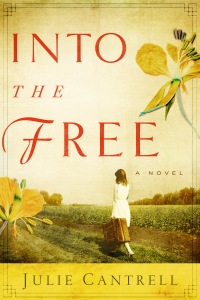
Allen Mendenhall Interviews Julie Cantrell

In Arts & Letters, Book Reviews, Creative Writing, Fiction, Humanities, Literature, News and Current Events, Novels, Southern Literary Review, The South, Writing on February 29, 2012 at 6:10 am

Julie Cantrell was editor-in-chief of the Southern Literary Review.  She teaches English as a second language to elementary school students and is a freelance writer who has published two children’s books. Julie and her family run Valley House Farm in Mississippi.  Her first novel, Into the Free, was released by David C. Cook in 2012.


Julie, so glad to be doing this interview.  First of all, congratulations on the publication of Into the Free, which, at the moment, is number 23 on the Amazon Kindle bestseller list.  What does it feel like to have completed your first novel?

It’s amazing! The entire journey has been joyful for me, but to see it reach readers across the world is incredible. Having it become a bestseller is simply surreal. I admit I’m a bit numb watching it climb the charts, and I keep thinking it will end in a few minutes – a strange little bubble of joy that is about to pop. For that reason, I’ve been doing the happy dance nonstop and am just going to enjoy the fun while it lasts.

The main character of the book is Millie Reynolds.  How did you come up with Millie?  Did you know what she would be like—her personality, her attitudes, her struggles—before you started writing, or did she sort of come to you as you worked?

Well, to be honest, I never intended to write from a child’s point of view. I originally set out to write about the “Gypsy Queen,” but it just wasn’t the voice I heard. Then I saw a scene of a poor, depressed woman standing on a porch watching the Travelers leave town. She wanted to leave with them, but she was too afraid to take the first step. So I sat down to write her story, but it wasn’t her voice I heard either. Instead, Millie sat in her tree and told me her story. I know it sounds kooky, but I guess I just have a very vivid imagination. I’m happy to introduce Millie to readers, and I hope they love her as much as I do.

You once told me that you had two kids, four cows, three goats (two of which were then due with babies that you’d have to bottle feed), two dogs, two cats (one stray that arrived pregnant), a horse that likes a lot of attention, a flock of hens, a newly arrived carton of chicks, a husband, and a full-time job as a speech therapist.  How did you ever manage to finish writing Into the Free

It sounds crazy, doesn’t it? In fact, we’ve grown bigger since then! I still work in an elementary school, but now I teach English as a Second Language, so I was able to reduce my hours to part-time this year. With a full-time farm, a teaching job (which is never really part-time, as any teacher will tell you), two kids, a wonderful hubby, freelance gigs, and an active community life, we stay very busy. I usually write between the hours of 3 am and 5 am, when the rest of the world is sleeping. I just love it more than sleep.

Tell us a little about your choice of setting for the novel?

I am a southern girl, through and through. I spent my childhood in Louisiana before leaving the south after graduate school. I loved living in various states across the country, but our family relocated to Mississippi seven years ago, returning to our southern roots. I find this state incredibly rich with everything needed to whip up a story. I never considered setting it anywhere other than Mississippi. However, I like to mix things up a bit, so let’s see where the sequel takes us.

Any advice for aspiring novelists who might come across this interview?

Yes. I say, Go for it! If writing is what you love, be willing to make sacrifices to keep that in your life. Only you know what you were born to do, and only you know how to live the life that makes you happy. Life is short. Choose wisely.

Thank you, Julie.  This has been a great interview.  I’m thrilled to see the success of Into the Free, and I would encourage readers of this site to purchase a copy right away. 

Thank you, Allen. I am honored to be interviewed here on a site I have always loved. You’ve done a fabulous job with Southern Literary Review, and I know your readers all agree. Kudos!

Allen Mendenhall Interviews Ace Atkins

In Artist, Arts & Letters, Book Reviews, Creative Writing, Fiction, Humanities, News and Current Events, Novels, Southern Literary Review, Writing on December 12, 2011 at 8:46 am

Ace Atkins is the author of nine novels, most recently The Ranger and Infamous.  A former journalist at The Tampa Tribune, Atkins has been nominated for a Pulitzer Prize for his investigation into a 1950s murder.  He lives on a farm outside Oxford, Mississippi.

The following interview first appeared here at Southern Literary Review.

AM: What I suspect everyone wants to know is, how do you stay so prolific?  How do you write so much, so quickly?

AA: I’m very fortunate to be a full-time novelist. I’ve been writing full time since 2001 and that gives me the freedom to concentrate completely on my stories. Many terrific writers I know have to carve out time from from their jobs to work on a book. I am able to go to my office every day and work on that new novel. I feel pretty damn lucky and that in turn means I get to work on more projects.

AM: You seem to have located The Ranger in regions of the South that you know well.  Would you call this book “Southern literature”? 

AA: Absolutely. I don’t get into working in a certain genre—that’s up to readers and critics—and can hurt the writer and reader. My new series of novels could not be set anywhere else but the South and certainly centers on many Southern themes. I gain a lot of inspiration from the gritty world of Faulkner’s crime stories and turn my attention to the descendants of those people. 

AM:    I noticed that country music and country musicians appear throughout The Ranger.  Can you tell us about the significance of this to the novel?

AA: My first four novels were stylistically and thematically about blues. I always wanted to work on a novel that felt like an old Johnny Cash ballad—a solider returning home to town, unrequited love, guns and violence. I listened to a lot of Johnny Cash and also tons of Outlaw Country—Waylon, Merle, etc.—when coming up with the background of Quinn Colson.

AM: Who is Colonel George Reynolds?  I noticed his name in the Acknowledgments. 

George is the guy who saved my ass. I had contracted to write a novel about a U.S. Army soldier without knowing enough about the modern war in Afghanistan. Colonel Reynolds contacted me from Camp Phoenix in Afghanistan about signing a copy of my novel, Devil’s Garden. He offered help if I ever needed. It turned out, I needed help immediately. He offered terrific insight direct from the battle front and introduced me to the real Ranger who provided the background for Quinn Colson. 

I could not have written the book without him and he still provides me with a ton of answers to picky questions. Read the rest of this entry »

Review of Forensic Fictions by Jay Watson

In Arts & Letters, Book Reviews, Fiction, Georgia, Humanities, Jurisprudence, Justice, Law, Law-and-Literature, Literary Theory & Criticism, Literature, Novels, Rhetoric, Rhetoric & Communication, Southern History, Southern Literary Review, The South, Writing on December 5, 2011 at 10:56 pm

Allen Mendenhall

The following review originally appeared here at the Southern Literary Review.  If you enjoy this review, please consider subscribing to the Southern Literary Review.  I became the managing editor of the Southern Literary Review in November.


Kudos to the University of Georgia Press for this recent reprint of Jay Watson’s Forensic Fictions, which has become something of a classic among law-and-literature scholars.  A pioneering project, Forensic Fictions stands as the first critical work to interrogate the lawyer figure in Faulkner’s oeuvre.

Watson submits that law is vast and multidimensional, “at once a deeply normative cultural system, a vehicle of ideology (in its constructive and destructive manifestations), a force of social stability and control, an entrenched and often blindly self-interested institution, and not least of all a human vocation, a form of practice that in some instances achieves the status of a calling.” 

In Faulkner’s fiction, law helps to highlight the complexity, sometimes liberating and sometimes disorienting, of the “everyday” aspects of Southern culture, institutions, and traditions.  Law is more than bills, statutes, judge-made opinions, codes, and the like.  Law isn’t a monolithic animal but a multiplicity of people and institutions; a product of self-serving performances by lawyers, judges, and politicians; and an accumulation of arguments couched in topoi of guilt and innocence, right and wrong, justice and equality.  Law is, simply put, a network of human relations and a collection of stories. 

Watson’s book examines how lawyers and laws constitute and presuppose authority in the microcosm of Yoknapatawpha.  “Lawyers of course advocate by narrating,” Watson explains, “by telling their clients’ stories in the language of the law.”  Lawyers, then, are raconteurs, and laws are products of language, even as they institute language.

Watson suggests that Faulkner internalized the “conspicuous and complicated presence” of real-life lawyers—Dean R.J. Farley, Governor Lee M. Russell, General James Stone, Ben Wasson, Jim Kyle Hudson, and Lucy Somerville Howorth, to name just a few—and then expressed mixed feelings about lawyers and the legal community in his writings.  Although not a lawyer himself, Faulkner could boast of a legal pedigree, having been born into a family and a society overflowing with attorneys.  Faulkner’s multifaceted and often contradictory ideas about law reflect these cultural associations.

Watson uses the term “forensic fictions” to refer to Faulkner’s depictions “of the legal vocation and the practice of law, a practice that extends from the official space of the courtroom and the professional space of the law office to the farthest reaches of the community.”  Thus conceived, law is not only a communicative vehicle but also a way of life, as mundane as it is exciting. 

Watson works out of the paradigms of forensic discourse.  He treats law as a theater of differences and disparate perspectives and as a vast system of interrelated parts.  An “important subtext” for Faulkner’s forensic fictions, according to Watson, “is the conviction that the values and concerns of the storyteller can and must carry over from a limited, private, aesthetic realm into a public world outside, where verbal creations can reinforce, challenge, or otherwise inform social norms.”

Three novels—Intruder in the Dust, Knight’s Gambit, and Requiem for a Nun—make up what Watson dubs Faulkner’s “forensic trilogy.”  These novels portray the lawyer as citizen-spokesperson, able to appropriate the public sphere as a space for social celebration or critique. Read the rest of this entry »